Where to buy in the South of France: Provence, the French Riviera or the Languedoc, town by town
The South of France is not one market but three: Provence, with its bastides and hilltop villages; the French Riviera, with its villas facing the sea; and the Languedoc, with its town mansions and stone farmhouses at prices still within reach. This guide takes them area by area, with real recorded sale prices, so you can choose by budget, by the life you want there and by how easily you can get there.
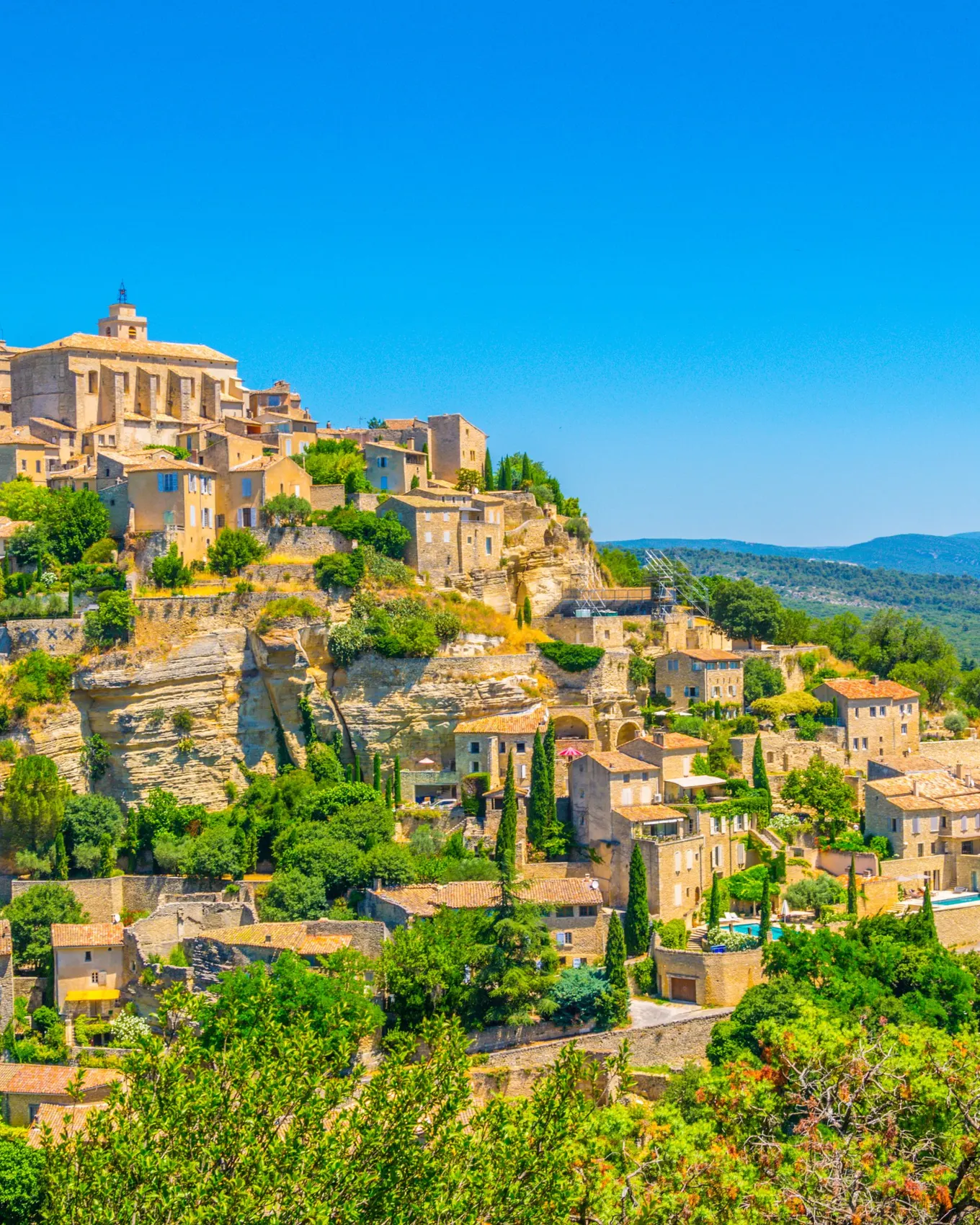
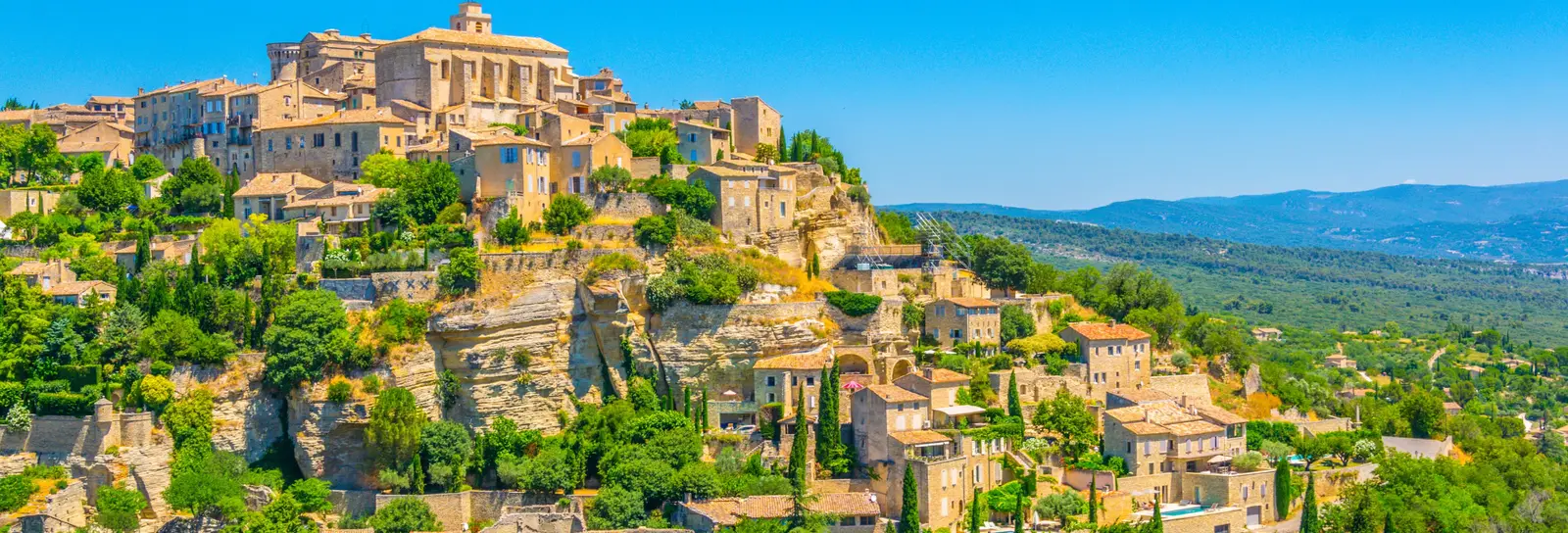
Provence -Gordes -The village clinging to its rock
By Jean Mascla, founder of Home SelectUpdated · 13 min read
Where should you buy in the South of France?
For most buyers, the South of France means the Mediterranean arc: Provence, the French Riviera and the Languedoc. The Riviera is the most international and the most expensive; Provence sells on its land, its bastides (Provençal country houses) and its villages; the Languedoc still offers space at prices the Riviera left behind long ago.
Recorded sales show the scale: median house prices stand at €5,500/m² in the Alpes-Maritimes, €4,200/m² in the Var, €2,900/m² in the Vaucluse, €3,000/m² in the Hérault and €2,600/m² in the Pyrénées-Orientales (DVF / DGFiP via data.gouv.fr, October 2026 release, 12 months to end of June 2026). Between neighbouring towns, the gaps are wider still.
Four questions decide the right place.
How you will use it: living there all year calls for a town that does not shut down in winter; a holiday home can live with a more remote village.
Sea or hinterland: a sea view commands a steep premium; twenty minutes inland, the same budget buys land and quiet.
Access: a TGV station or an airport within an hour changes how often you will actually use the house.
Budget: it often points to a region before taste does.
Which part of Provence: the Pays d’Aix, the Alpilles or the Luberon?
Inland Provence comes in three landscapes, less than an hour apart. It was the first territory Home Select opened outside Paris: its founder lives in the Pays d’Aix.
The Pays d’Aix: the Provence that lives all year round
Aix-en-Provence brings together the private mansions of the Mazarin quarter, apartments in the old centre and the bastides of the surrounding countryside. The median house price is €6,000/m², and the most expensive tenth sold above €10,300/m². Around the city, Le Tholonet, Éguilles and Puyricard (€6,000/m² for houses) offer land and often a view of Mont Sainte-Victoire, close to the TGV station and Marseille Provence airport. This is Provence for families: a university, good schools and a cultural life all year round.
The Alpilles: a mas at the foot of the hills
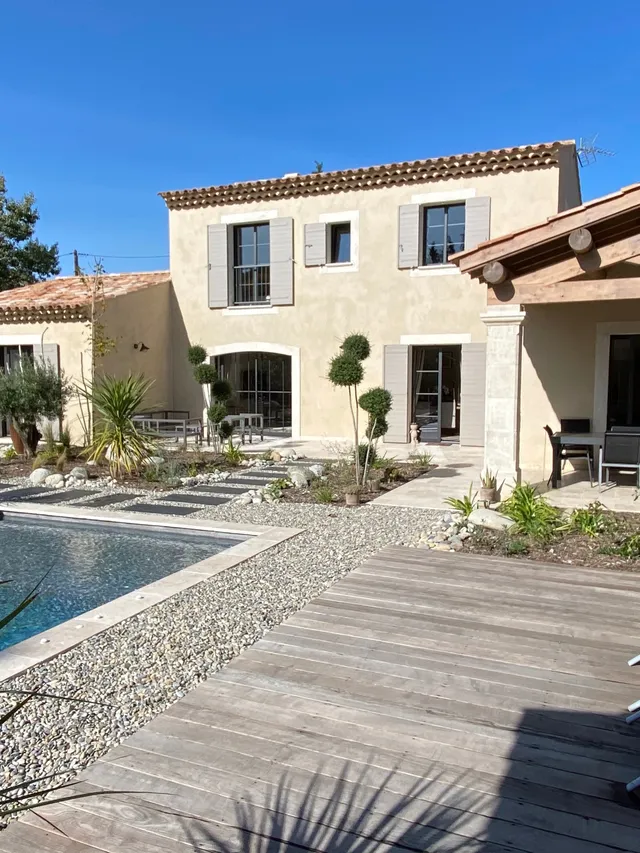
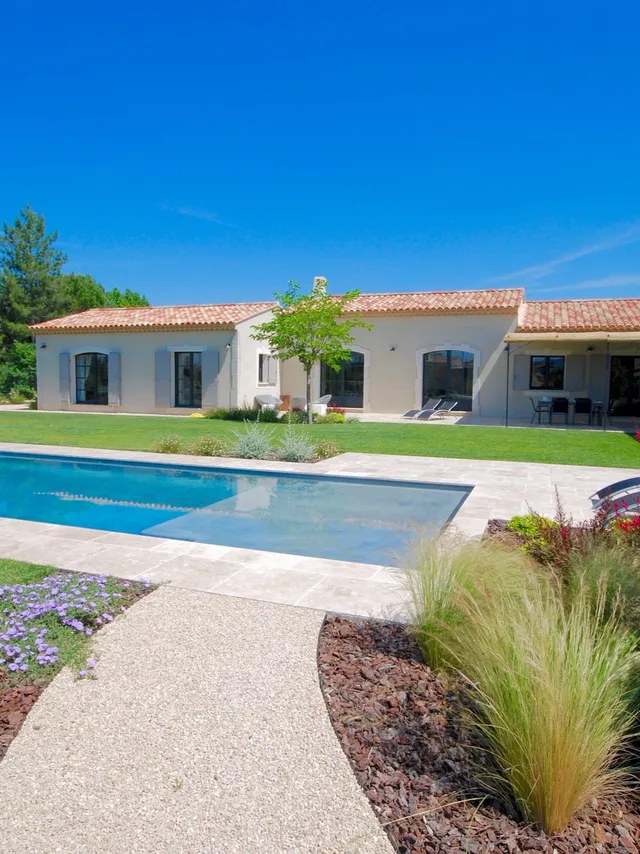
Between Avignon and Arles, the Alpilles regional nature park takes in Saint-Rémy-de-Provence, Eygalières, Maussane-les-Alpilles and Les Baux-de-Provence. Buyers look for a mas (a Provençal farmhouse) in the plain or a bastide set against the limestone ridge; value lies in the olive grove, the water, the view and the quiet. Saint-Rémy, a town that lives all year, shows a median of €5,500/m² for houses, Maussane €5,600/m²: see buying a mas in Saint-Rémy-de-Provence.
The Luberon: hilltop villages and second homes
Further east, the Luberon strings together Gordes, Bonnieux, Ménerbes, Lacoste and Lourmarin. The market is narrow and very international, made of restored farmhouses and village houses, often sold without a listing. In Gordes the median house price is €6,600/m², against €2,900/m² across the Vaucluse: see buying a mas in Gordes. These villages come alive in summer and quieten in winter. Avignon, 2 hours 40 from Paris by TGV, is the gateway to both the Luberon and the Alpilles (€2,500/m² for houses).
From Marseille to Sanary-sur-Mer, the Provençal coast alternates calanques (steep limestone inlets), harbours and vineyards. In Marseille, the prime market sits on a narrow coastal strip, from Roucas-Blanc to Pointe Rouge, and in the 8th arrondissement: the median house price is €4,600/m², but the most expensive tenth goes above €8,900/m².
Cassis, between the calanques and Cap Canaille, is one of the most closed markets on the coast: houses sell too rarely for a reliable median, apartments at €7,000/m². Further east, La Ciotat (€5,900/m² for houses), Bandol (€6,800/m²) and Sanary-sur-Mer (€6,200/m²) combine working harbours, villas in the hills and vineyards.
The sea-view villa, in the hills of Bandol or Roucas-Blanc, rare and fought over.
The apartment facing the harbour, in Cassis or Sanary, easy to lock up between stays.
The village house two streets back from the water, more affordable and lively all year.
Building in salt air, the Loi Littoral (the coastal planning law) and the price of a view have their own guide: buying by the sea.
Where should you buy on the French Riviera?
The French Riviera, the Côte d’Azur in French, runs from Saint-Tropez to Menton and is the most international residential market in France. In the Alpes-Maritimes the median apartment price is €4,900/m²; in Nice the median house reaches €6,500/m², and far more on the capes.
From Nice to Menton: the Riviera of the capes
Nice is the residential capital of the Riviera: Belle Époque buildings in the Carré d’Or and Cimiez, villas on Mont Boron, an international airport on the edge of town. To the east come Villefranche-sur-Mer, Beaulieu-sur-Mer, Èze (€12,400/m² for houses), Roquebrune-Cap-Martin (€13,100/m²) and Menton, reputed to have the mildest climate in France. Saint-Jean-Cap-Ferrat, one of the most closed markets in the world, recorded just 56 sales in a year: its villas often change hands without ever being advertised.
Cannes, Antibes and the hills
Cannes has the most liquid market on the Riviera, from the Croisette to the villas of La Californie. Antibes plays on two registers, the old town and the Cap d’Antibes, a confidential market of world standing: the median house price is €6,800/m², and the top tenth sold above €14,800/m². Inland, Mougins (€7,300/m²), Valbonne, Saint-Paul-de-Vence and Grasse offer land and lively villages, close to the Sophia Antipolis technology park.
The Gulf of Saint-Tropez and the Var coast
In the Var, the Gulf of Saint-Tropez is a market of its own: the median house price reaches €25,000/m² in Saint-Tropez and €18,200/m² in Ramatuelle. Sainte-Maxime lives all year; Grimaud, Le Lavandou and Saint-Raphaël offer the sea at other prices, and the hinterland around Fayence (€4,000/m²) the calm of hilltop villages. The gulf is highly seasonal and far from the main stations and airports.
The Languedoc, the Mediterranean side of the Occitanie region, offers historic towns that live all year, characterful coastlines and old houses at prices still within reach: the median house price is €3,000/m² in the Hérault, €1,800/m² in the Aude and €3,700/m² in Montpellier itself.
Montpellier and Sète: Montpellier, the most dynamic city on the Mediterranean arc, hides private mansions in its old centre, the Écusson, fifteen minutes from the sea; Sète, between the sea and the Thau lagoon, lives all year (€4,800/m² for houses).
Nîmes and the Uzège: Nîmes has its Roman arena, the Maison Carrée and town mansions to restore (€2,800/m² for houses); Uzès, the first duchy of France, is ringed by stone farmhouses (€3,800/m² for houses in the town): see buying a mas in Uzès.
The Côte Vermeille: Collioure is a miniature market where almost nothing is advertised; apartments sell at €5,300/m².
The hinterland: from the Béziers area to the Corbières, wine estates and manor houses for those who want space more than the sea.
The TGV, the universities and the hospitals of Montpellier and Nîmes make it a South to live in all year; its exceptional properties remain rare and go fast. See buying a house in the Languedoc.
What about the South West?
Some buyers also weigh up the South West, Atlantic and greener: the French Basque Country, where the median house price in Biarritz is €7,900/m², the Dordogne (€1,600/m² across the département), Toulouse or the Arcachon basin. An ocean climate, less scorching summers: a different life, with its own guides.
How much does a house cost in the South of France?
For a house, the price per square metre divides the total price, land included, by the built floor area: a large garden or a sea view inflates it.
Median prices per square metre (DVF / DGFiP via data.gouv.fr, October 2026 release, 12 months to end of June 2026). A dash marks a property type with too few sales for a reliable median; drive times by car, out of season.
Town
Houses, median
Apartments, median
Way of life
Access
Aix-en-Provence
€6,000/m²
€4,900/m²
University city
TGV, airport
Marseille
€4,600/m²
€3,200/m²
Large coastal city
TGV, airport
Cassis
-
€7,000/m²
Sought-after harbour
Marseille, 30 min
Avignon
€2,500/m²
€2,300/m²
City of art
TGV
Saint-Rémy-de-Provence
€5,500/m²
-
Lively market town
Avignon, 25 min
Gordes
€6,600/m²
-
Hilltop village, seasonal
Avignon, 40 min
Nice
€6,500/m²
€4,900/m²
Large city
International airport
Cannes
€6,700/m²
€5,800/m²
International town
Nice airport, 30 min
Antibes
€6,800/m²
€5,200/m²
Town and cape
Nice airport, 20 min
Saint-Tropez
€25,000/m²
€12,400/m²
Highly seasonal village
Nice, 90 min or more
Menton
-
€5,100/m²
Mild-climate town
Monaco, 15 min
Montpellier
€3,700/m²
€3,400/m²
Young, large city
TGV, airport
Nîmes
€2,800/m²
€2,200/m²
Roman city
TGV
Uzès
€3,800/m²
€3,300/m²
Small town
Nîmes, 30 min
Sète
€4,800/m²
€3,400/m²
Working port
Montpellier, 30 min
Collioure
-
€5,300/m²
Seasonal village
Perpignan, 30 min
A median mixes town houses with properties on land, and the finest sales, often off-market, pull the top of the range up: in Saint-Tropez, a tenth of houses sold above €53,200/m²; in Uzès, a tenth below €2,400/m².
Provence -Gordes -The village clinging to its rock
Which South suits your plans?
The right choice depends less on the region than on how you will use the house.
Living there all year with children: the Pays d’Aix, Nice, Antibes or Montpellier, for schools, hospitals, the station and the airport.
A holiday home by the water: the calanques, the Gulf of Saint-Tropez, Cannes, Antibes or Collioure.
A pied-à-terre in town: the Carré d’Or in Nice, the Mazarin quarter in Aix, the Écusson in Montpellier.
A more measured budget: the Gard, the Hérault or the inland Var, under an hour from the sea.
How do you get there, and can you live there all year?
TGV, airports, motorways
By TGV from Paris: Avignon in about 2 hours 40, Aix-en-Provence, Marseille and Nîmes in about three hours, Montpellier in three and a half, Nice in almost six.
By air: Nice-Côte d’Azur airport links the Riviera with Europe’s main cities and beyond; Marseille Provence serves Aix and Marseille, Montpellier the Languedoc.
By road: the A7 runs down the Rhône valley to Marseille, the A8 links Aix to Nice and Italy, the A9 heads for Montpellier and Spain.
Summer is paid for in travel time: in July and August, reaching the Gulf of Saint-Tropez, with no station or airport nearby, can take hours.
Seasons, schools, year-round life
Aix-en-Provence, Avignon, Marseille, Nice, Antibes, Menton, Montpellier and Nîmes live all year; the Luberon villages, the Saint-Tropez peninsula and the Côte Vermeille quieten down in winter. The coast is mild, the hinterland gets frost, the mistral sweeps Provence and the tramontane the Roussillon.
For families moving from abroad, the Riviera has the International School of Nice, Mougins School and the Centre International de Valbonne; the Pays d’Aix has the International Bilingual School of Provence and the Lycée International Georges Duby in Luynes. Elsewhere, the choice is thinner.
Which local rules should you check before buying?
The South has its own constraints, to be checked before you make an offer.
Wildfire risk: in exposed municipalities, owners must clear brush within 50 metres of buildings, sometimes extended to 100 metres, and the buyer must be told at the sale.
The Loi Littoral: outside built-up areas, the 100-metre strip from the shore cannot be built on; an extension or a pool must be checked before you sign.
Drainage: an isolated house often has a septic tank or a micro treatment plant; if the inspection finds it non-compliant, the buyer has one year to bring it up to standard.
Zoning and protected sites: agricultural and natural zones where almost nothing can be built, protected landscapes such as Mont Sainte-Victoire or the Calanques, and the surroundings of listed monuments, where the state heritage architect has a say.
Flood zones: the Rhône, Durance and Argens valleys, and the plains of the Gard and the Hérault exposed to autumn storms; the risk report (état des risques), handed over from the first viewing, says so.
Land and water: vineyards or farmland may fall under the pre-emption right of the rural land agency (SAFER) or an existing farm lease; a borehole or a spring adds value if it is declared.
Pools: an approved safety device is compulsory, and drought orders can ban filling them.
Local tax: the tax on second homes may be surcharged in municipalities classed as areas of high housing pressure, many of them on the coast.
When is the best time to buy in the South of France?
The market follows the seasons. In spring, supply grows and foreign buyers visit at Easter; in summer, demand peaks but August slows notaires and banks; autumn suits negotiating on properties still unsold after the summer; winter shows a house as it really is, mistral and sleepy village included.
The written offer, then the preliminary contract (compromis or promesse de vente).
The buyer’s ten-day cooling-off period.
Pre-emption rights of the municipality or of the SAFER, which in principle have two months to decide.
The final deed before the notaire, two to three months after the preliminary contract, with notaire’s fees of 7 to 8% for an older property.
How does Home Select search in the South of France?
Home Select works for the buyer alone, never for the seller. In the South, where the finest houses often sell without a listing, the search depends as much on the network as on the daily watch.
The brief: budget, use, areas, criteria and timing; this is often where the right region is decided.
The watch: listings sorted every day, and a network of 15,000 professional partners, agents, notaires and managing agents, who flag off-market properties.
Pre-viewings: a buyer’s agent visits first, by video if you are far away.
Checks and negotiation: planning, risks and easements, then price and terms, through to the deed, by power of attorney if needed.
Frequently asked questions
Where should I buy in the South of France to live there all year?
In a town that stays alive in every season: Aix-en-Provence, Avignon, Nice, Antibes, Montpellier or Nîmes combine schools, hospitals, shops and fast links. Hilltop villages and beach resorts suit a second home better.
What is the cheapest region in the South of France?
The Languedoc and the Roussillon: the median house price is €1,800/m² in the Aude, €2,600/m² in the Gard and €2,600/m² in the Pyrénées-Orientales, against €5,500/m² in the Alpes-Maritimes (DVF / DGFiP via data.gouv.fr, October 2026 release, 12 months to end of June 2026). In Provence, the Vaucluse (€2,900/m²) remains more affordable than the coast.
Is it better to buy in Provence or on the French Riviera?
It depends on how you will use the house. The Riviera offers the sea, an international airport and towns that live all year, with a median house price of €5,500/m² in the Alpes-Maritimes. Provence offers land, farmhouses, light and the TGV, with a median of €4,100/m² in the Bouches-du-Rhône and €6,000/m² in Aix-en-Provence.
Where can I find a house with a sea view in the South of France?
From Cassis to Sanary-sur-Mer in Provence; on the Riviera, from the hills of Cannes and the Cap d’Antibes to the capes between Nice and Menton, and around the Gulf of Saint-Tropez; in the Languedoc, in Sète and Collioure. A sea view always commands a premium and must be checked against the Loi Littoral.
What are an owner’s obligations for a house in the South of France?
Clearing brush around the house if it is near woodland or scrub, having the septic system inspected, securing the pool and respecting summer water restrictions. The risk report also tells you whether the house is in a flood zone.
Can I buy in the South of France without travelling there?
Largely, yes: video pre-viewings, document checks, negotiation and signing through a power of attorney at the notaire’s office. Seeing the chosen property in person before you commit is still advisable.
How much does a buyer’s agent cost in the South of France?
Home Select charges 2.5% incl. VAT of the net purchase price on the Exclusive offer, minimum €10,000 incl. VAT. The Confidential offer, reserved for projects of €2m and above, costs 1.5% incl. VAT for the same full service, with off-market properties only. On top of the fees, Home Select receives 10% of the negotiated reduction: it is also paid on what you save. Nothing is due before the signing of the authentic deed.
Torn between Provence, the French Riviera and the Languedoc? Describe your project: a Home Select buyer’s agent will tell you what your budget can buy, and where.
Your request is already sent, simply pick what suits you.
A buyer’s agent calls you back within one working day.
🇫🇷+33
An error occurred. Please try again.
Then answer 3 quick questions to be matched with the right hunter.
Home Select processes your data (name, email, phone, project) to handle your request and contact you. It is recorded in our follow-up tool and read by the hunter in charge of your project. Our technical providers access it for hosting, email and checking that your email and number are real, some of them from the United States under the safeguards set by the GDPR. We keep it for three years after our last exchange, or five years after the end of our assignment if you entrust it to us, as French anti-money-laundering law requires. To access, correct or erase it, or to object to its use: contact@home-select.fr. Details in our privacy policy.
Your hunter calls you back within one working day.
Resume your request?
You started a request recently. Pick up where you left off, or start over.
Your answers are kept for 24 hours.
What is your project?
Takes 1 minute, no commitment.
Where are you looking?
Select one or more cities or areas
Your budget?
€
You pay only when Home Select finds it.
Anything to add?
Optional. Add any useful details: specifics about your search, constraints or your availability.
This helps your hunter prepare for your call.
An expert will contact you shortly
Your brief
Confidential search: your file goes to a senior hunter.
60 rue François 1er, 75008 Paris · FCI member
FeesOne month’s rent excluding charges, plus VAT, with a minimum of €2,000 including VAT. Payable only when the lease is signed. No application fee.
Step 1 of 2 · Your search
What are you looking for?
Furnished, unfurnished or both?
In which city?
One or more cities or areas.
€ / month
Charges included, as in the listings.
You would like to move in
Two minutes, no documents needed at this stage.
FeesOne month’s rent excluding charges, plus VAT, with a minimum of €2,000 including VAT. Payable only when the lease is signed. No application fee.
Step 2 of 2 · Your situation
Your situation
These answers let Home Select tell you quickly, and frankly, whether your search can succeed on the market in your city.
You are applying
€ / month
Before tax, regular bonuses included, for everyone applying.
Main applicant’s employment
Your company is based in France
Number of annual accounts filed
To strengthen your file
Optional for your profile. A guarantee reassures landlords.
Guarantor’s situation
€ / month
Who it is for, why you are moving, what matters to you. Do not include sensitive information (health, origin, religion, family situation).
Your contact details
🇫🇷+33
Reply within 24 business hours.
Home Select processes your data (name, email, phone, project, employment, income, guarantee) to review your rental request and contact you. Your answers are compared with the criteria landlords apply, then read by Home Select’s rental hunter. A request that cannot succeed receives a written reply within 24 business hours, and you can ask for it to be reviewed again at contact@home-select.fr. Our technical providers access it for hosting, email and checking that your email and number are real, some of them from the United States under the safeguards set by the GDPR. A request that does not lead to an assignment is erased after three months; otherwise, we keep your data for three years after our last exchange, or five years after the end of our assignment if you entrust it to us, as French anti-money-laundering law requires. To access, correct or erase it, or to object to its use: contact@home-select.fr. Details in our privacy policy.
FeesOne month’s rent excluding charges, plus VAT, with a minimum of €2,000 including VAT. Payable only when the lease is signed. No application fee.
Your file
Your file matches what landlords expect
Book your meeting with Stéphane Martins, rental hunter. He confirms it after reading your file, within 24 business hours.
Choose your time slot
Times shown in Paris time.
Confirmation arrives by email and text message.
FeesOne month’s rent excluding charges, plus VAT, with a minimum of €2,000 including VAT. Payable only when the lease is signed. No application fee.
Your request
Your request is in good hands
Stéphane Martins, rental hunter, is reviewing your file and will reply within 24 business hours.
You will receive a confirmation email.
You arrived through one of Home Select’s ads or campaigns.Ad measurement.Do you agree to Home Select measuring how well it works? Home Select will know which campaign brought you here and, if you get in touch, the ad platform will only learn that its ad worked, without receiving your contact details.Do you agree to Home Select measuring how well its ads work? If you arrive through one of them, Home Select will know which one and, if you get in touch, the ad platform will only learn that its ad worked, without receiving your contact details.Learn moreYour current choice: .