Where to buy in Corsica: Porto-Vecchio, Bonifacio, Ajaccio, the Balagne and Cap Corse compared
Buying in Corsica means choosing between several islands in one: the far south and its villas under the pines, the gulfs of Ajaccio and the Valinco, the Balagne and its hilltop villages, Cap Corse and Bastia. This guide compares them with real sale prices, and sets out what to check before you buy.
By Jean Mascla, founder of Home SelectUpdated · 13 min read
What does a house in Corsica cost, and what do you buy?
Corsica is a mountain rising from the sea: life, and the property market, sit on a narrow coastal strip, at the head of the gulfs and on the hills above them. The island has two departments: Corse-du-Sud (2A), around Ajaccio, Porto-Vecchio and Bonifacio, and Haute-Corse (2B), around Bastia, Calvi and Saint-Florent.
According to recorded sales (DVF, the official French register) over the 12 months to end of June 2026, the median house price is €4,800/m² in Corse-du-Sud and €3,300/m² in Haute-Corse, across 2,041 and 2,223 sales of houses and apartments; Porto-Vecchio, the only commune on the island tracked here town by town, rises to €6,800/m².
These medians mix inland villages, suburban houses around Ajaccio and Bastia and villas facing the sea: they place the market, not an address. Value here comes down to access to the sea, the view, the land, shelter from the wind, and a valid building permit.
Three ways to buy in Corsica
The seaside villa, under the pines or in the maquis, the island’s dense scrub: the heart of the prestige market, and the scarcest supply.
The stone village house, perched above a gulf: character, works to plan, and a village life that carries on through the winter.
The town or citadel apartment, in Ajaccio, Bastia, Calvi, Bonifacio or Porto-Vecchio: a pied-à-terre that is easy to lock up and leave.
Porto-Vecchio, Lecci, Sainte-Lucie: why does the gulf hold the prestige market?
In the south-east of the island, Porto-Vecchio is both a town that lives all year round, around its Genoese citadel and its harbour, and the most sought-after villa coast in Corsica: to the south, Palombaggia, with its pines and porphyry rocks, then the bay of Santa Giulia; to the north, Cala Rossa and San Ciprianu, in Lecci, then Sainte-Lucie-de-Porto-Vecchio and Pinarellu.
Over the 12 months to end of June 2026, the commune recorded 193 sales. The median house price reaches €6,800/m², with a very wide range: a tenth sold below €3,500/m², a tenth above €15,300/m². Apartments, in the old town or around the harbour, stand at €5,500/m². The page on houses in Porto-Vecchio also gives the benchmarks for Lecci, Zonza and Sainte-Lucie, Sotta and Figari.
What you buy: the villa under the pines with a sea view, sometimes right on the water; the house set back from the beaches; the apartment in the old town.
Who it suits: families who come back every summer, buyers who want turquoise water half an hour from Figari airport.
What to know: many villas sit in private estates run by an owners’ association, whose rules and charges are read before the offer; the shore itself remains public maritime domain.
Bonifacio and the far south: what lies at the tip of the island?
Bonifacio is a citadel set on white limestone cliffs, facing Sardinia, above a harbour tucked into a narrow inlet. The commune spreads over a spectacular coastline: the bay of Rondinara, the gulf of Santa Manza, the Sperone golf course, Piantarella beach, and offshore the Lavezzi islands, a nature reserve, and the island of Cavallo.
Buyers look for an apartment in the upper town, in old buildings whose structure and access are checked first, or a villa in a private estate, towards Sperone or Santa Manza. The benchmark is the median house price in Corse-du-Sud, €4,800/m²; for a villa facing the sea, the top of the Porto-Vecchio market next door, where a tenth of houses sell above €15,300/m², says more.
Who it suits: lovers of the sea and of boats, who value a rare address more than a lively town in winter.
Access: Figari airport about twenty minutes away, Porto-Vecchio half an hour, Sardinia across the strait by boat.
What to know: the wind in the Strait of Bonifacio blows hard and often, which matters for a terrace or a pool.
Ajaccio and Porticcio: is the gulf the place to live all year round?
Napoleon’s birthplace, seat of the Collectivité de Corse, the island’s regional government, and prefecture of Corse-du-Sud, Ajaccio is the island’s largest town, with its secondary schools, its hospital, its airport and its port. The market here is mostly apartments; villas are found along the Route des Sanguinaires, facing the islands of the same name.
On the south shore of the gulf, Porticcio, the beach resort facing Ajaccio, lines up beaches and villas about twenty minutes away by road, longer in summer; towards Isolella and Coti-Chiavari, houses spread out and the view widens. Benchmark: €4,000/m² for an apartment in Corse-du-Sud, against €5,500/m² in Porto-Vecchio.
Who it suits: families and working people who want the sea without giving up a town.
Access: the airport on the edge of town, linked to the mainland all year round; the port, with ferries from Marseille and Toulon.
What to know: summer traffic around the gulf, and flood risk near the river mouths, shown in the risk report every buyer receives.
The Valinco, Propriano and Sartène: where is the quieter south-west?
Between Ajaccio and Bonifacio, the gulf of Valinco opens below granite villages: Propriano, a small port town, Olmeto on the heights, Porto Pollo to the north, Campomoro and its Genoese tower to the south. Inland, Sartène, nicknamed ‘the most Corsican of Corsican towns’, keeps its tall stone houses.
People come here for space and a less fashionable Corsica: village houses to restore, villas facing the gulf, large plots in the maquis. Benchmark: €4,800/m² for a house in Corse-du-Sud, to compare with €6,800/m² in Porto-Vecchio.
Who it suits: those who prefer a living village to a famous address, and enjoy a house to restore.
Access: Propriano is a little over an hour from Ajaccio airport and about an hour from Figari.
What to know: outside the villages, water supply, drainage and access by a dirt track need careful checks.
Calvi and the Balagne: why is it called the garden of Corsica?
In the north-west, the Balagne terraces olive groves and hilltop villages between mountain and sea, hence its nickname. Calvi, with its Genoese citadel and long pine-fringed beach, sits at the head of a wide bay; L’Île-Rousse, half an hour away, owes its name to the red rocks of the Île de la Pietra and lives all year round around its port. In between, Algajola and Lumio; higher up, Sant’Antonino and Pigna.
Buyers look for the sea-view villa on the hills of Lumio or Calvi, the stone village house, the apartment in the citadel. The median house price in Haute-Corse, €3,300/m² against €6,800/m² in Porto-Vecchio, blends the Balagne with inland villages: a villa facing the bay is priced address by address.
Who it suits: families who want a real town in winter and beaches in summer, and walkers, with the GR20 trail starting at Calenzana.
Access: Calvi airport on the edge of town; the ports of Calvi and L’Île-Rousse, with seasonal schedules.
What to know: in the hilltop villages, car access, parking and gradient need checking.
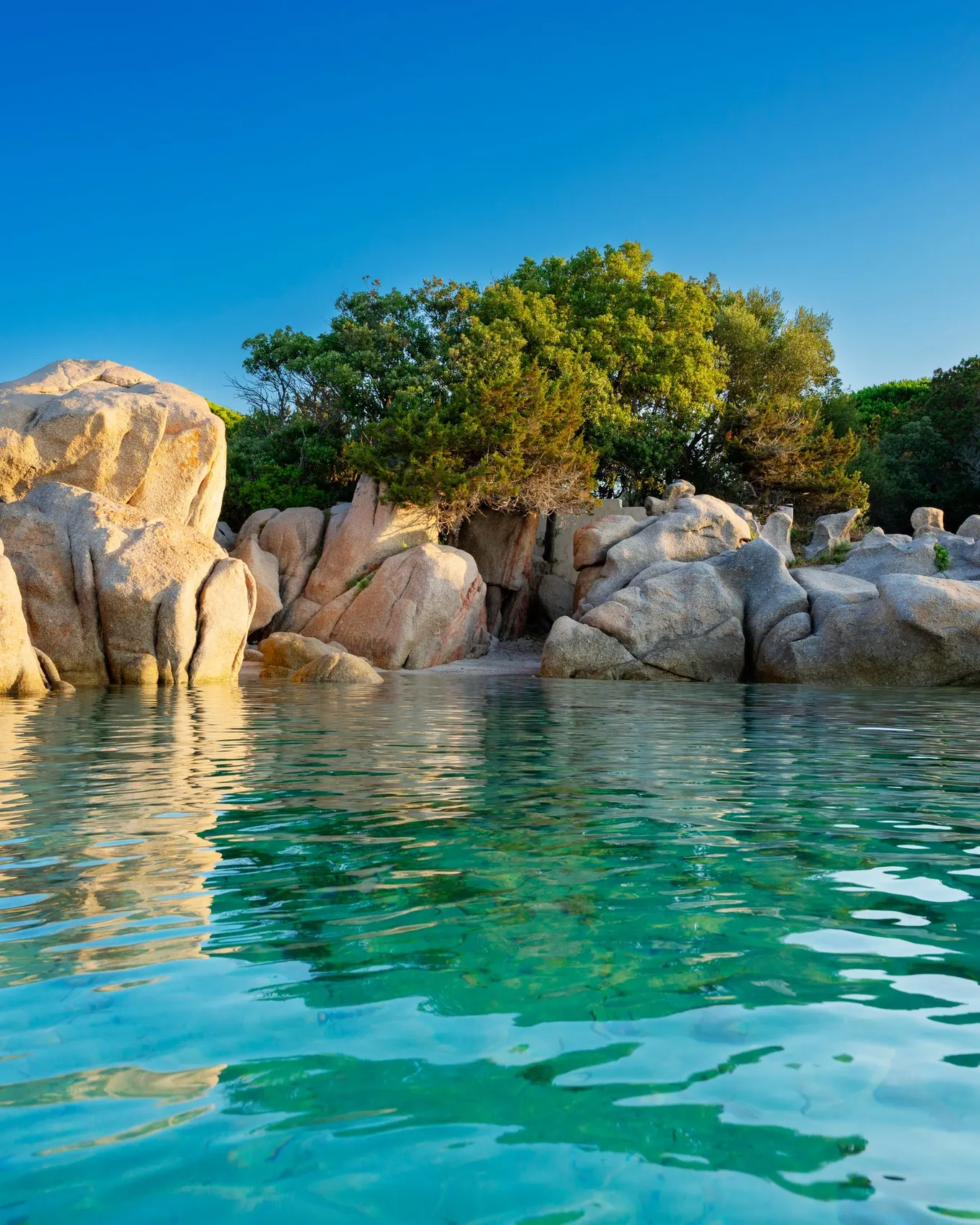
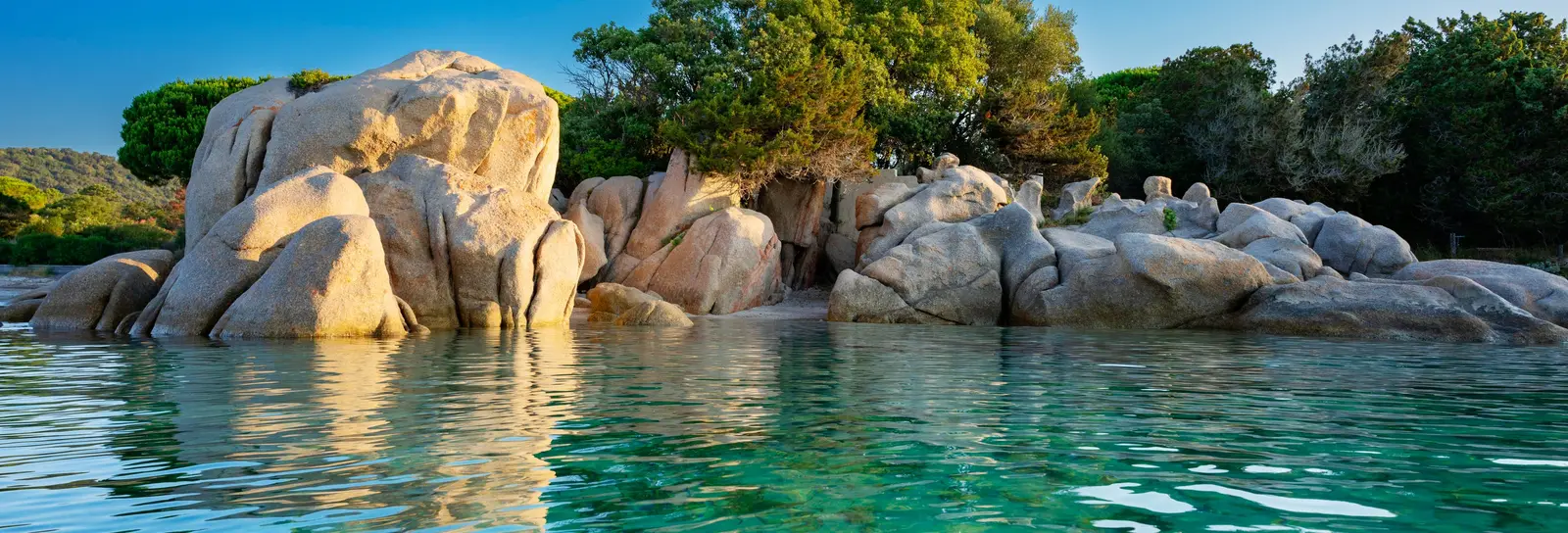
Corsica -Porto-Vecchio -Santa Giulia beach
Saint-Florent, Cap Corse and Bastia: which north to choose?
Saint-Florent and the Nebbio
Saint-Florent combines a marina that is busy in summer, a small citadel and the Patrimonio vineyards. To the west, the Désert des Agriates, largely owned by the Conservatoire du littoral, France’s coastal protection agency, can only be reached on foot, by boat or by dirt track. Buyers look for villas on the hills above the gulf, half an hour from Bastia.
Cap Corse
North of Bastia, Cap Corse runs some forty kilometres out to sea, from the harbour hamlets of Erbalunga and Macinaggio to Centuri and Nonza. You will find village houses there and the ‘American houses’, built by local families who came home rich from the Americas: character homes, often in need of restoration, which our guide to character homes helps you assess.
Bastia and its heights
Prefecture of Haute-Corse and the island’s busiest port, Bastia lives all year round around its Old Port and its citadel; its ferries link it to the mainland and to Italy. On the heights, Ville-di-Pietrabugno and San-Martino-di-Lota offer villas turned towards the sea and, on clear days, the Tuscan islands.
For the whole north, the benchmark is Haute-Corse: €3,300/m² for a house, €3,200/m² for an apartment, against €5,500/m² in Porto-Vecchio. In Bastia, the state of the building matters as much as the view; on Cap Corse, the state of the house and its access.
Which part of Corsica suits your plans?
Only Porto-Vecchio has its own commune median here; elsewhere, the benchmark is the department median, given below the table.
Median prices per square metre (DVF / DGFiP via data.gouv.fr, October 2026 release, 12 months to end of June 2026). Houses: €6,800/m² in Porto-Vecchio, €4,800/m² in Corse-du-Sud, €3,300/m² in Haute-Corse; apartments: €5,500/m², €4,000/m² and €3,200/m². Driving times are indicative.
Area
What you buy
Price benchmark
Life there
Access
Porto-Vecchio, Lecci, Sainte-Lucie
Villas under the pines, sea views
€6,800/m² in Porto-Vecchio
Year-round town, seasonal coast
Figari, half an hour
Bonifacio
Upper-town apartments, estate villas
Corse-du-Sud median
Seasonal, windy
Figari, twenty minutes
Ajaccio and Porticcio
Apartments, south-shore villas
Corse-du-Sud median
Year-round town
Ajaccio airport and port
Valinco
Village houses, villas facing the gulf
Corse-du-Sud median
Villages, calm gulf
Ajaccio or Figari, about an hour
Balagne
Sea-view villas, village houses
Haute-Corse median
Calvi and L’Île-Rousse all year
Calvi airport
Saint-Florent and Cap Corse
Gulf villas, houses to restore
Haute-Corse median
Villages, summer marina
Bastia, half an hour or more
Bastia
Period apartments, villas on the heights
Haute-Corse median
Year-round town
Poretta airport, ferries
Summer, right on the water: the gulf of Porto-Vecchio, Bonifacio, the bay of Calvi.
All year round with children: Ajaccio and Porticcio, Bastia, Calvi and L’Île-Rousse.
Character and village life: the Balagne, the Valinco, Cap Corse.
What is life in Corsica like: getting there, seasons, living year-round?
The island has no motorway and no high-speed train, and its winding roads are measured in hours rather than kilometres: about two hours from Bastia to Porto-Vecchio, two and a half to three hours from Bastia to Ajaccio, a little over two hours from Ajaccio to Porto-Vecchio.
Four airports, Ajaccio, Bastia, Calvi and Figari, linked to the mainland all year round, notably to Paris-Orly, Marseille and Nice; in summer, direct flights are added to many European cities.
Ferries: Bastia and Ajaccio all year round, Bastia also from Italy; L’Île-Rousse, Calvi, Propriano and Porto-Vecchio depending on the season. Allow an overnight crossing from Marseille or Toulon.
The train links Ajaccio and Bastia via Corte, with a branch line to L’Île-Rousse and Calvi.
The seasons
In July and August, roads, beaches and ports fill up, and flights and crossings are expensive and fully booked; part of the coast closes its shutters and restaurants from the autumn. Spring and autumn are the best seasons to visit as a buyer.
Living there all year or coming for the summer
Ajaccio and Bastia have the hospitals, secondary schools and public services, and the university is in Corte; Porto-Vecchio, Calvi and L’Île-Rousse also live through the winter, on a smaller scale. Schooling in another language is checked case by case: see moving to France with children.
Loi Littoral and PADDUC: what can still be built in Corsica?
France’s coastal law, the Loi Littoral of 3 January 1986, applies to every seaside commune: outside built-up areas, the 100-metre strip from the shore cannot be built on, and new development may only extend existing villages and towns. In Corsica, the prefect scrutinises permits closely and environmental groups often challenge them in court.
The PADDUC, Corsica’s planning and sustainable development framework adopted in 2015, spells out this law for the island: it maps the outstanding natural sites, the areas close to the shore and the strategic farmland, and local zoning plans must be consistent with it. Yet many communes still fall under the national planning rules, which limit building to areas already built up: a plot advertised as ‘buildable’ often is not.
What to check before an offer
The building permit for the house and for every addition, pool or extension, with proof that it was posted on site, that no appeal was lodged and that completion was declared.
A planning certificate (certificat d’urbanisme), to know what the plot still allows.
The pre-emption rights of the commune, the Conservatoire du littoral and the Safer, the rural land agency, and the delay to plan for.
By the water, the limit of the public maritime domain and the public footpath easement along the shore.
Titles, joint ownership, maquis: what should you check before buying in Corsica?
Under the Miot decrees of 1801, failing to declare an inheritance carried no penalty in Corsica: many properties remained in the names of long-dead ancestors, held jointly by numerous heirs. A public body, the GIRTEC, helps rebuild these titles; the island’s notaires know such files well, but they take time.
The chain of title: the notaire traces the deeds back at least thirty years; the title deed you receive is only as good as that chain.
Joint ownership: in principle every co-owner must agree to the sale; otherwise, longer procedures run through a notaire or a judge.
Brush clearance: under the pines and in the maquis, usually fifty metres around the house, sometimes more; the buyer is informed before the sale.
Drainage: outside the villages, it is often a private septic system; an inspection by the public service (SPANC) less than three years old is handed to the buyer, and a non-compliant system must be brought up to standard within a year.
Water and access: mains supply, spring or declared borehole; a written right of way when the track crosses a neighbour’s land.
Risks: wildfire, flooding, coastal submersion, and radon, as the granite bedrock places much of the island in a significant radon potential zone.
The residence tax (taxe d’habitation) still applies to second homes, and communes classed as high-pressure housing areas, Ajaccio and Bastia among them, may increase it; the list grew in 2023 (see local property taxes). Purchase costs come to 7 to 8% of the price for an older property: our notaire fees calculator works them out.
When to buy in Corsica, and how does Home Select search there?
Owners often decide to sell at the end of the summer; viewings are prepared in autumn and winter, when houses show themselves as they really are, and the finest houses are decided in spring. July and August are for testing an address in high season.
The brief: use, area, budget, timing, and what is not negotiable.
The watch: listings across the island, every day, and the properties that sell without a listing.
Pre-viewings: each shortlisted property is visited and filmed for you, wind and neighbours included.
Checks: permits, title, drainage and brush clearance, with the notaire, before the offer.
In Corsica, the finest houses often sell privately, between families and neighbours: the off-market search matters a great deal. Home Select runs it remotely following its method, and you travel only for the decisive viewings, in a single trip (see buying remotely and our Corsica page).
Frequently asked questions
Where should I buy a seaside house in Corsica?
The gulf of Porto-Vecchio, from Palombaggia to Cala Rossa, is the heart of the prestige market; Bonifacio, the bay of Calvi, the south shore of the gulf of Ajaccio and Saint-Florent are the other leading addresses.
How much does a house cost in Corsica?
The median house price is €4,800/m² in Corse-du-Sud and €3,300/m² in Haute-Corse; in Porto-Vecchio it reaches €6,800/m², and a tenth of houses there sell above €15,300/m² (DVF, 12 months to end of June 2026).
Can a foreigner buy a house in Corsica?
Yes: no rule reserves property purchases for residents of the island. A buyer from mainland France or from abroad buys in Corsica as anywhere else in France, before a notaire.
Can you build a new villa by the sea in Corsica?
Very rarely: the Loi Littoral, spelled out for the island by the PADDUC, bans building within 100 metres of the shore outside built-up areas and only allows development in continuity with existing villages and towns.
What is the PADDUC?
Corsica’s planning and sustainable development framework, adopted in 2015 by the Corsican Assembly. It spells out the coastal law for the island and protects outstanding natural sites and farmland; local zoning plans must be consistent with it.
Why are so many Corsican properties in joint ownership?
It is the legacy of the Miot decrees of 1801, under which failing to declare an inheritance carried no penalty: many properties remained in the names of ancestors, shared among numerous heirs whose agreement must be gathered before a sale.
When is the best time to view property in Corsica?
From autumn to spring, when houses show their real condition and sellers have time; the finest houses are often decided before the summer.
How much does a buyer’s agent cost in Corsica?
Home Select charges 2.5% incl. VAT of the net purchase price on the Exclusive offer (minimum €10,000 incl. VAT), or 1.5% incl. VAT on the Confidential offer, reserved for projects of €2m and above, on success only; on top of the fees, Home Select receives 10% of the negotiated reduction. See our fees.
A house in Corsica, for the summers or to live there? Describe your project: a Home Select buyer’s agent will scope it with you, then search the whole island, off-market included.
Your request is already sent, simply pick what suits you.
A buyer’s agent calls you back within one working day.
🇫🇷+33
An error occurred. Please try again.
Then answer 3 quick questions to be matched with the right hunter.
Home Select processes your data (name, email, phone, project) to handle your request and contact you. It is recorded in our follow-up tool and read by the hunter in charge of your project. Our technical providers access it for hosting, email and checking that your email and number are real, some of them from the United States under the safeguards set by the GDPR. We keep it for three years after our last exchange, or five years after the end of our assignment if you entrust it to us, as French anti-money-laundering law requires. To access, correct or erase it, or to object to its use: contact@home-select.fr. Details in our privacy policy.
Your hunter calls you back within one working day.
Resume your request?
You started a request recently. Pick up where you left off, or start over.
Your answers are kept for 24 hours.
What is your project?
Takes 1 minute, no commitment.
Where are you looking?
Select one or more cities or areas
Your budget?
€
You pay only when Home Select finds it.
Anything to add?
Optional. Add any useful details: specifics about your search, constraints or your availability.
This helps your hunter prepare for your call.
An expert will contact you shortly
Your brief
Confidential search: your file goes to a senior hunter.
60 rue François 1er, 75008 Paris · FCI member
FeesOne month’s rent excluding charges, plus VAT, with a minimum of €2,000 including VAT. Payable only when the lease is signed. No application fee.
Step 1 of 2 · Your search
What are you looking for?
Furnished, unfurnished or both?
In which city?
One or more cities or areas.
€ / month
Charges included, as in the listings.
You would like to move in
Two minutes, no documents needed at this stage.
FeesOne month’s rent excluding charges, plus VAT, with a minimum of €2,000 including VAT. Payable only when the lease is signed. No application fee.
Step 2 of 2 · Your situation
Your situation
These answers let Home Select tell you quickly, and frankly, whether your search can succeed on the market in your city.
You are applying
€ / month
Before tax, regular bonuses included, for everyone applying.
Main applicant’s employment
Your company is based in France
Number of annual accounts filed
To strengthen your file
Optional for your profile. A guarantee reassures landlords.
Guarantor’s situation
€ / month
Who it is for, why you are moving, what matters to you. Do not include sensitive information (health, origin, religion, family situation).
Your contact details
🇫🇷+33
Reply within 24 business hours.
Home Select processes your data (name, email, phone, project, employment, income, guarantee) to review your rental request and contact you. Your answers are compared with the criteria landlords apply, then read by Home Select’s rental hunter. A request that cannot succeed receives a written reply within 24 business hours, and you can ask for it to be reviewed again at contact@home-select.fr. Our technical providers access it for hosting, email and checking that your email and number are real, some of them from the United States under the safeguards set by the GDPR. A request that does not lead to an assignment is erased after three months; otherwise, we keep your data for three years after our last exchange, or five years after the end of our assignment if you entrust it to us, as French anti-money-laundering law requires. To access, correct or erase it, or to object to its use: contact@home-select.fr. Details in our privacy policy.
FeesOne month’s rent excluding charges, plus VAT, with a minimum of €2,000 including VAT. Payable only when the lease is signed. No application fee.
Your file
Your file matches what landlords expect
Book your meeting with Stéphane Martins, rental hunter. He confirms it after reading your file, within 24 business hours.
Choose your time slot
Times shown in Paris time.
Confirmation arrives by email and text message.
FeesOne month’s rent excluding charges, plus VAT, with a minimum of €2,000 including VAT. Payable only when the lease is signed. No application fee.
Your request
Your request is in good hands
Stéphane Martins, rental hunter, is reviewing your file and will reply within 24 business hours.
You will receive a confirmation email.
You arrived through one of Home Select’s ads or campaigns.Ad measurement.Do you agree to Home Select measuring how well it works? Home Select will know which campaign brought you here and, if you get in touch, the ad platform will only learn that its ad worked, without receiving your contact details.Do you agree to Home Select measuring how well its ads work? If you arrive through one of them, Home Select will know which one and, if you get in touch, the ad platform will only learn that its ad worked, without receiving your contact details.Learn moreYour current choice: .