Buying a château, a manor house or a country estate in France
Buying a château or a manor house means buying heritage, land and upkeep as much as a home. This guide from Home Select, a buyer’s agent working only for the purchaser since 2011, tells you where to look, how to read the price, what protection as a historic monument changes and how to avoid the most expensive pitfalls.
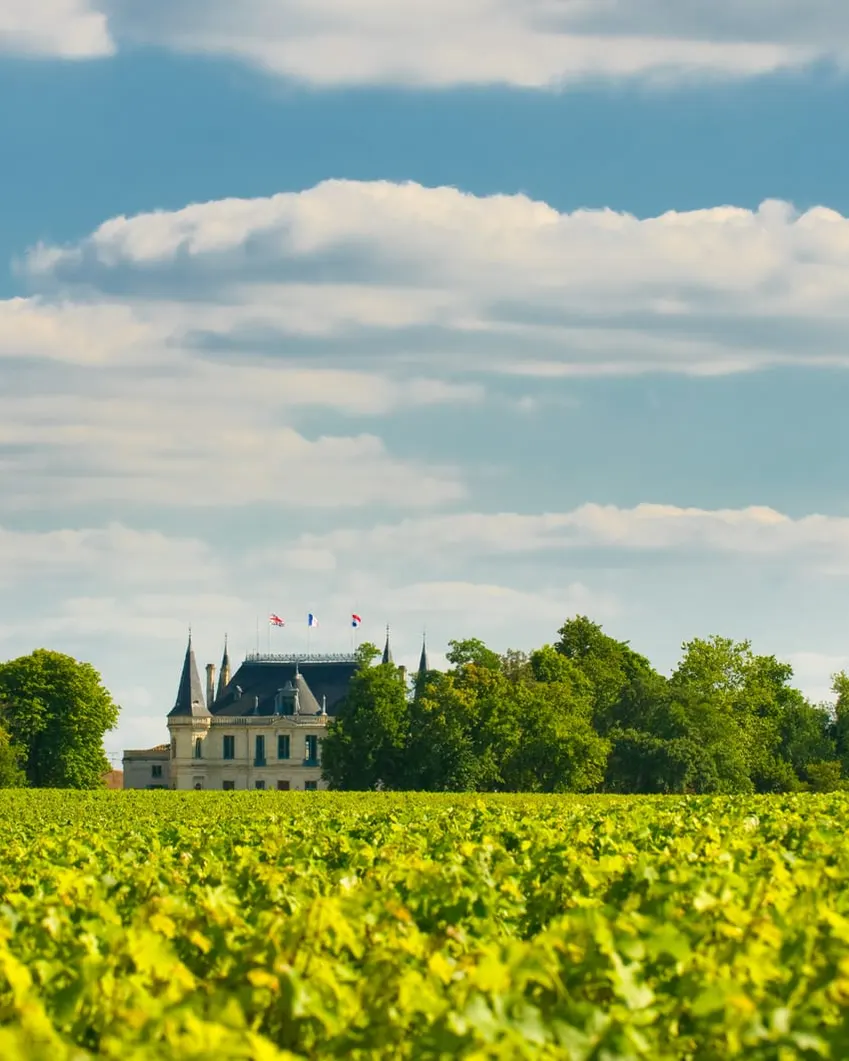
Atlantic Coast -Bordeaux -A wine château among its vines
By Jean Mascla, founder of Home SelectUpdated · 12 min read
Château, manor house, country house: what are we talking about?
In listings, the word château covers very different realities: the medieval fortress and its towers, the Renaissance château of the Loire Valley, the classical château of the 17th and 18th centuries, the bourgeois 19th-century château built by an industrialist, and sometimes a large family house crowned with a turret. French law gives no definition: usage, the history of the place and often the vanity of the listing decide the word.
The manoir, or manor house, was originally the house of the lord of a modest fief: smaller, more rural and less fortified than a château, it still dominates the landscape of Normandy and Brittany. The demeure, or gentilhommière, is the large house of character that is neither quite a château nor quite a house. Each region then has its own forms, described in detail in the guide to character homes.
The main families of French country houses and what the buyer really pays for.
Type
Where
What makes its value
Renaissance or classical château
Loire Valley, Burgundy, Périgord
The architecture, the park, the outbuildings, the protection
Wine château and chartreuse
Bordeaux region, Médoc, Entre-deux-Mers
The house, the park, the vines around it
Half-timbered manor
Pays d’Auge, Normandy
The pastures, the orchards, the condition of the timber framing
Granite manor and malouinière
Brittany, Emerald Coast
The walled park, the view, the granite and slate
Bastide
Aix countryside, hills of Marseille
The park, the plane trees, the view of Sainte-Victoire
Where to buy a château or a manor house in France?
Demand gathers where history left the most country houses and where daily life stays simple: less than three hours from Paris, near a TGV station or an airport, in a region worth living in all year. Six areas come up in almost every search.
These are the lands of the château in the classical sense: Renaissance and grand-siècle châteaux in Touraine and Anjou, châteaux and gentilhommières in the Périgord, wine châteaux in Burgundy. Supply is wider, prices more varied, and the distance to a station often decides value. Home Select runs the search there remotely, with its network of partners.
The Sologne and its hunting estates
Between the Loire and the Cher, the Sologne sells estates more than houses: a château or a hunting lodge in the middle of woods, ponds and heath, less than two hours from Paris. Value lies in the hectares, the quality of the woods, the ponds and the rights attached to them; the house itself sometimes comes second. These estates pass between families and rarely list.
No public statistic gives the price of a château. The DVF register of sales, published by the French tax authority, files country houses among houses, without telling a longère from a malouinière. The house median of a town is therefore a distant benchmark, useful to place the local market, never to value a country house.
House sales over the 12 months to end of June 2026, DVF / DGFiP via data.gouv.fr, October 2026 release, 12 months to end of June 2026. The register does not single out country houses: these are market benchmarks, not château prices.
The price of a country house is formed elsewhere: the area of the land and its nature, pastures, woods, vines or park; the outbuildings, staff quarters, stables, caretaker’s house; the condition of the roofs and structures; any protection as a historic monument; the distance to a station, an airport and schools. Two châteaux of comparable size may trade in a ratio of one to three. Home Select documents each property with the comparable actual sales of the region before any offer.
What does protection as a historic monument change?
A building may be listed, inscrit, or scheduled, classé, as a historic monument, scheduling being the highest level of protection. On a scheduled monument, restoration, repair or alteration works require the authorisation of the state services and are carried out under their supervision; on a listed monument, works go through planning consent and the agreement of the administration. Protection may cover all or part of the building: façades and roofs, certain interiors, sometimes the park.
Protection radiates around the monument: in the surroundings of a historic monument, within a defined perimeter or, failing that, within a radius of 500 metres and in its field of view, works that alter the exterior of a building require the agreement of the Architecte des Bâtiments de France. An unprotected country house can therefore be governed by the protection of the church next door.
What should be checked before buying a country house?
On an old country house, five items concentrate most of the risk. They are read in the survey file, in the invoices of past works and on site, with a heritage architect or craftsmen skilled in old buildings, before the offer and not after the preliminary contract.
The roofs and the timber frames: slate, tile or thatch, age of the covering, condition of the rafters, gutters and leadwork.
Damp in the walls and cellars, and in certain areas defined by prefectoral order, termites and dry rot.
The networks: electricity, heating, water, and private sanitation, inspected by the public service for non-collective sanitation.
Energy performance: a house rated E, F or G is sold with an energy audit, which prices the recommended renovation works.
The permits: converted outbuildings, pools, extensions, each construction must have been authorised, otherwise it becomes your problem.
Home Select checks every document of the file before you commit and tells you what the listing does not say; have the works priced by an architect or craftsmen of your choice, the estimate being the basis of a serious negotiation.
Atlantic Coast -Bordeaux -A wine château among its vines
Land, rural leases, woodland: what should be read?
A country house is often bought with land, and land has its own rules. The sale of farmland is notified to the SAFER, the rural land development agency, which holds a right of pre-emption; the notaire organises this notification, and the timetable of the sale takes it into account.
Pastures or vines leased to a farmer fall under the tenant farming regime: the rural lease protects the farmer, who himself enjoys a priority right of pre-emption when the land he farms is sold. A current lease is not terminated at signing; it is read before the offer, as part of the price.
Woods of less than four hectares give, under conditions, a right of preference to neighbouring owners; ponds and watercourses follow the rules of water law. None of this prevents buying; all of it is checked before signing.
How much does it cost to maintain a château?
The cost of a country house does not stop at the deed. Roofs, joinery, heating large volumes, upkeep of the park and the drives, insurance, property tax, sometimes staff: these lines come back every year and weigh more than in a house of the same price. They are priced with the seller’s invoices, a heritage architect and local craftsmen, before the offer.
The right method is to draw up a multi-year plan: what is urgent, what can wait five years, what belongs to routine upkeep. A country house whose roofs and structures have been redone costs more to buy and less to own; a house to restore is cheaper to buy and commits you for years. Both can be good purchases, provided you know it before signing.
Buying a château from abroad: how does it work?
No restriction limits the purchase of a château or a manor house by a foreign or non-resident buyer. Most of the search is run remotely: brief by video call, qualification on documents, pre-viewing by commented video, then one trip for the decisive viewings. The notaire can receive a power of attorney, and signing remotely is possible.
A country house owned from afar also needs organising: a caretaker or a property-watching company, trusted craftsmen for routine upkeep, insurance suited to periods when the house is empty, and someone on site to open, air and watch over it in winter. These lines are planned before buying; they are part of the cost of the house and of the peace of mind of those who own it.
The points of vigilance lie in language, financing and the tax rules of the country of residence: a notaire who works in English, a bank used to non-residents, a tax adviser who knows the treaty between the two countries. The guide to buying remotely details each step, and the Home Select library devotes a shelf to countries of residence.
What are the most common pitfalls?
Bad country-house deals look alike: they rarely come from the purchase price, almost always from what was not read before signing.
The cheap château: the listing attracts, the restoration of the roofs and structures multiplies the budget and the years of works.
The word château put on a large house: the turret does not make the château, the price must follow the actual building.
Leased land: a current rural lease limits the use of the pastures for years.
Protection ignored: a neighbouring monument or a partial protection governs the works you had planned.
Access and surroundings: a private track without a written right of way, livestock farming, a road or a planned facility nearby.
Undivided inheritance: a house sold by several heirs needs everyone’s agreement, and time.
How Home Select searches for a château or a manor house
Home Select works for the buyer alone, with no stock of properties to place. The search starts with a precise brief: regions, distance to Paris or an airport, land, outbuildings, purchase and works budgets. It covers the whole market: listings, a watch on 1,700 sites, and above all the off-market, through notaires, families, wealth managers and a network of 15,000 professional partners.
The brief: regions, land, outbuildings, distance to a station or an airport, purchase budget and works budget, timetable.
The sourcing: listings screened, notaires, families, wealth managers and the partner network for off-market properties.
The qualification: title, surveys, protections, land and leases read on documents, then a pre-viewing by commented video.
The decisive viewings, grouped into a single trip, with the architect or craftsmen you choose.
The offer and the negotiation, backed by the comparable sales of the region, then the preliminary contract and the deed.
Each lead is qualified on documents, then pre-viewed by commented video, before any trip; Home Select checks the file, defends your offer with the comparable sales of the region and accompanies you to the deed. The fees are due on success only: 2.5% of the net purchase price with the Exclusive offer, minimum €10,000 incl. VAT, or the Confidential offer, at 1.5%, for projects of €2m and above, presented only on off-market properties; 10% of the negotiated reduction is added.
Frequently asked questions
What is the difference between a château and a manor house?
The château is the house of a lord, often fortified at first, then a residence of prestige; the manor house is the house of a more modest fief, smaller and more rural, very present in Normandy and Brittany. In listings the two words mix: the building, the land and the condition make the value.
Can you buy a cheap château in France?
Some châteaux are listed at surprising prices, almost always because their roofs, structures or networks need redoing. The purchase price then becomes the smallest line of the budget. Have the restoration priced by a heritage architect before the offer: it is the only way to know whether the deal is one.
Do you need a buyer’s agent to buy a château?
It is not compulsory, but the country-house market is small, discreet and technical: many properties sell without a listing, and each file mixes old buildings, land, leases and protections. Home Select searches the whole market, off-market included, checks the file and negotiates for the buyer alone.
Can a foreigner buy a château in France?
Yes, without restriction. A foreign or non-resident buyer purchases on the same terms as a resident, with a notaire, possibly by power of attorney. Financing and the tax rules of the country of residence are prepared upstream; the search itself is run remotely until the decisive viewings.
What does scheduling as a historic monument change?
Works on the protected parts require the authorisation and supervision of the state services, and the monument’s surroundings are governed by the Architecte des Bâtiments de France. Protection prevents neither living in the house nor modernising it; it is read before the offer, with its constraints and the possible grants.
How long does it take to buy a château?
The search is counted in months rather than weeks, because supply is rare and often discreet. Once the property is found, the offer, the preliminary contract and the deed follow the timetable of a standard sale, longer when farmland requires notification to the SAFER.
What are Home Select’s fees for a château?
The same as for any search: 2.5% of the net purchase price with the Exclusive offer, minimum €10,000 incl. VAT, or 1.5% with the Confidential offer for projects of €2m and above, plus 10% of the negotiated reduction. Nothing is due until you have bought.
Does Home Select also search for wine estates and equestrian properties?
Yes, as properties: the house, its land, its vines or its stables. The business itself, taking over a vineyard or a breeding operation, belongs to specialists whom Home Select introduces; the dossiers of the library detail the purchase of a wine estate and of an equestrian property.
Describe the country house you are looking for, its region, its land and your timetable: Home Select tells you what can realistically be found there, and how.
Your request is already sent, simply pick what suits you.
A buyer’s agent calls you back within one working day.
🇫🇷+33
An error occurred. Please try again.
Then answer 3 quick questions to be matched with the right hunter.
Home Select processes your data (name, email, phone, project) to handle your request and contact you. It is recorded in our follow-up tool and read by the hunter in charge of your project. Our technical providers access it for hosting, email and checking that your email and number are real, some of them from the United States under the safeguards set by the GDPR. We keep it for three years after our last exchange, or five years after the end of our assignment if you entrust it to us, as French anti-money-laundering law requires. To access, correct or erase it, or to object to its use: contact@home-select.fr. Details in our privacy policy.
Your hunter calls you back within one working day.
Resume your request?
You started a request recently. Pick up where you left off, or start over.
Your answers are kept for 24 hours.
What is your project?
Takes 1 minute, no commitment.
Where are you looking?
Select one or more cities or areas
Your budget?
€
You pay only when Home Select finds it.
Anything to add?
Optional. Add any useful details: specifics about your search, constraints or your availability.
This helps your hunter prepare for your call.
An expert will contact you shortly
Your brief
Confidential search: your file goes to a senior hunter.
60 rue François 1er, 75008 Paris · FCI member
FeesOne month’s rent excluding charges, plus VAT, with a minimum of €2,000 including VAT. Payable only when the lease is signed. No application fee.
Step 1 of 2 · Your search
What are you looking for?
Furnished, unfurnished or both?
In which city?
One or more cities or areas.
€ / month
Charges included, as in the listings.
You would like to move in
Two minutes, no documents needed at this stage.
FeesOne month’s rent excluding charges, plus VAT, with a minimum of €2,000 including VAT. Payable only when the lease is signed. No application fee.
Step 2 of 2 · Your situation
Your situation
These answers let Home Select tell you quickly, and frankly, whether your search can succeed on the market in your city.
You are applying
€ / month
Before tax, regular bonuses included, for everyone applying.
Main applicant’s employment
Your company is based in France
Number of annual accounts filed
To strengthen your file
Optional for your profile. A guarantee reassures landlords.
Guarantor’s situation
€ / month
Who it is for, why you are moving, what matters to you. Do not include sensitive information (health, origin, religion, family situation).
Your contact details
🇫🇷+33
Reply within 24 business hours.
Home Select processes your data (name, email, phone, project, employment, income, guarantee) to review your rental request and contact you. Your answers are compared with the criteria landlords apply, then read by Home Select’s rental hunter. A request that cannot succeed receives a written reply within 24 business hours, and you can ask for it to be reviewed again at contact@home-select.fr. Our technical providers access it for hosting, email and checking that your email and number are real, some of them from the United States under the safeguards set by the GDPR. A request that does not lead to an assignment is erased after three months; otherwise, we keep your data for three years after our last exchange, or five years after the end of our assignment if you entrust it to us, as French anti-money-laundering law requires. To access, correct or erase it, or to object to its use: contact@home-select.fr. Details in our privacy policy.
FeesOne month’s rent excluding charges, plus VAT, with a minimum of €2,000 including VAT. Payable only when the lease is signed. No application fee.
Your file
Your file matches what landlords expect
Book your meeting with Stéphane Martins, rental hunter. He confirms it after reading your file, within 24 business hours.
Choose your time slot
Times shown in Paris time.
Confirmation arrives by email and text message.
FeesOne month’s rent excluding charges, plus VAT, with a minimum of €2,000 including VAT. Payable only when the lease is signed. No application fee.
Your request
Your request is in good hands
Stéphane Martins, rental hunter, is reviewing your file and will reply within 24 business hours.
You will receive a confirmation email.
You arrived through one of Home Select’s ads or campaigns.Ad measurement.Do you agree to Home Select measuring how well it works? Home Select will know which campaign brought you here and, if you get in touch, the ad platform will only learn that its ad worked, without receiving your contact details.Do you agree to Home Select measuring how well its ads work? If you arrive through one of them, Home Select will know which one and, if you get in touch, the ad platform will only learn that its ad worked, without receiving your contact details.Learn moreYour current choice: .