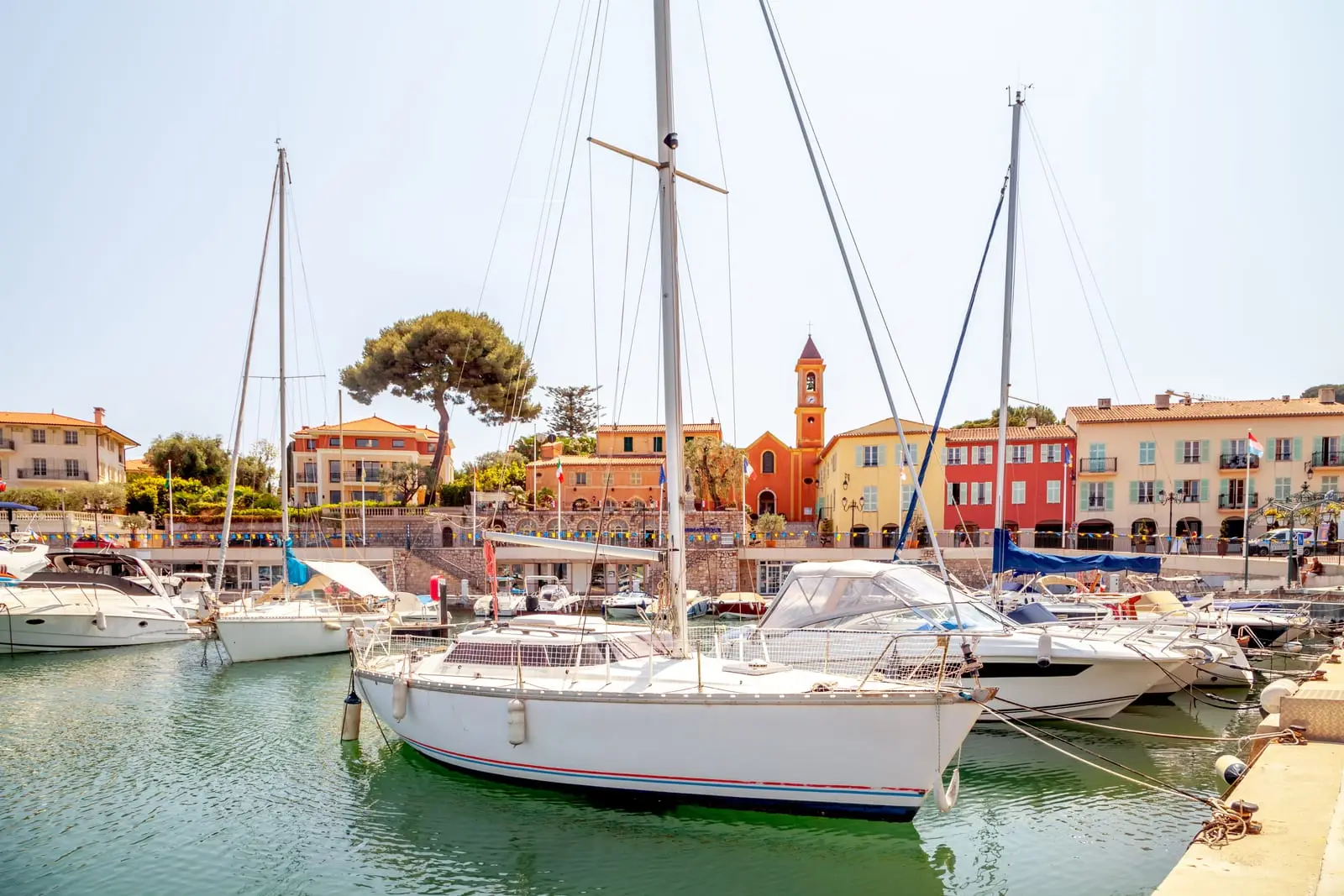
Buying a prestige property in France: the buyer’s guide
Buying luxury real estate in France follows its own rules: a narrow market, part of the sales concluded without a listing, heavier checks and a negotiation with no obvious comparables.
By Jean Mascla, founder of Home SelectUpdated · 15 min read
What is a prestige property?
A prestige property is a rare property, one that could not be reproduced elsewhere or at a later date: its location, view, architecture, land and privacy count for more than its floor area. No rule sets a price threshold for a “luxury property”, and the thresholds that professionals use vary from one network to the next.
Location: front-line position facing the sea, the heart of a protected village, the foot of the ski slopes, the most sought-after street in a major city.
View: open and protected, by the lie of the land or by an unbuildable zone, not merely because no neighbour is there at the moment.
Architecture: a signature, a period, fine materials, volumes, and a condition documented by invoices.
Land: size, aspect, relief, trees, and what it still allows to be built.
Privacy: no overlooking, private access, the ability to live without being seen.
The actual sales in the DVF register give an objective benchmark: the top decile threshold (p90), the price per m² above which 10% of a market’s sales are concluded. This threshold marks the upper end of a market without being enough to define prestige: a small, very well-placed property can exceed it, while a large residence or a property to renovate can stay below.
Where are the main luxury real estate markets in France?
Outside Île-de-France, luxury homes for sale in France are concentrated along a few coastlines, in the Provençal countryside, in the major resorts of the northern French Alps and in the upmarket neighbourhoods of Lyon and Bordeaux.
The Côte d’Azur (French Riviera): the Saint-Tropez peninsula, Cap d’Antibes, La Californie in Cannes, Cap Ferrat.
The northern French Alps: Courchevel, Megève and Chamonix, where the apartment at the foot of the ski slopes and the village chalet form two distinct markets.
The Atlantic coastline and the Basque Country: the Bassin d’Arcachon and Cap Ferret, the Île de Ré, the villas of Biarritz, Saint-Jean-de-Luz.
Provence: the bastides (country houses) of the Aix area, the calanques of Cassis.
Normandy and Brittany: the Belle Époque villas of Deauville and Dinard.
Lyon and Bordeaux: private mansions (hôtels particuliers) and large apartments, where the address sets the price.
Price per m², one property type per market. Source: DVF / DGFiP via data.gouv.fr, April 2026 release, 2025 sales.
Market
Property type
Median per m²
Top decile threshold (p90)
Saint-Tropez
Houses
€18,600/m²
€29,800/m²
Cannes
Apartments
€5,700/m²
€11,300/m²
Antibes
Houses
€6,200/m²
€12,300/m²
Courchevel
Apartments
€11,800/m²
€20,600/m²
Megève
Apartments
€9,600/m²
€15,600/m²
Cap Ferret
Houses
€8,100/m²
€18,800/m²
Île de Ré
Houses
€6,500/m²
€9,900/m²
Biarritz
Houses
€7,900/m²
€14,200/m²
Aix-en-Provence
Houses
€5,300/m²
€8,600/m²
Cassis
Apartments
€7,500/m²
€11,500/m²
Deauville
Houses
€6,500/m²
€13,300/m²
Lyon
Apartments
€4,400/m²
€6,000/m²
Bordeaux
Houses
€4,800/m²
€7,000/m²
For reference: €9,900/m² median in Paris (DVF, April 2026 vintage). The gap between the median and the top decile threshold measures the weight of the address: at Cap Ferret, the median for houses is €8,100/m², but 10% of sales exceed €18,800/m². The number of sales measures the depth of the market, and so the references available to judge a price: 195 apartment and house sales in Saint-Tropez in 2025, against 2,555 in Cannes.
The prestige price index tracks these markets: median, price range, five-year trend. Every market, even one missing from the table, has its own page, such as the page on the property finder in Dinard. In Saint-Jean-Cap-Ferrat, the market is too narrow for a median to mean anything: the page on the property finder in Saint-Jean-Cap-Ferrat describes this market separately.
Why are some prestige properties sold without a listing?
At the top end of the market, some sales are concluded with no portal and no public photographs, between notaires (the public officers who draw up the deed), agents and networks, because sellers value discretion. The rarer the property, the more likely it is to circulate in this way: this is the market known as off-market, or unlisted.
Security: an interior photographed online also gives information to people who should not have it.
Price: a rare property left on show for too long goes stale and attracts low offers.
Family: an inheritance, joint ownership (indivision) or a separation cannot be settled in a shop window.
Preview: an agent who receives a mandate can first reserve it for their qualified buyers.
The buyer must therefore be known to the right contacts before the property exists for the public, and be ready: a precise brief, financing in place, the ability to decide quickly. On a market as narrow as the Cap Ferrat peninsula, a purchase often comes through personal connections, as the page on buying a villa in Saint-Jean-Cap-Ferrat explains.
Home Select covers the listed market as well as the hidden market, through three channels: a network of 15,000 professional partners, agents, notaires and managing agents, which surfaces at least 100 off-market properties every day; automated monitoring of 1,700 listing sites; and the direct approach to owners where the circumstances allow. The guide to buying an off-market property details these mechanisms.
What budget should you plan for beyond the purchase price?
A prestige property is budgeted in three stages: the price and acquisition costs, the works of the first year, then the annual holding cost, which is heavier than for an ordinary property.
Acquisition costs, commonly called “notary fees”: around 7 to 8% of the price on existing homes, 2 to 3% on new-build, which the notary fees calculator works out.
Furniture: sold with the property, it can fall outside the base on which transfer duties are calculated if it has a separate price and appears in the deed, valued item by item; your notaire makes sure the valuation is realistic.
Works: bringing the property up to standard, energy renovation, drainage, to be costed before the offer.
Upkeep and services: garden, swimming pool, caretaking, opening up the house.
Insurance: a comprehensive home policy based on the rebuilding value and on valuables.
Local taxes: property tax (taxe foncière), and the residence tax (taxe d’habitation) on second homes, which communes in high-demand areas (zones tendues) may increase by 5 to 60%.
A prestige purchase often brings you within the scope of the real estate wealth tax (impôt sur la fortune immobilière, IFI), payable above €1.3m of net taxable real estate assets: something to plan for with your wealth adviser. If you intend to let the property in season, check the commune’s rules and, in a co-ownership building, the co-ownership regulations: the law of 19 November 2024 tightened the framework for furnished tourist lets (meublés de tourisme). Finally, set your ceiling price with these recurring costs included.
What checks should you make before buying an exceptional property?
An exceptional property is checked against the documents, before the offer: planning authorisations, easements and boundaries, the condition of the building and its equipment, natural risks, in addition to the mandatory diagnostic reports.
Planning: checking that what already exists is authorised
Extension, swimming pool, pool house, converted outbuilding: every structure must have been authorised where the rules required it, by building permit or prior declaration (déclaration préalable), then declared complete and compliant. Ask for the full planning file before the offer, not after the preliminary sale agreement (compromis de vente): an irregular structure is often discovered late, and regularising it is not always possible. In the surroundings of a listed historic monument (by default, within 500 metres and in co-visibility with it) as well as in a site patrimonial remarquable (a protected heritage area), works that alter the external appearance require the approval of the architecte des Bâtiments de France (the State heritage architect). The Loi Littoral (coastal law) makes the 100-metre coastal strip outside urbanised areas unbuildable, and the Loi Montagne (mountain law) governs urbanisation in mountain areas: see the guides to buying by the sea and buying in the mountains.
Easements, access and boundaries
Easements under private law (right of way, view, pipework) are found first in the successive title deeds; public-utility easements, in an annex to the local urban plan. The cadastral plan is not proof of boundaries: only a boundary survey by a géomètre-expert (bornage) fixes them. The SAFER, the rural land agency, can pre-empt certain rural properties and agricultural land; the commune often holds an urban pre-emption right, with two months to respond to the declaration of intent to sell (déclaration d’intention d’aliéner). Finally, check access: private road, shared upkeep, snow clearing.
The building and its equipment
Have the structure, roof, roof timbers and utility networks examined by a building professional before you commit. An in-ground swimming pool must have been declared to the tax authority and fitted with a standardised safety device (law of 3 January 2003). Where there is no mains sewer, the inspection of the non-mains drainage (assainissement non collectif) must be less than three years old, and works are to be carried out within the year following the sale if the installation does not comply. A house rated F or G on its energy performance certificate (DPE), or E since 2025, is sold with an energy audit that puts a price on its renovation.
Natural risks
Since 1 January 2023, the risk report (état des risques) must be handed to you from the first viewing. In areas exposed to wildfire risk, the owner of land near woodland may be subject to mandatory brush clearance (débroussaillement), a legal obligation that generally covers fifty metres around buildings: check whether the land is subject to it and whether it is maintained. On the coast, the communes listed by decree in respect of coastline retreat (recul du trait de côte) map the exposure, which is carried into the risk report; in the mountains, risk prevention plans (plans de prévention des risques), where they exist, mark out the zones exposed to avalanches and ground movements.
La villa Belle Époque, Côte d’Azur
How do you negotiate the price of a prestige property?
A prestige property is negotiated on evidence rather than on a percentage: since comparables are rare, every argument must be documented, from the price to the timetable.
Establish the value: pull the DVF sales for the street and the area, then place the asking price between the median and the top decile threshold.
Read the property’s history: time on the market, price reductions, withdrawals and relistings.
Put a figure on what the price does not say: works, compliance work, missing authorisations.
Draft a complete written offer: price, conditions precedent, timetable, furniture, period of validity. Pay nothing: the law makes void any purchase offer accompanied by a payment.
Negotiate the terms as much as the price: dates of signing and of taking possession, works, deposit.
A cash purchase strengthens an offer, because it does away with the mortgage condition precedent: the preliminary agreement states this, and you acknowledge in a written statement that you cannot rely on that protection if you end up borrowing after all.
Across all budgets, Home Select negotiates 6% off the asking price on average. At the top end of the market, the margin depends on the property’s rarity and how long it has been on sale: an off-market property presented to a single buyer is not negotiated like a villa that has been advertised for two seasons.
How do you buy a prestige property discreetly?
A prestige purchase stays discreet when the search is neither published nor circulated and four precautions go with it:
Confidentiality agreement: the seller, or their agent, may ask you not to disclose the address, the photographs or the price before opening the file to you.
Proof of financial capacity: a bank certificate opens doors more reliably than a promise.
Single point of contact: your project does not circulate from firm to firm.
Protected identity: at Home Select, your name appears only at the moment of the offer, if you wish, and then at the notaire’s office.
Discretion has legal limits: the notaire, like property professionals, checks the buyer’s identity and the source of funds as part of the fight against money laundering, and the deed is registered with the land registry (service de la publicité foncière). The price, date and address of the sale then join the public DVF data, without the names of the parties.
How do you finance and structure a prestige acquisition?
A prestige acquisition often involves a substantial down payment, a private bank, sometimes a cash purchase or a purchase through a company; its structure is decided before the preliminary agreement, with your notaire and your wealth adviser.
In 2026, mortgage rates stand between 3.2 and 3.5% over 20 years, and the rules of the Haut Conseil de stabilité financière (HCSF), France’s financial stability council, cap the debt-to-income ratio at 35%, insurance included, and the term at 25 years, with banks retaining only a limited margin for exceptions. Private banks offer arrangements designed for large estates, such as the interest-only loan (prêt in fine) backed by a pledged investment.
A property holding company (société civile, SCI) can make it easier to hold a property jointly and to pass it on, but it has its own taxation and management obligations. If one is chosen, the preliminary agreement must name the right buyer or provide for the buyer to be substituted.
Wire funds only to the notaire, after checking their bank details by calling the notaire’s office, on a number you have found yourself: the “faux RIB” fraud, based on fake bank details, targets large transfers.
How Home Select supports a prestige purchase
Home Select is a property finder, or buyer’s agent, working on the buyer’s side only: never a sales mandate, never a commission from the seller. For a prestige purchase, two offers share the same full service, with no advance and no file fee.
Net purchase price: the price actually paid to the seller, excluding the agency commission.
Criterion
Exclusive offer
Confidential offer
Search mandate
Exclusive
Simple: you remain free to search in parallel
Fees
2.5% incl. VAT of the net purchase price, minimum €10,000 incl. VAT
1.5% incl. VAT of the net purchase price
Projects
Every budget
€2m and above
Properties presented
The whole market: listings, network, off-market
Off-market properties only
Support
Full service, from the brief to the deed
The same full service
Payment
100% on success, at the authentic deed
100% on success, at the authentic deed
Take a typical case: for a property bought at €3m net purchase price, the fees come to €45,000 incl. VAT in Confidential and €75,000 incl. VAT in Exclusive, which also covers the listed market (details on the fees page). Home Select’s search mandate is signed electronically and can be terminated at any time on seven days’ notice.
Outside Île-de-France, the search is led by Home Select’s management together with its network of partners, and is conducted remotely: the brief by video call or phone, properties qualified from the documents, pre-viewings by video, price analysis against DVF sales, negotiation, and coordination of the notaire, the mortgage broker and the surveyors. You travel only for the decisive viewing, grouped into a single trip. The pages on the property finder in Megève and the property finder at Cap Ferret describe this arrangement, and the method details it in six steps.
Since 2011, Home Select has guided more than 1,200 buyers, with 96% of clients satisfied and 4.8/5 on Google (130+ reviews). Home Select operates under carte T professional card no. CPI 7501 2018 000 028 939, issued by the chamber of commerce and industry (CCI Paris Île-de-France), carries professional liability insurance with Suffren Assurances Associés and is a member of the FCI (Fédération des Chasseurs Immobiliers).
Frequently asked questions
What is a luxury property?
No official price threshold makes a property a luxury property: it is recognised by its rarity, through its location, view, architecture, land and privacy. An objective benchmark: the top decile threshold (p90) of DVF sales, the price per m² exceeded by 10% of a market’s sales, which stands at €29,800/m² for houses in Saint-Tropez (DVF / DGFiP via data.gouv.fr, April 2026 release, 2025 sales).
Where can you buy luxury property in France?
Outside Île-de-France, the main luxury property markets are the Côte d’Azur, or French Riviera (Saint-Tropez, Saint-Jean-Cap-Ferrat, Cannes, Antibes), the northern French Alps (Courchevel, Megève, Chamonix), Cap Ferret and Arcachon, the Île de Ré, Biarritz, Provence (Aix-en-Provence, Cassis), Deauville, Dinard, and the upmarket neighbourhoods of Lyon and Bordeaux. Each has its own page, such as the page on the property finder in Biarritz.
How much does a luxury villa cost on the French Riviera?
Per m², house sales in the DVF data give a median of €18,600/m² in Saint-Tropez, €6,200/m² in Antibes and €6,000/m² in Cannes; in Saint-Tropez, 10% have exceeded €29,800/m² (DVF / DGFiP via data.gouv.fr, April 2026 release, 2025 sales). The price of a villa then depends on the view, the land, the swimming pool and the distance to the sea, as the page on buying a villa in Cannes details.
What costs should you expect on top of the price of a prestige property?
On top of the price come acquisition costs of around 7 to 8% on existing homes and 2 to 3% on new-build, then works, and each year upkeep, staff, insurance, property tax (taxe foncière) and, for a second home, the residence tax (taxe d’habitation), which can be raised by 5 to 60% in high-demand areas (zones tendues).
Do you need a luxury property finder in France to buy a prestige property?
It is not compulsory, but a luxury property finder mandated by the buyer brings what is hard to obtain alone: access to properties sold without a listing, checks before the offer, and a negotiation conducted for you alone. Home Select is paid by the buyer alone, never by the seller. To compare firms on public facts: the comparison of luxury property finders, published by Home Select.
How much does a property finder cost for a prestige purchase?
Home Select charges 2.5% incl. VAT of the net purchase price on the Exclusive offer, with a minimum of €10,000 incl. VAT, and 1.5% incl. VAT on the Confidential offer, under a simple mandate and reserved for projects of €2m and above. Both are paid on success only, at the authentic deed, with no advance and no file fee: €45,000 incl. VAT in Confidential for a purchase at €3m net purchase price.
Can you buy a prestige property without travelling?
Yes, for the most part: the search, video pre-viewings, price analysis and negotiation are all conducted remotely; with Home Select, you travel only for the decisive viewing, grouped into a single trip. The deed can be signed by a notarial power of attorney taken by video call, or at a notaire near where you live who takes part in the deed. The guide to buying remotely details each step.
Your request is already sent, simply pick what suits you.
A property hunter calls you back within the minute.
🇫🇷+33
An error occurred. Please try again.
Then answer 3 quick questions to be matched with the right hunter.
Home Select processes your data (name, email, phone, project) to handle your request and contact you. It is recorded in our follow-up tool and read by the hunter in charge of your project. Our technical providers access it for hosting, email and checking that your email and number are real, some of them from the United States under the safeguards set by the GDPR. We keep it for three years after our last exchange, or five years after the end of our assignment if you entrust it to us, as French anti-money-laundering law requires. To access, correct or erase it, or to object to its use: contact@home-select.fr. Details in our privacy policy.
Your hunter calls you back within the minute.
Resume your request?
You started a request recently. Pick up where you left off, or start over.
Your answers are kept for 24 hours.
What is your project?
Takes 1 minute, no commitment.
Where are you looking?
Select one or more cities or areas
Your budget?
or enter an exact amount
€
You pay only when Home Select finds it.
Anything to add?
Optional. Add any useful details: specifics about your search, constraints or your availability.
This helps your hunter prepare for your call.
An expert will contact you shortly
Your brief
Confidential search: your file goes to a senior hunter.