Buying a wine estate in France: the house, its vines and what to check
Buying a wine estate means first buying a house among the vines, then deciding what to do with the vines. This dossier separates what belongs to the property, which Home Select searches for you, from what belongs to the wine business, which calls for other specialists.
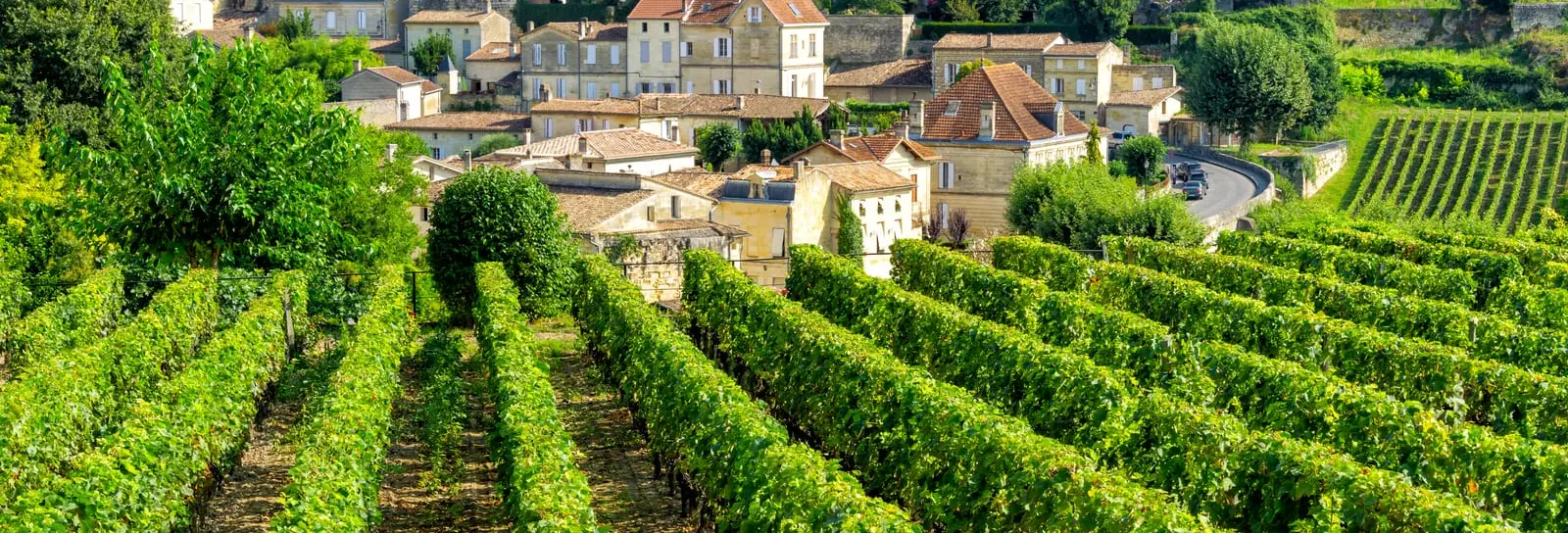
Atlantic Coast -Bordeaux -Saint-Émilion and its vineyards
By Jean Mascla, founder of Home SelectUpdated · 6 min read
Wine estate, wine property, vineyard for pleasure: what are we talking about?
The same word covers three purchases. The vineyard for pleasure is a house surrounded by a few hectares of vines, entrusted to a neighbouring grower or to a vineyard-services company; the wine property adds a winery and a production, often sold to a cooperative winery or a wine merchant; the working estate, finally, is a business, with its brand, its customers, its stock and its staff.
The first two are bought as a property: a house, land, buildings. The third is bought as a business, with an accounting, commercial and technical audit that Home Select does not carry out: it then introduces the specialist firms and the vineyard experts, and stays at your side for the house.
Where to buy a wine estate in France?
Demand gathers where vines, climate and a pleasant life meet. The Bordeaux region offers the greatest variety, from the château of Saint-Émilion to the chartreuse of the Entre-deux-Mers, around Bordeaux. Provence sells vines and the sea: the slopes of Bandol and Cassis, the vines of the Aix-en-Provence countryside and those of the gulf of Saint-Tropez.
The Languedoc and the Rhône valley offer more space for a more contained budget; Burgundy and Champagne remain narrow markets, where vines change hands between vineyard families. Everywhere, the distance to a station or an airport weighs on value as soon as the estate is to be lived in several months a year.
How is the price of a wine estate formed?
The price of an estate reads in two parts. The house is compared with the local house market, which it often exceeds through its size and character; the DVF register files it among houses, without telling the bastide from the village house. The vines are valued per hectare, according to the appellation, the age of the plants, the exposure and their health.
Every year, the French Ministry of Agriculture publishes an indicative scale of the average market value of farmland and vines, by region and by appellation: it is the first benchmark to read the price of an estate’s vines. The winery, the equipment and the stock, when included, are priced separately, with a vineyard expert.
SAFER, tenant farming, authorisations: which rules apply to vines?
The sale of farmland, vines included, is notified to the SAFER, the rural land development agency, which holds a right of pre-emption to keep land in farming. The notaire organises the notification; the timetable of the sale takes it into account.
Vines leased to a grower fall under the tenant farming regime: the rural lease protects the farmer, who himself holds a priority right of pre-emption when the land he farms is sold. Farming land yourself may require an authorisation to farm under the structures control, depending on the area and the region.
Planting or replanting vines requires an authorisation, issued by FranceAgriMer within the European framework. An estate is therefore also judged on its planted areas, their grape varieties, their age and their condition: grubbed-up vines cannot be replanted freely.
Atlantic Coast -Bordeaux -Saint-Émilion and its vineyards
What should be checked before buying a wine estate?
The house: roofs, structures, networks, sanitation, energy performance, permits for past conversions.
The vines: appellation, grape varieties, age of the plants, share of missing vines, health, how the vineyard is managed.
The land: exact cadastral area, access for machinery, water, rights of way, and any leased plots.
The farm buildings: winery, vats, sheds, their condition and compliance, and what is sold with them or separately.
The leases and contracts in force: tenant farming, vineyard-services contracts, supply contracts with a cooperative winery.
Home Select checks the documents that concern the property before you commit; have the vines and the winery assessed by a vineyard expert, and the works on the house priced by an architect or craftsmen, before the offer.
Having your vines worked without being a winemaker
Many buyers want the house and the landscape of the vines without making the wine. Three solutions exist: lease the vines to a neighbouring grower under a rural lease, entrust their upkeep to a vineyard-services company and sell the grapes to a cooperative winery or a wine merchant, or partner with a winemaker to produce a small vintage.
Each solution commits differently: tenant farming is long and protects the farmer, the service contract leaves control with the owner and makes him bear the costs, the partnership needs a clear contract. The choice is made before the offer, because it changes the value given to the vines.
How Home Select supports you
Home Select searches for the estate for you alone, across the whole market: listings, the notaires of the wine regions, families, and a network of 15,000 professional partners, for the sales that never appear. Each lead is qualified on documents and by video pre-viewing before you travel.
For the house and the land, Home Select checks the file, defends your offer and accompanies you to the deed; for the wine business, it introduces the specialists. Fees are due on success: 2.5% of the net purchase price with the Exclusive offer, minimum €10,000 incl. VAT, or 1.5% with the Confidential offer for projects of €2m and above, plus 10% of the negotiated reduction. The guide to châteaux and manor houses extends this dossier.
Frequently asked questions
Can you buy a wine estate without being a winemaker?
Yes. The vines can be leased to a neighbouring grower, maintained by a vineyard-services company with the grapes sold, or worked in partnership. The choice is made before the offer, because it changes the value of the vines and the yearly budget.
What makes the price of a wine estate?
The house, read on the local house market, and the vines, valued per hectare according to the appellation, the age and the condition of the plants; the winery, equipment and stock are priced separately. The indicative scale published every year by the French Ministry of Agriculture gives the first benchmark for the vines.
Can the SAFER block the purchase of a wine estate?
It holds a right of pre-emption on farmland, vines included, to keep it in farming. The sale is notified to it by the notaire, who tells you the time limit; a project that keeps the vines in farming is prepared with it.
Can leased vines be taken back?
Not freely. The rural lease protects the farmer in place, who also holds a priority right of pre-emption in the event of a sale. An estate sold with leased vines is bought with the lease: it is read before the offer, as part of the price.
Does Home Select buy wine businesses?
Home Select searches for the property, the house, the land and the vines, for a buyer. Taking over a working estate as a company, with its brand, customers and staff, belongs to specialist firms, which Home Select introduces.
What fees for the search of a wine estate?
Those of any search: 2.5% of the net purchase price with the Exclusive offer, minimum €10,000 incl. VAT, or 1.5% with the Confidential offer for projects of €2m and above, plus 10% of the negotiated reduction. Nothing is due until you have bought.
Your request is already sent, simply pick what suits you.
A buyer’s agent calls you back within one working day.
🇫🇷+33
An error occurred. Please try again.
Then answer 3 quick questions to be matched with the right hunter.
Home Select processes your data (name, email, phone, project) to handle your request and contact you. It is recorded in our follow-up tool and read by the hunter in charge of your project. Our technical providers access it for hosting, email and checking that your email and number are real, some of them from the United States under the safeguards set by the GDPR. We keep it for three years after our last exchange, or five years after the end of our assignment if you entrust it to us, as French anti-money-laundering law requires. To access, correct or erase it, or to object to its use: contact@home-select.fr. Details in our privacy policy.
Your hunter calls you back within one working day.
Resume your request?
You started a request recently. Pick up where you left off, or start over.
Your answers are kept for 24 hours.
What is your project?
Takes 1 minute, no commitment.
Where are you looking?
Select one or more cities or areas
Your budget?
€
You pay only when Home Select finds it.
Anything to add?
Optional. Add any useful details: specifics about your search, constraints or your availability.
This helps your hunter prepare for your call.
An expert will contact you shortly
Your brief
Confidential search: your file goes to a senior hunter.
60 rue François 1er, 75008 Paris · FCI member
FeesOne month’s rent excluding charges, plus VAT, with a minimum of €2,000 including VAT. Payable only when the lease is signed. No application fee.
Step 1 of 2 · Your search
What are you looking for?
Furnished, unfurnished or both?
In which city?
One or more cities or areas.
€ / month
Charges included, as in the listings.
You would like to move in
Two minutes, no documents needed at this stage.
FeesOne month’s rent excluding charges, plus VAT, with a minimum of €2,000 including VAT. Payable only when the lease is signed. No application fee.
Step 2 of 2 · Your situation
Your situation
These answers let Home Select tell you quickly, and frankly, whether your search can succeed on the market in your city.
You are applying
€ / month
Before tax, regular bonuses included, for everyone applying.
Main applicant’s employment
Your company is based in France
Number of annual accounts filed
To strengthen your file
Optional for your profile. A guarantee reassures landlords.
Guarantor’s situation
€ / month
Who it is for, why you are moving, what matters to you. Do not include sensitive information (health, origin, religion, family situation).
Your contact details
🇫🇷+33
Reply within 24 business hours.
Home Select processes your data (name, email, phone, project, employment, income, guarantee) to review your rental request and contact you. Your answers are compared with the criteria landlords apply, then read by Home Select’s rental hunter. A request that cannot succeed receives a written reply within 24 business hours, and you can ask for it to be reviewed again at contact@home-select.fr. Our technical providers access it for hosting, email and checking that your email and number are real, some of them from the United States under the safeguards set by the GDPR. A request that does not lead to an assignment is erased after three months; otherwise, we keep your data for three years after our last exchange, or five years after the end of our assignment if you entrust it to us, as French anti-money-laundering law requires. To access, correct or erase it, or to object to its use: contact@home-select.fr. Details in our privacy policy.
FeesOne month’s rent excluding charges, plus VAT, with a minimum of €2,000 including VAT. Payable only when the lease is signed. No application fee.
Your file
Your file matches what landlords expect
Book your meeting with Stéphane Martins, rental hunter. He confirms it after reading your file, within 24 business hours.
Choose your time slot
Times shown in Paris time.
Confirmation arrives by email and text message.
FeesOne month’s rent excluding charges, plus VAT, with a minimum of €2,000 including VAT. Payable only when the lease is signed. No application fee.
Your request
Your request is in good hands
Stéphane Martins, rental hunter, is reviewing your file and will reply within 24 business hours.
You will receive a confirmation email.
You arrived through one of Home Select’s ads or campaigns.Ad measurement.Do you agree to Home Select measuring how well it works? Home Select will know which campaign brought you here and, if you get in touch, the ad platform will only learn that its ad worked, without receiving your contact details.Do you agree to Home Select measuring how well its ads work? If you arrive through one of them, Home Select will know which one and, if you get in touch, the ad platform will only learn that its ad worked, without receiving your contact details.Learn moreYour current choice: .