Married abroad, buying in France: the matrimonial regime question that delays so many deeds
The notaire must write into the deed not only who is buying, but how. For a couple married outside France, the answer depends on the date of the marriage and the country where they settled afterwards. It is the question that delays the most signings, and it is settled entirely upstream, from the preliminary contract.
By Jean Mascla, founder of Home SelectUpdated · 6 min read
Why does the notaire need your matrimonial regime?
Because the deed must say not only who is buying, but how. The matrimonial regime decides whether the property belongs to one of you, the other, or both; what becomes of it on divorce; what happens on the first death; and who will have to consent on the day you want to sell.
A notaire who wrote "Mr X buys alone" without having established the regime would risk drawing up an inaccurate deed. They will not do it, and they are right. So the question is not an administrative formality: it is a condition of signing.
Which law applies to a couple married abroad?
Not necessarily that of the country where you married, nor that of your nationality. Three sets of connecting rules have followed one another, and it is the date of the marriage that determines which applies to you.
For marriages celebrated before 1 September 1992, the first matrimonial home is sought, that is the country where the couple settled after the wedding.
For marriages celebrated between 1 September 1992 and 28 January 2019, the applicable international convention looks in principle to the first common habitual residence after the marriage, with exceptions turning notably on a shared nationality.
For marriages celebrated from 29 January 2019, the applicable European regulation looks first to the first common habitual residence after the marriage, failing that the common nationality at the time of the marriage, failing that the closest connection.
The result often comes as a surprise. A couple of shared nationality married without a contract, who spent a few months in a third country just after the ceremony, may find themselves subject to that country’s default regime.
What happens when the answer is uncertain?
The notaire asks for a statement of foreign law, often called a certificat de coutume, issued by a lawyer or an authority of the country concerned. It sets out the applicable default regime and its effects.
Obtaining that document takes time, sometimes several weeks, and it is the commonest cause of postponement on this subject. It is entirely avoidable: it is enough to raise the question with the notaire at the preliminary contract stage, rather than three days before the deed.
Can you choose your law, and when?
Yes, within the limits the texts allow, and by a designation drawn up in the required form. A couple may, for instance, designate French law for the future, which durably simplifies matters where the assets are in France.
That choice is prepared with a professional, because its effects reach well beyond the purchase in hand: a future sale, a gift, passing the property on and the tax that goes with it. It is exactly the kind of subject where having your own notaire makes a difference, since it concerns only you and not the sale.
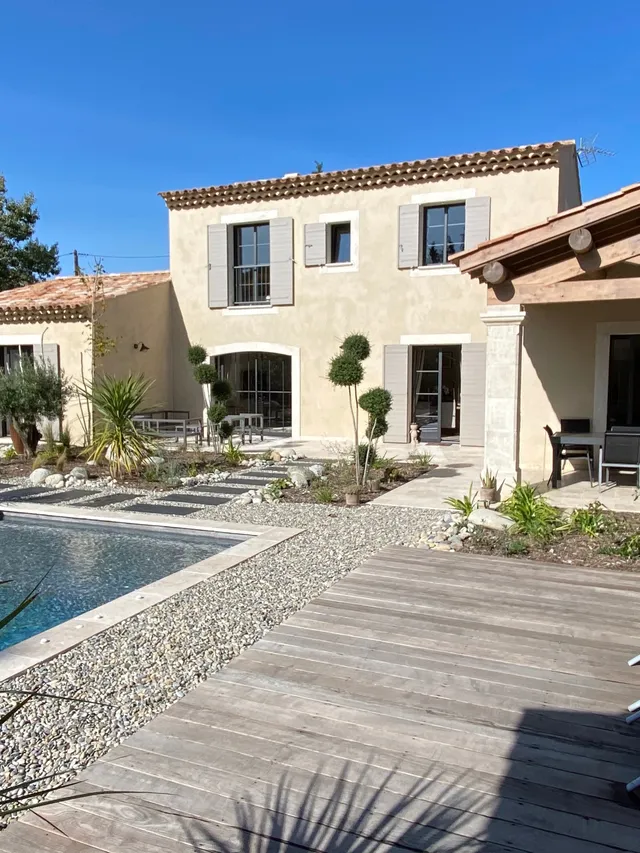
Mougins, Côte d’Azur
And if you are buying together without being married?
The questions change but do not disappear. Buying in indivision is possible and common; it is made safe by an agreement setting out the real shares, how costs are divided, and what happens if one of you wants out. Without such an agreement, indivision follows default rules that rarely suit a couple.
A registered partnership entered into abroad raises a further question, that of its equivalence in French law, and it is handled in advance with the same documents and the same statement of foreign law.
What documents should you prepare, and in what form?
Three categories, and form matters as much as substance.
Civil status: each party’s birth certificate, the marriage certificate, and where relevant the divorce decree from a previous marriage. These must be recent and, depending on the country of origin, carry an apostille or a legalisation.
The marriage contract, if one exists, wherever it was signed.
The translation, by an authorised translator, wherever the documents are not in French.
Ask the notaire for the exact list at the preliminary contract stage, with the validity period of each item. It is the same reflex as for source of funds evidence: none of it is difficult, all of it is simply slow, and the only real risk is starting late.
What Home Select organises for your deed
Home Select searches and negotiates for the buyer, and for the buyer alone. Your property finder checks the property, the building’s documents and the calendar before you commit, and flags what deserves a question to the notaire or a clause in the offer.
Around the purchase, we introduce the partners used to buyers who live abroad: bilingual notaire, mortgage broker, lawyer, sworn translator. Each acts under their own responsibility; we keep the calendar, from the offer to the handing over of the keys.
Frequently asked questions
Can just one of the two spouses buy?
It depends on the regime and on where the money came from. Under a separation regime, each buys for themselves and the deed says so. Under a community regime, a property acquired during the marriage with joint funds falls into the community, whatever name appears on the deed. Which is exactly why the notaire asks beforehand rather than afterwards.
Is a marriage contract signed abroad recognised in France?
In principle yes, but it must be produced, translated and sometimes explained by a statement of foreign law. A contract that exists but is not supplied protects nobody on the day. Look for it from the preliminary contract onwards: retrieving an old document in a distant country takes weeks, not hours.
Does the spouse have to come and sign too?
Where they are a co-buyer, yes, their signature is needed, but it can be given by power of attorney like the buyer’s. Neither spouse needs to be physically in France. The constraint is documentary, not geographical, and that is good news.
Why does the notaire need your matrimonial regime?
Because the deed must say not only who is buying, but how. The matrimonial regime decides whether the property belongs to one of you, the other, or both; what becomes of it on divorce; what happens on the first death; and who will have to consent on the day you want to sell.
Which law applies to a couple married abroad?
Not necessarily that of the country where you married, nor that of your nationality. Three sets of connecting rules have followed one another, and it is the date of the marriage that determines which applies to you.
What happens when the answer is uncertain?
The notaire asks for a statement of foreign law, often called a certificat de coutume, issued by a lawyer or an authority of the country concerned. It sets out the applicable default regime and its effects.
Can you choose your law, and when?
Yes, within the limits the texts allow, and by a designation drawn up in the required form. A couple may, for instance, designate French law for the future, which durably simplifies matters where the assets are in France.
And if you are buying together without being married?
The questions change but do not disappear. Buying in indivision is possible and common; it is made safe by an agreement setting out the real shares, how costs are divided, and what happens if one of you wants out. Without such an agreement, indivision follows default rules that rarely suit a couple.
Preparing a purchase in France from abroad, or already an owner there? Describe your situation: a Home Select property finder answers within one working day, and the file starts with the right partners, in the right order.
Your request is already sent, simply pick what suits you.
A property finder calls you back within one working day.
🇫🇷+33
An error occurred. Please try again.
Then answer 3 quick questions to be matched with the right hunter.
Home Select processes your data (name, email, phone, project) to handle your request and contact you. It is recorded in our follow-up tool and read by the hunter in charge of your project. Our technical providers access it for hosting, email and checking that your email and number are real, some of them from the United States under the safeguards set by the GDPR. We keep it for three years after our last exchange, or five years after the end of our assignment if you entrust it to us, as French anti-money-laundering law requires. To access, correct or erase it, or to object to its use: contact@home-select.fr. Details in our privacy policy.
Your hunter calls you back within one working day.
Resume your request?
You started a request recently. Pick up where you left off, or start over.
Your answers are kept for 24 hours.
What is your project?
Takes 1 minute, no commitment.
Where are you looking?
Select one or more cities or areas
Your budget?
€
You pay only when Home Select finds it.
Anything to add?
Optional. Add any useful details: specifics about your search, constraints or your availability.
This helps your hunter prepare for your call.
An expert will contact you shortly
Your brief
Confidential search: your file goes to a senior hunter.
60 rue François 1er, 75008 Paris · FCI member
FeesOne month’s rent excluding charges, plus VAT, with a minimum of €2,000 including VAT. Payable only when the lease is signed. No application fee.
Step 1 of 2 · Your search
What are you looking for?
Furnished, unfurnished or both?
In which city?
One or more cities or areas.
€ / month
Charges included, as in the listings.
You would like to move in
Two minutes, no documents needed at this stage.
FeesOne month’s rent excluding charges, plus VAT, with a minimum of €2,000 including VAT. Payable only when the lease is signed. No application fee.
Step 2 of 2 · Your situation
Your situation
These answers let Home Select tell you quickly, and frankly, whether your search can succeed on the market in your city.
You are applying
€ / month
Before tax, regular bonuses included, for everyone applying.
Main applicant’s employment
Your company is based in France
Number of annual accounts filed
To strengthen your file
Optional for your profile. A guarantee reassures landlords.
Guarantor’s situation
€ / month
Who it is for, why you are moving, what matters to you. Do not include sensitive information (health, origin, religion, family situation).
Your contact details
🇫🇷+33
Reply within 24 business hours.
Home Select processes your data (name, email, phone, project, employment, income, guarantee) to review your rental request and contact you. Your answers are compared with the criteria landlords apply, then read by Home Select’s rental hunter. A request that cannot succeed receives a written reply within 24 business hours, and you can ask for it to be reviewed again at contact@home-select.fr. Our technical providers access it for hosting, email and checking that your email and number are real, some of them from the United States under the safeguards set by the GDPR. A request that does not lead to an assignment is erased after three months; otherwise, we keep your data for three years after our last exchange, or five years after the end of our assignment if you entrust it to us, as French anti-money-laundering law requires. To access, correct or erase it, or to object to its use: contact@home-select.fr. Details in our privacy policy.
FeesOne month’s rent excluding charges, plus VAT, with a minimum of €2,000 including VAT. Payable only when the lease is signed. No application fee.
Your file
Your file matches what landlords expect
Book your meeting with Stéphane Martins, rental hunter. He confirms it after reading your file, within 24 business hours.
Choose your time slot
Times shown in Paris time.
Confirmation arrives by email and text message.
FeesOne month’s rent excluding charges, plus VAT, with a minimum of €2,000 including VAT. Payable only when the lease is signed. No application fee.
Your request
Your request is in good hands
Stéphane Martins, rental hunter, is reviewing your file and will reply within 24 business hours.
You will receive a confirmation email.
You arrived through one of Home Select’s ads or campaigns.Ad measurement.Do you agree to Home Select measuring how well it works? Home Select will know which campaign brought you here and, if you get in touch, the ad platform will only learn that its ad worked, without receiving your contact details.Do you agree to Home Select measuring how well its ads work? If you arrive through one of them, Home Select will know which one and, if you get in touch, the ad platform will only learn that its ad worked, without receiving your contact details.Learn moreYour current choice: .