Negotiating the price of a property in France when buying from abroad: the arguments that work
The price of a French property is negotiated on documents: the prices actually paid, the time on the market, the energy rating, the works voted by the co-ownership, the measured surface. From abroad, these elements do not come on their own. This dossier says where to find them, how to use them, and what closes a negotiation.
By Jean Mascla, founder of Home SelectUpdated · 6 min read
Why the remote buyer negotiates badly
A buyer living abroad negotiates badly for a simple reason: they do not have the material. They do not know how long the property has been on the market, what the neighbours actually paid, or what the building is about to vote through in works.
Start from prices actually paid, not prices asked
Since 2019 the tax administration has published, as open data, the property value declarations database, fed by notarised deeds and updated twice a year. For each transfer for value it gives the address, the date, the price, the floor area and the type of property. It is the only public source that says what was paid, rather than what was asked.
Two limits apply. The database covers neither Alsace-Moselle nor Mayotte, which fall under a separate land registration regime. And it says nothing about the condition of the property: two flats at the same address can differ by thirty per cent depending on floor level, aspect and works. It serves as a foundation, not a verdict.
The quarterly indexes of the notaries and of the national statistics institute usefully complete that foundation by giving the trend rather than the point. In a turning market, a price set six months earlier is often worth a negotiation on its own.
Time on the market and the energy rating
Time on market is the first lever, and the one an absent buyer almost always misses. A property advertised for four months in a district where turnover runs at six weeks has already met its market, and its owner knows it.
The energy performance rating has become the second lever, since the law banned letting the most energy-hungry ratings. A home rated G can no longer be let, an F rating follows from 1 January 2028, and that deadline moves value: the buyer takes on a works budget and a timetable constraint, which can be quantified and stated.
Works voted and anomalies in the technical file
Works voted at a general meeting come next, and this is the most poorly used lever. Facade works voted but not yet called in can be read in the minutes the seller must hand over; they are negotiated either on the price, or through a clause in the preliminary contract placing the call for funds on the seller. We set out that reading in what to check in a co-ownership before buying.
Anomalies in the technical survey file form the fourth lever: a non-compliant electrical installation, a boiler past its age, a Carrez floor area more than five per cent below the one stated. That last point even opens, after the deed, a proportionate price-reduction claim under article 46 of the Act of 10 July 1965, available for one year. Better to establish it beforehand.
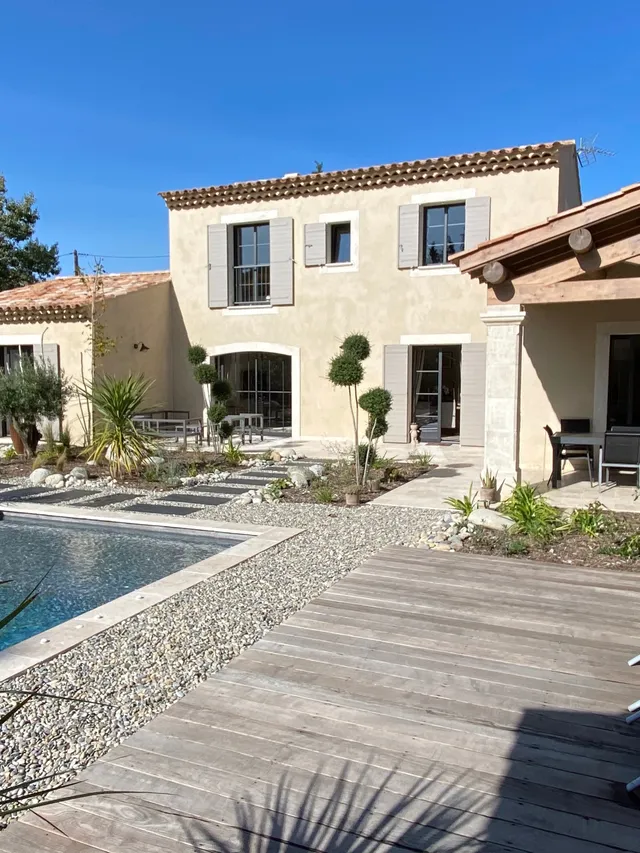
Lourmarin, Provence
What does not work
A low offer with no argument produces nothing but the end of the conversation, especially on a property that has just come to market. A negotiation conducted by email from another time zone, with nobody to meet the seller or their agent, runs into the fact that a French seller rarely picks the highest offer: they pick the one that will reach completion.
What really makes the difference
The financing file counts as much as the amount. A buyer presenting an agreement in principle, an escrow ready to send and a workable timetable is often worth more than a more generous buyer whose bank has processed nothing. The subject is covered in our page on the deadlines from offer to deed.
Finally, the idea that a foreign buyer mechanically pays more rests on no rule: the price, transfer duties and notary’s fees are identical for everyone. What costs is not seeing. And that is corrected by documentation, by a professional who holds their mandate from you, as our comparison between buying agent and estate agent explains, and by a search mandate whose fee is due only on a completed acquisition.
What Home Select organises for your negotiation
Home Select searches and negotiates for the buyer, and for the buyer alone. Your property finder checks the property, the building’s documents and the calendar before you commit, and flags what deserves a question to the notaire or a clause in the offer.
Around the purchase, we introduce the partners used to buyers who live abroad: bilingual notaire, mortgage broker, lawyer, sworn translator. Each acts under their own responsibility; we keep the calendar, from the offer to the handing over of the keys.
Frequently asked questions
Where can you see the prices actually paid in France?
In the property value declarations database, published as open data by the tax administration since 2019 and updated twice a year. It lists transfers for value taken from notarised deeds: address, date, price, floor area and type of property. It covers neither Alsace-Moselle nor Mayotte, which fall under a separate land registration regime.
What if the actual floor area is smaller than the stated one?
In a co-ownership, article 46 of the Act of 10 July 1965 allows the buyer to claim a price reduction proportionate to the shortfall, where the actual area is more than five per cent below the area stated in the deed. The claim is time-barred one year from the notarised deed. Before signing, the same finding is negotiated directly on the price.
Does a foreign buyer pay more in France?
No rule provides for it: the price, transfer duties and notary’s fees are the same for everyone. What costs is the information asymmetry, where the buyer can neither view several times, nor compare on the ground, nor read the general meeting minutes before committing. That asymmetry is corrected by a documented file, not by an overbid.
Why does a buyer living abroad negotiate less well?
A buyer living abroad negotiates badly for a simple reason: they do not have the material. They do not know how long the property has been on the market, what the neighbours actually paid, or what the building is about to vote through in works.
Which arguments bring a price down in France?
Time on market is the first lever, and the one an absent buyer almost always misses. A property advertised for four months in a district where turnover runs at six weeks has already met its market, and its owner knows it.
Why does a low offer without arguments fail?
A low offer with no argument produces nothing but the end of the conversation, especially on a property that has just come to market. A negotiation conducted by email from another time zone, with nobody to meet the seller or their agent, runs into the fact that a French seller rarely picks the highest offer: they pick the one that will reach completion.
Preparing a purchase in France from abroad, or already an owner there? Describe your situation: a Home Select property finder answers within one working day, and the file starts with the right partners, in the right order.
Your request is already sent, simply pick what suits you.
A property finder calls you back within one working day.
🇫🇷+33
An error occurred. Please try again.
Then answer 3 quick questions to be matched with the right hunter.
Home Select processes your data (name, email, phone, project) to handle your request and contact you. It is recorded in our follow-up tool and read by the hunter in charge of your project. Our technical providers access it for hosting, email and checking that your email and number are real, some of them from the United States under the safeguards set by the GDPR. We keep it for three years after our last exchange, or five years after the end of our assignment if you entrust it to us, as French anti-money-laundering law requires. To access, correct or erase it, or to object to its use: contact@home-select.fr. Details in our privacy policy.
Your hunter calls you back within one working day.
Resume your request?
You started a request recently. Pick up where you left off, or start over.
Your answers are kept for 24 hours.
What is your project?
Takes 1 minute, no commitment.
Where are you looking?
Select one or more cities or areas
Your budget?
€
You pay only when Home Select finds it.
Anything to add?
Optional. Add any useful details: specifics about your search, constraints or your availability.
This helps your hunter prepare for your call.
An expert will contact you shortly
Your brief
Confidential search: your file goes to a senior hunter.
60 rue François 1er, 75008 Paris · FCI member
FeesOne month’s rent excluding charges, plus VAT, with a minimum of €2,000 including VAT. Payable only when the lease is signed. No application fee.
Step 1 of 2 · Your search
What are you looking for?
Furnished, unfurnished or both?
In which city?
One or more cities or areas.
€ / month
Charges included, as in the listings.
You would like to move in
Two minutes, no documents needed at this stage.
FeesOne month’s rent excluding charges, plus VAT, with a minimum of €2,000 including VAT. Payable only when the lease is signed. No application fee.
Step 2 of 2 · Your situation
Your situation
These answers let Home Select tell you quickly, and frankly, whether your search can succeed on the market in your city.
You are applying
€ / month
Before tax, regular bonuses included, for everyone applying.
Main applicant’s employment
Your company is based in France
Number of annual accounts filed
To strengthen your file
Optional for your profile. A guarantee reassures landlords.
Guarantor’s situation
€ / month
Who it is for, why you are moving, what matters to you. Do not include sensitive information (health, origin, religion, family situation).
Your contact details
🇫🇷+33
Reply within 24 business hours.
Home Select processes your data (name, email, phone, project, employment, income, guarantee) to review your rental request and contact you. Your answers are compared with the criteria landlords apply, then read by Home Select’s rental hunter. A request that cannot succeed receives a written reply within 24 business hours, and you can ask for it to be reviewed again at contact@home-select.fr. Our technical providers access it for hosting, email and checking that your email and number are real, some of them from the United States under the safeguards set by the GDPR. A request that does not lead to an assignment is erased after three months; otherwise, we keep your data for three years after our last exchange, or five years after the end of our assignment if you entrust it to us, as French anti-money-laundering law requires. To access, correct or erase it, or to object to its use: contact@home-select.fr. Details in our privacy policy.
FeesOne month’s rent excluding charges, plus VAT, with a minimum of €2,000 including VAT. Payable only when the lease is signed. No application fee.
Your file
Your file matches what landlords expect
Book your meeting with Stéphane Martins, rental hunter. He confirms it after reading your file, within 24 business hours.
Choose your time slot
Times shown in Paris time.
Confirmation arrives by email and text message.
FeesOne month’s rent excluding charges, plus VAT, with a minimum of €2,000 including VAT. Payable only when the lease is signed. No application fee.
Your request
Your request is in good hands
Stéphane Martins, rental hunter, is reviewing your file and will reply within 24 business hours.
You will receive a confirmation email.
You arrived through one of Home Select’s ads or campaigns.Ad measurement.Do you agree to Home Select measuring how well it works? Home Select will know which campaign brought you here and, if you get in touch, the ad platform will only learn that its ad worked, without receiving your contact details.Do you agree to Home Select measuring how well its ads work? If you arrive through one of them, Home Select will know which one and, if you get in touch, the ad platform will only learn that its ad worked, without receiving your contact details.Learn moreYour current choice: .