Where should I buy a mas in the Alpilles: north side or south side?
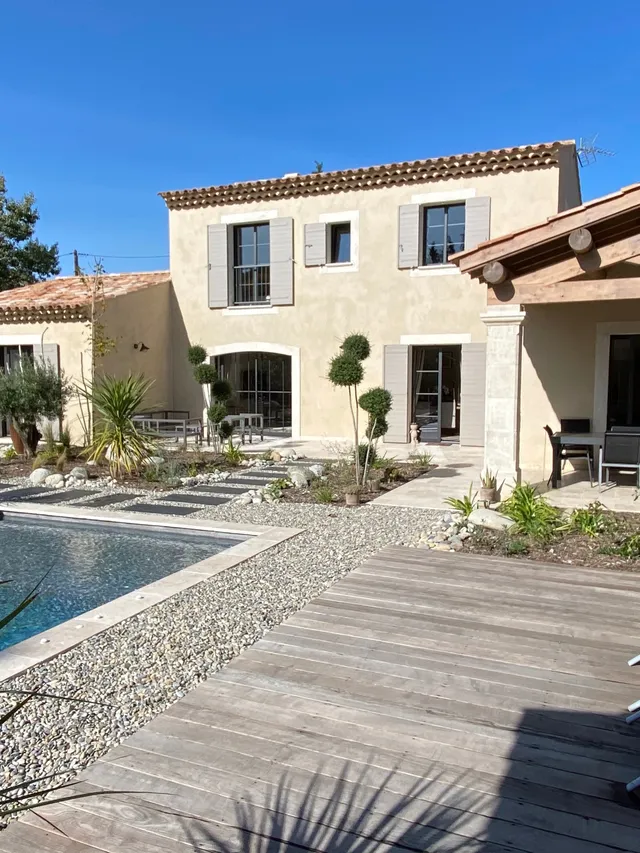
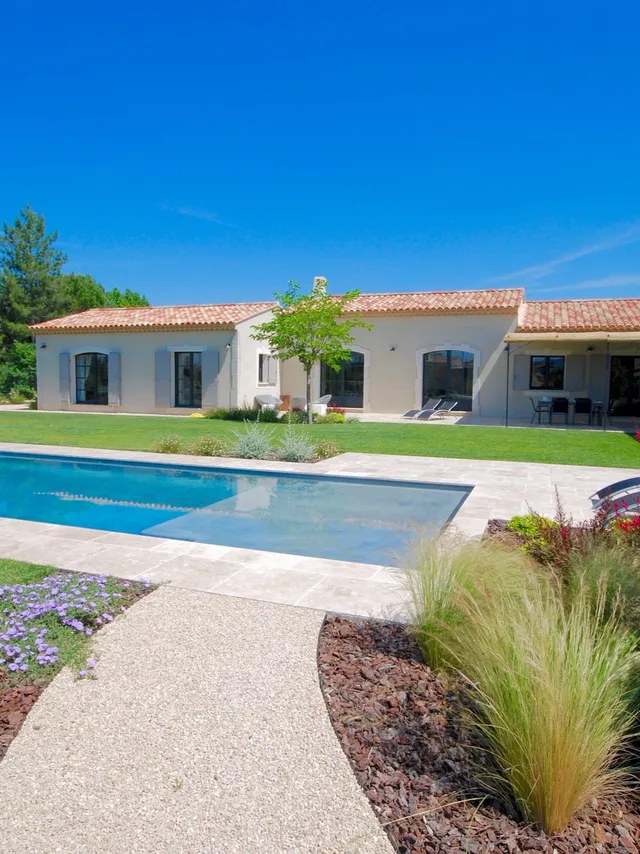
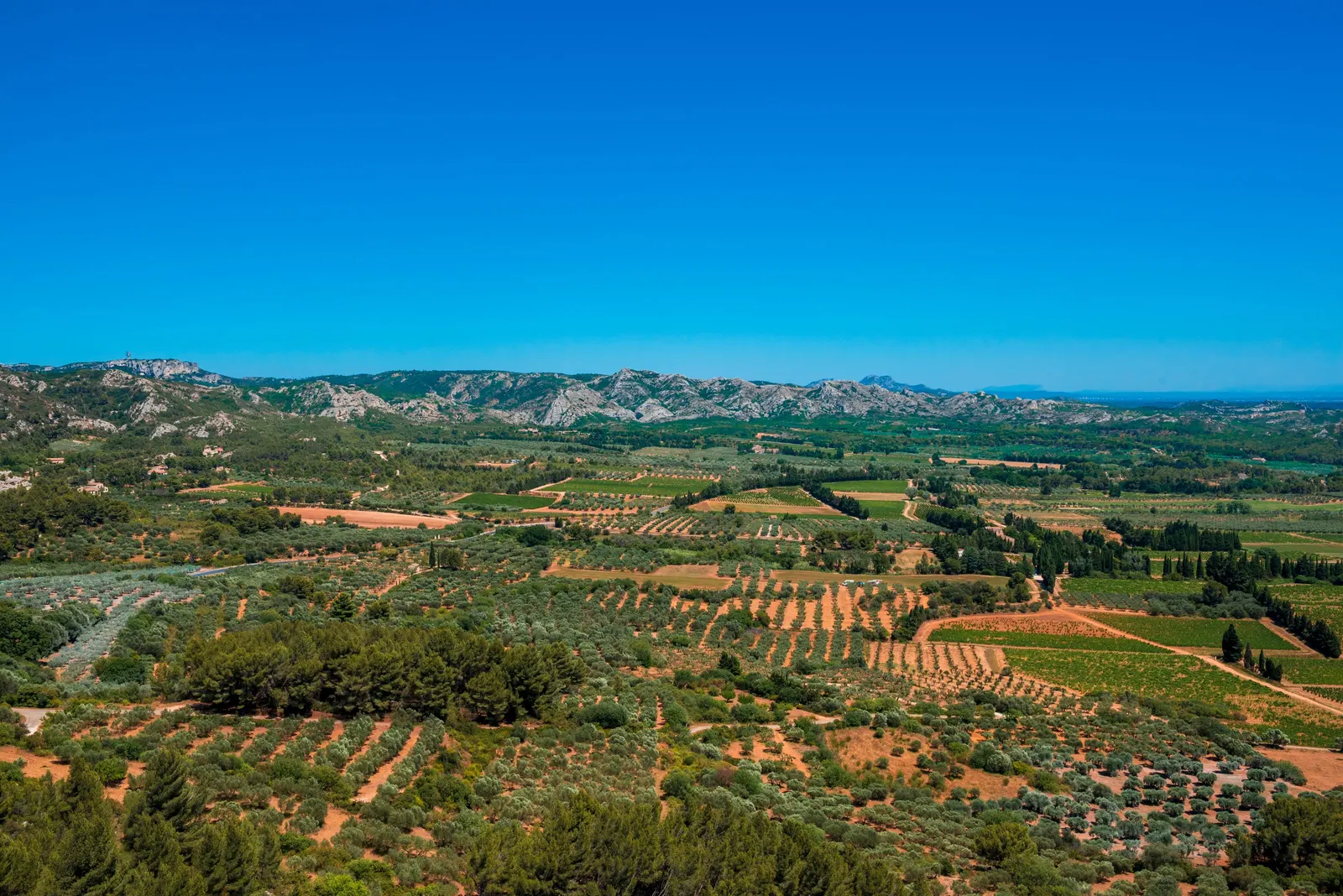
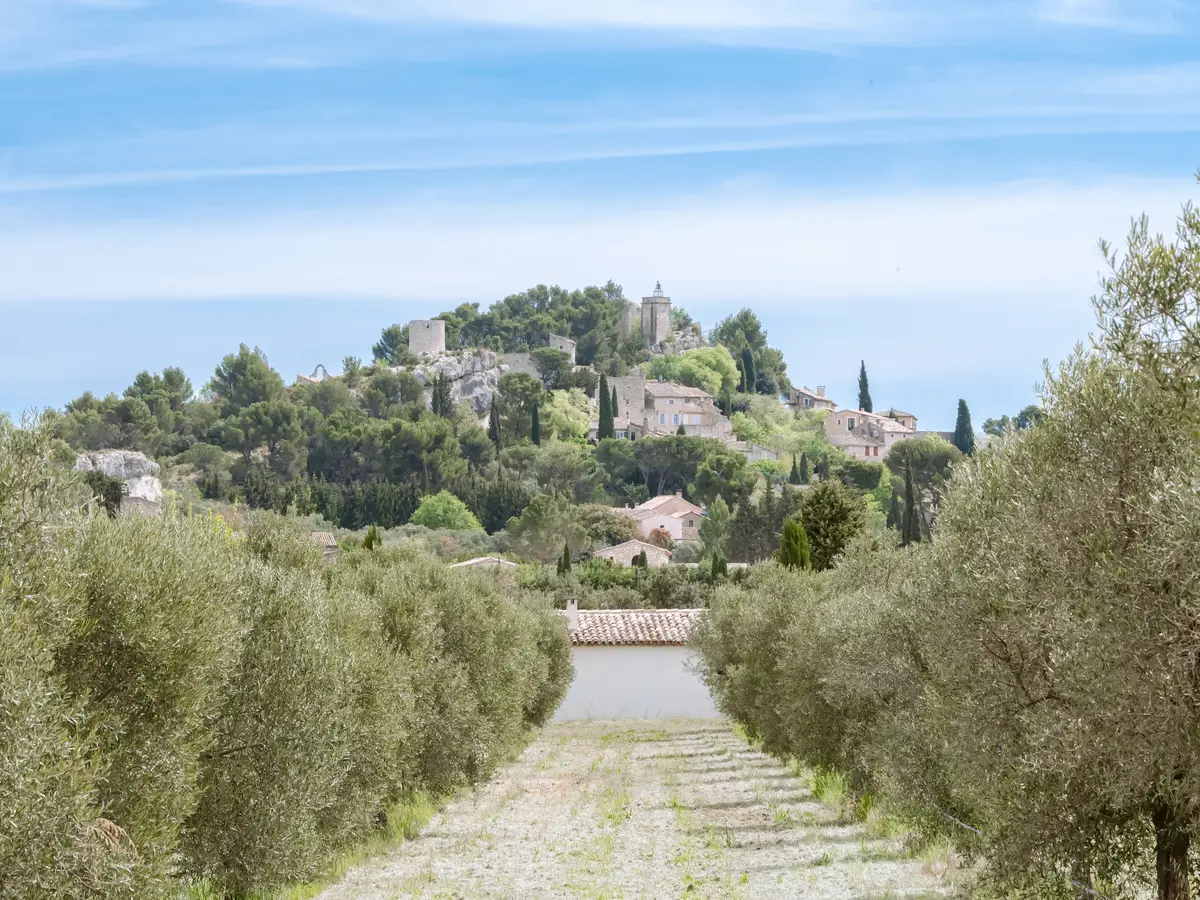
On the north side, around Saint-Rémy-de-Provence and Eygalières, a mas faces the ridge head-on, with a real town ten minutes away and Avignon closer. On the drier, sunnier south side, from Maussane-les-Alpilles to Le Paradou and Les Baux-de-Provence, it lives among the olive groves. Over 12 months to end of June 2026, house medians were close, €5,500/m² in Saint-Rémy-de-Provence and €5,600/m² in Maussane-les-Alpilles, but the top of the market climbs higher in the north. Home Select helps you choose the area before the house: that decision weighs most, on daily life as on resale.
Can I add a pool or extend a mas in the Alpilles?
Often, but read the rules first. An isolated farmhouse almost always sits in an agricultural or natural zone of the local zoning plan, where only modest extensions and outbuildings, pools included, may be allowed if the plan provides for them, in line with the charter of the regional nature park and the Alpilles landscape directive. Near a listed monument or in a protected site, the state heritage architect has a say as well. Home Select has these rules checked before you offer and, where your plans depend on it, makes the purchase conditional on obtaining the permit.
What should I check before buying a mas with an olive grove?
First, who farms the trees: a grove worked by a third party is sold with its agricultural lease, and the farmer, or sometimes the Safer, the rural land agency, may pre-empt the land. Then the health of the trees, their pruning, the irrigation water and whether the olives go to a mill for the protected-origin oil of the Vallée des Baux-de-Provence. Home Select gathers these documents before the pre-visit and builds them into the negotiation: a well-kept grove is worth paying for, a tired one is a bargaining point.
What are the brush clearance rules for a house near the Alpilles?
In areas exposed to forest fires, which ring the hills, owners must clear brush around their house, usually over fifty metres and further if the mayor requires it, as well as along their access track, even onto a neighbour’s land if the zone reaches it. In summer, access to the forest massifs of the Bouches-du-Rhône is also restricted according to the daily fire risk. Home Select checks the property’s exposure, the state of the clearance, access for the fire services and the risk prevention plan, which can restrict works.
How do I know whether a mas in the Alpilles has water?
By asking where it comes from, with documents to prove it. A farmhouse may draw water from the mains, a well, a borehole, which must be declared to the town hall, or an irrigation right on one of the canals fed by the Durance: run by an association of water users, that right is attached to the plot and paid for every year. Home Select has every source, its title and its easements checked before you offer.
Alpilles or Luberon: where should I buy a Provençal farmhouse?
Two landscapes, two markets. The Alpilles are a small limestone range between Avignon and Arles, close to Avignon’s TGV station, with Saint-Rémy-de-Provence as a year-round town and the olive tree as signature; the larger Luberon lines its hilltop villages along both sides of its mountain, from Gordes to Lourmarin. If you are torn between the two, see buying a house in the Luberon and buying a mas in Provence: Home Select searches both with the same brief.
Can you live in the Alpilles all year round?
Yes, especially around Saint-Rémy-de-Provence, a town that lives all year, with its schools, shops and Wednesday market, half an hour from Avignon’s TGV station. Smaller villages such as Eygalières or Maussane-les-Alpilles quieten down in winter but keep their squares and shops. To live in a mas full time, look at insulation, heating, access in wet weather and the distance to schools before its charm; Home Select raises these questions from the first brief.
Is it worth using a buyer’s agent in the Alpilles?
Yes, because the finest farmhouses in the Alpilles are rarely advertised, and those that are often leave out what matters: a pool without a permit, an olive grove under lease, an undeclared borehole, a road too close. A buyer’s agent works for you alone, on the buyer’s side, from shortlisting to negotiation. Home Select, a buyer’s agent in Provence, adds its network of 15,000 agents and professional partners and fees due on success only.
How much does a mas cost in the Alpilles in 2026?
Over 12 months to end of June 2026, the median price per square metre of mas in the Alpilles ranged from €2,500/m² in Avignon to €8,800/m² in Eygalières. Bouches-du-Rhône: €4,100/m² median for mas, over 8,730 sales (DVF / DGFiP via data.gouv.fr, October 2026 release, 12 months to end of June 2026). Home Select reads these figures street by street before any offer: view, land and condition make most of the price.
How long does it take to buy in the Alpilles with a buyer’s agent?
The calendar depends on how rare the target property is in {nom} and on your availability: Home Select frames it at the brief, then holds it. Properties are first seen on video, and your decisive viewings are grouped into a single trip.
How do you reach off-market properties in the Alpilles?
Through the network and direct approach: Home Select receives more than 100 properties every day from its 15,000 professional partners before they go on sale, and also contacts owners when the setting calls for it. In {nom}, the monitoring starts with two sectors: Eygalières and Maussane-les-Alpilles. That is often where the unfindable property is.
What are your fees in the Alpilles?
Home Select, a buyer’s agent in the Alpilles, charges 2.5% of the net purchase price (minimum €10,000 incl. VAT) on the Exclusive offer, or 1.5% on the Confidential offer for projects of €2m and above, plus 10% of the negotiated reduction in both cases. Home Select is paid on success only, and also on what you save: nothing is due until you have bought.