Skip to content
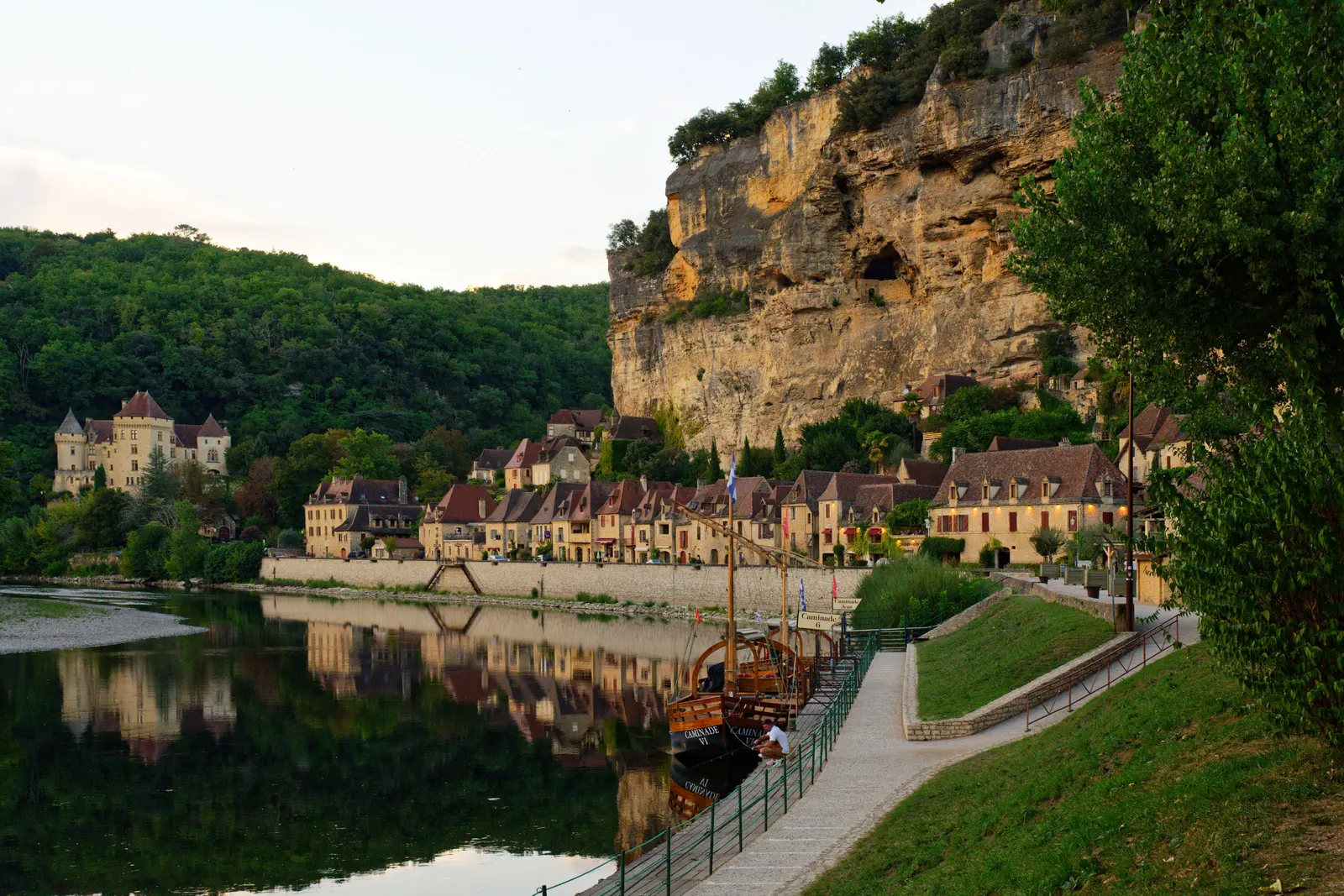
The honey-coloured stone houses of La Roque-Gageac lined up at the foot of the cliff along the Dordogne, with traditional gabarre boats moored at the quay and the village reflected in the calm evening water

Dordogne - La Roque-Gageac - The village on the Dordogne river

Dordogne - La Roque-Gageac - The village on the Dordogne river

Buying a house · Dordogne

Buy a house in the Dordogne

From the Périgord Noir to the vineyards of Bergerac: what houses in the Dordogne really sell for, which of the four Périgords to choose and what to check before you buy. Home Select then runs the search for you, off-market properties included, and is paid on success only.

2011
15 years of hunting in France
1,200+
Buyers guided
4.8/5
On Google (141 reviews)
100%
On success, nothing upfront

At a glance

  • Over 12 months to end of June 2026, houses in the Dordogne sold at a median of €1,600/m², across 6,321 sales of houses and apartments, well below neighbouring Gironde (€3,100/m²) and Charente-Maritime (€2,500/m²).
  • In the Dordogne, the median house price (€1,600/m² over 12 months to end of June 2026) says little about a character home: location, the view, the state of the roof and walls, the land and the outbuildings make the difference.
  • The Dordogne, the historic Périgord, divides into four areas: the Périgord Vert (Green) in the north, the Blanc (White) around Périgueux, the Pourpre (Purple) around Bergerac and the Noir (Black) around Sarlat.
  • Home Select, a buyer’s agent in the Dordogne, searches for your house across all four Périgords, off-market included, has it checked, then negotiates it for you, with fees due on success only.
€1,600/m²
Median for houses, Dordogne

The market

The market for houses in the Dordogne, in figures

Over 12 months to end of June 2026, the Dordogne recorded 6,321 sales of houses and apartments, and the median house sold for €1,600/m². That makes it one of the most affordable second-home markets in France: neighbouring Gironde stands at €3,100/m², Charente-Maritime, whose houses near the Atlantic draw many of the same buyers, at €2,500/m², and the Vaucluse, in the heart of the South of France, at €2,900/m². Apartments, at a median of €1,600/m², are a small share of sales; the Dordogne is a market of houses, and its median mostly reflects ordinary homes: modern detached houses, village houses and cottages in need of updating.

A character home is priced on other things. Geography first: the Dordogne and Vézère valleys, around Sarlat, Domme and Beynac, command the highest prices, while the Périgord Vert remains the most affordable. Then come a view over the valley or a château, no neighbours and no road, hectares of meadow and woodland, stone outbuildings, a pool with its permit and a lively village a few minutes away. Condition does the rest: between a house restored by the book and a farmhouse to take back to the walls, the difference is counted in works. For a manor or a chartreuse with no comparable sale, see how to value a property with no comparables.

Then there is liquidity: the 6,321 sales recorded over 12 months to end of June 2026 make a broad market, but character homes are a narrow one. Many houses stay on sale for a long time, overpriced or burdened with works, and can be negotiated with the file in hand; the finest, restored, quiet and with a view, sell quickly, often without a listing. The market wakes up in spring, when British, Dutch, Belgian and Parisian buyers return, but winter remains the best time to judge a house’s damp, heating and light.

  • Dordogne: €1,600/m² median for houses, over 5,430 sales.

DVF / DGFiP via data.gouv.fr, October 2026 release, 12 months to end of June 2026. Page reviewed by Jean Mascla, founder of Home Select.

The old town of Bergerac on the bank of the Dordogne, its quays overlooked by a pointed church spire, a water jet in the middle of the river and the old stone bridge with its wide arches

Dordogne - Bergerac - The quays and the old bridge

Where to buy

Where to buy in the Dordogne?

Five areas, from north to south and then along the river, each with its own houses and pitfalls.

The angled stone bridge over the Dronne in Brantôme, the Renaissance pavilion with its round tower and the white limestone cliff, with weeping willows reflected in the still water
Dordogne - Brantôme - The angled bridge over the Dronne

01

The Périgord Vert

In the north, around Brantôme, Bourdeilles, Saint-Jean-de-Côle and Nontron, the Green Périgord takes its name from its meadows, chestnut woods and rivers. Farmhouses, mills, manor houses and village houses often come with several hectares, at the gentlest prices in the département, closer to the median (€1,600/m² over 12 months to end of June 2026) than to Périgord Noir prices. Brantôme, wrapped in a loop of the Dronne beneath its abbey, is the showcase, and the Périgord-Limousin Regional Nature Park draws buyers looking for space and silence. Towards the Limousin, granite replaces limestone in places and winters are wetter: check the damp, the heating and the septic system.

02

The Périgord Blanc

In the centre, the White Périgord owes its name to its limestone plateaux, whose pale stone dresses the façades from Périgueux to the Isle valley. Périgueux, the departmental capital, offers what the countryside does not always provide: a railway station, schools, doctors and a protected old town around Saint-Front cathedral; people buy here to live all year, in a townhouse or in a chartreuse or stone house nearby. Saint-Astier produces the natural lime used to restore old walls far beyond the Périgord. Along the Isle, read the flood risk prevention plan and gauge the noise of the A89 motorway and the railway.

A lane of honey-coloured stone in the old town of Sarlat-la-Canéda, with a laid restaurant terrace, a wrought-iron lantern and a carved stone doorway
Dordogne - Sarlat-la-Canéda - A lane in the old town

03

Sarlat, the Vézère and the Périgord Noir

In the south-east, the Black Périgord takes its name from the shade of its oak forests. Sarlat-la-Canéda is its heart, a town of honey-coloured stone and stone-slab roofs and one of the first protected historic centres in France; to the north, the Vézère valley links Montignac, Saint-Léon-sur-Vézère and Les Eyzies, whose decorated caves, Lascaux first among them, are a UNESCO World Heritage Site. Buyers come for restored stone houses with pools, manor houses, farmhouses to restore and townhouses in Sarlat, at some of the highest prices in the département, and the British, Dutch and Parisians compete for the best addresses. Around the many listed monuments, the state heritage architect watches over every façade.

Beynac castle standing on top of its limestone cliff, above the village houses and the woods, under a blue sky with large white clouds
Dordogne - Beynac-et-Cazenac - The castle

04

The Dordogne valley

From Domme to the great meander of Trémolat, the river winds beneath cliffs and castles: Castelnaud and Beynac, enemies in the Hundred Years’ War, face each other across the water, La Roque-Gageac shelters against its cliff and Domme watches over the valley from its hilltop bastide. This is the most sought-after landscape in the Périgord, and a view of the river or a château costs more here than anywhere else. Buyers look for the stone house under its lauze roof, the chartreuse among the walnut groves, the village house near the water. Check the flood risk prevention plan, as the river can burst its banks, and the risk of rockfall below the cliffs; in summer, gauge the crowds of visitors and canoes too.

The white Château de Monbazillac with its four round slate-roofed towers, surrounded by rows of vines, under a deep blue sky streaked with clouds
Dordogne - Monbazillac - The château and its vineyards

05

The Périgord Pourpre

In the south-west, the Purple Périgord takes its name from its vines: around Bergerac lie the appellations of Pécharmant, Saussignac and Monbazillac, whose white four-towered château stands guard over the sweet wines. Here you find chartreuses among the vines, farmhouses with a few hectares and houses in the bastide towns of Eymet and Monpazier, and a budget often buys more land than in the Périgord Noir. Bergerac airport, whose routes serve mainly the UK, and Bordeaux, about an hour and a half’s drive away, make it the gateway for British buyers, many of whom have settled around Eymet. Check the distance to sprayed vineyards, rights of way and clay subsidence.

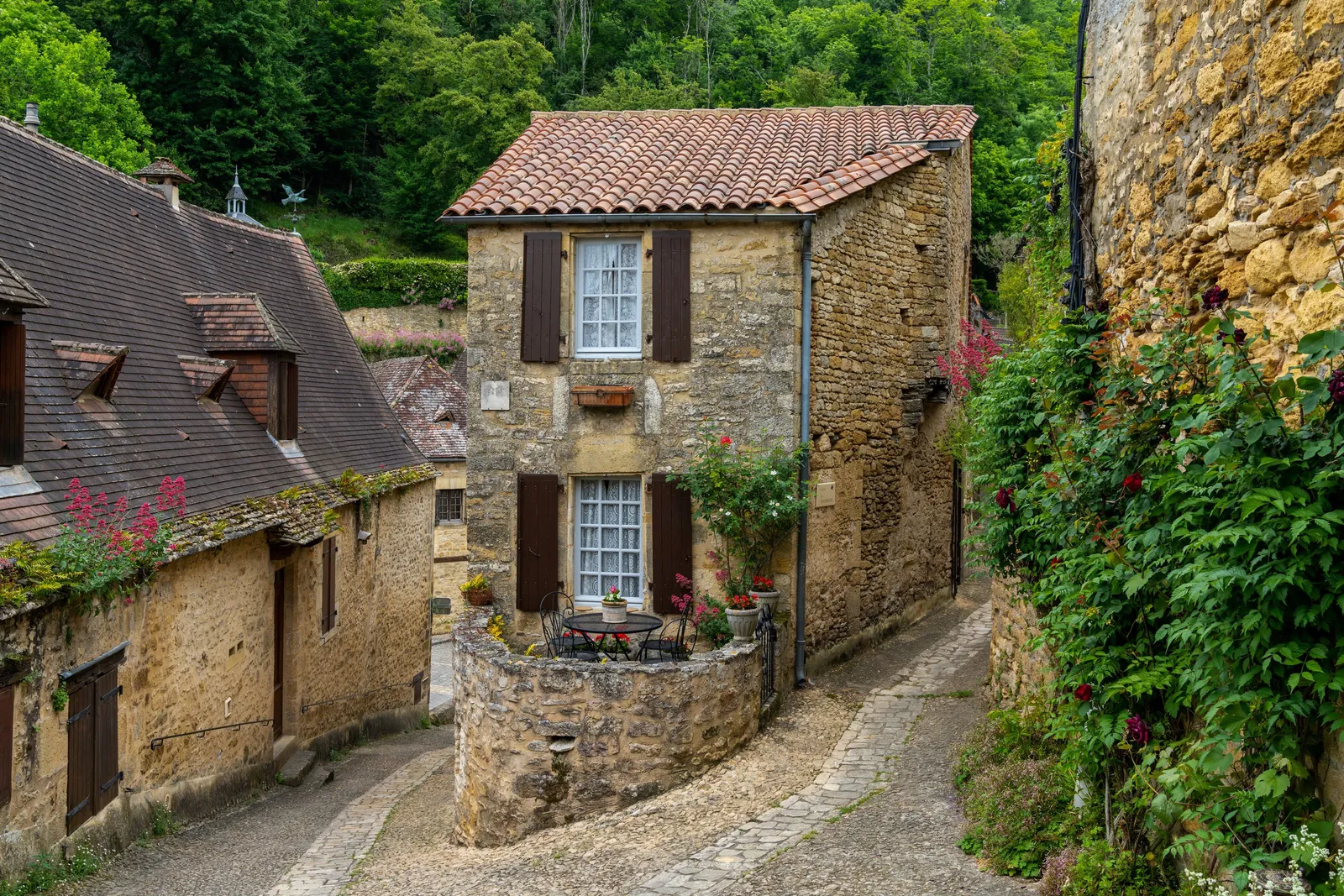
A small honey-coloured stone house with brown shutters between two cobbled lanes in Beynac-et-Cazenac, with its round terrace full of geraniums and climbing roses

Dordogne - Beynac-et-Cazenac - A village house

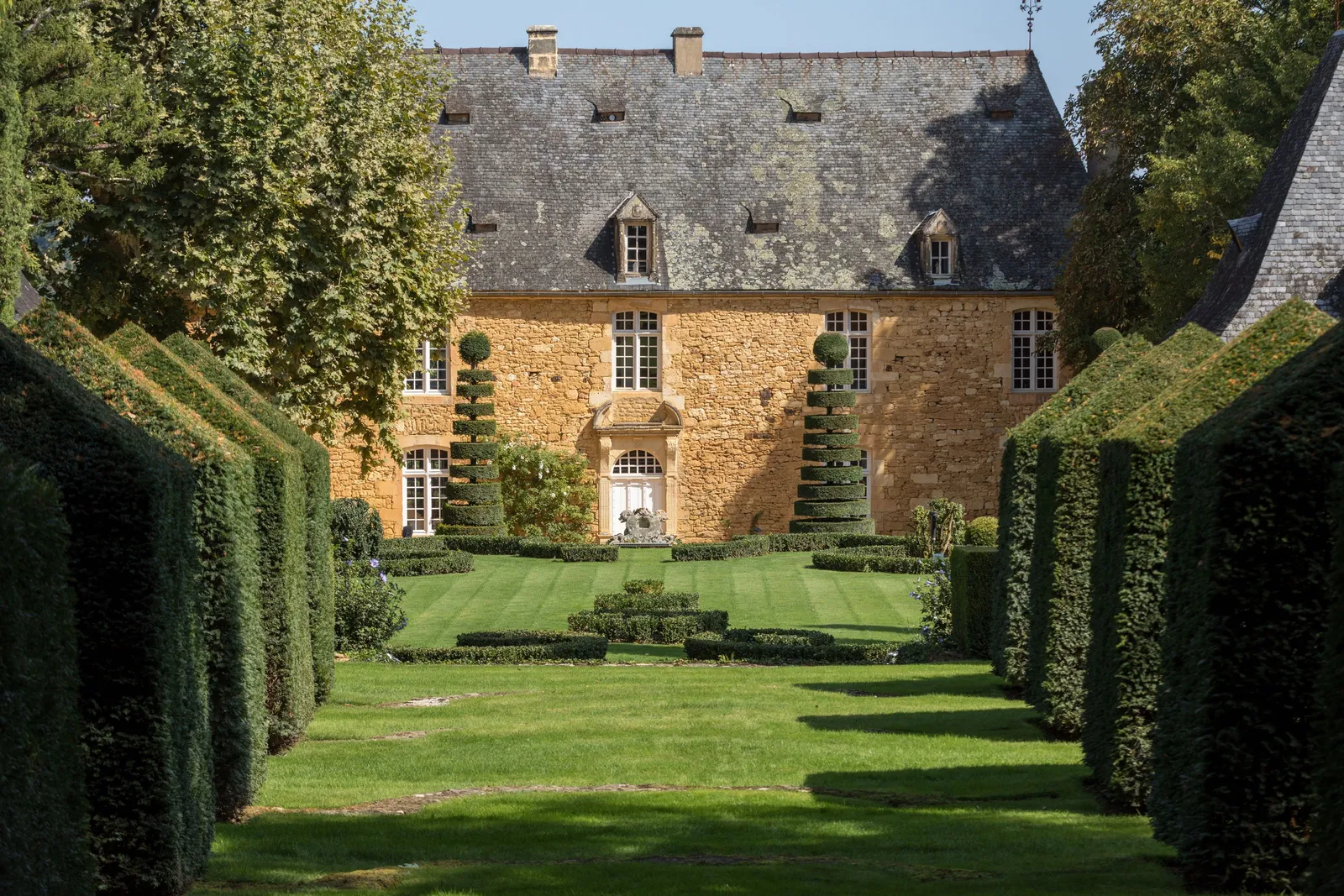
The honey-coloured stone façade of the Eyrignac manor under its large stone-slab roof, with spiral topiaries and tall clipped hedges at the end of a lawn alley

Dordogne - Salignac-Eyvigues - The Eyrignac manor and its gardens

Properties

The properties people buy in the Dordogne

The Périgord stone house

This is the house people come to the Dordogne for: thick walls of honey-coloured limestone, windows framed in dressed stone, a steep roof of lauzes, the region’s flat limestone slabs, or small brown flat tiles, and often a barn and a pigeonnier, the traditional dovecote, around the yard. It is found above all in the Périgord Noir and the Dordogne valley, the core of the market for character homes. Many have been restored with more taste than method: old walls need lime render, not cement, which traps damp. Have the roof timbers, insulation, heating (often oil-fired), septic system and the pool’s permit checked.

The chartreuse

A long, single-storey house over cellars beneath a great roof, often flanked by two pavilions, the chartreuse is the country retreat of the bourgeoisie and minor nobility of the seventeenth and eighteenth centuries, in the Périgord as around Bordeaux. It stands in parkland, vineyards or walnut groves, sometimes with its outbuildings and pigeonnier. Its run of ground-floor rooms makes a rare family home, but the vast roof is costly to keep up: have the roofing, timbers and windows priced, and check whether the house is protected as a historic monument.

The manor house

A stair tower, mullioned windows, sometimes a watchtower or a chapel: the Périgord manor, a former noble seat or a country house enlarged over the centuries, is found throughout a land nicknamed the country of a thousand and one châteaux. It is the rarest property of all, often changing hands without a listing, between families, notaries and networks. Before any offer, check its status: a listed monument puts its works under state supervision, and within the surroundings of a monument, the state heritage architect reviews every exterior project. Have the timbers, roofs, wiring and plumbing surveyed.

The farmhouse, barn and tobacco barn

Stone farmhouses, barns, bread ovens and tobacco drying barns, the tall slatted timber sheds of the Dordogne valley and the Bergerac country, attract buyers who dream of making a home within old walls. In an agricultural or natural zone, a barn only becomes a house if the local planning rules allow the change of use. Check water, electricity, access and room for a septic system and, if farmland is sold with the property, the right of pre-emption of the SAFER, the rural land agency. Cost the works before the offer, line by line: see our note on renovation budgets for older properties.

The village and bastide house

In Sarlat and Bergerac, in the bastide towns of Domme, Eymet or Monpazier and in villages such as Belvès, the village house offers life on foot, with the market and the bakery, and often a courtyard or walled garden behind the façade: a base with no grounds to keep. In a protected centre, façades, windows and roofs need the approval of the state heritage architect; check parking, party walls, summer-evening noise and, if the building is shared, the co-ownership rules.

Our method

How Home Select searches in the Dordogne

It starts with a precise brief: living in the Dordogne all year or for the summers, how far from an airport you are happy to be, a village on foot or complete seclusion, the land, the pool, the outbuildings, and the full budget, notary fees of 7 to 8% and works included; for a second home, upkeep while you are away matters as much as the price. Home Select then cross-checks, every day, the listings, the properties passed on by its network of 15,000 agents and professional partners, and those never advertised: in the Périgord, some of the finest houses still sell through notaries, families and word of mouth, off-market.

Each shortlisted house is vetted on paper, then viewed before you, in a filmed pre-visit. The checks are specific to the Périgord: the septic system inspection, as a buyer must bring a failing system up to standard within a year of the sale; lauze roofs and their timbers; listed-monument status and the opinion of the state heritage architect; flood risk near the rivers and rockfall below the cliffs; clay shrinkage; rights of way and the rural paths that sometimes cross a property; water, phone signal and internet, patchy deep in the valleys. Have a builder or architect price any works before you make an offer.

Negotiation is conducted with the file in hand: comparable sales, time on the market. Home Select defends your offer, follows the preliminary contract with your notary and its conditions, then stays with you until completion and the handover of the keys. Its fees are due on success only.


One method, two ways in

Both are billed only if the property is found and the purchase completed. On top comes 10% of the negotiated reduction: Home Select is also paid on what you save.

Haussmannian living room with fireplace and open view

Exclusive

Exclusive search mandate

2.5% of the net purchase price, minimum €10,000 incl. VAT + 10% of the negotiated reduction

The full service, for every budget: brief, sourcing, off-market, pre-visits, negotiation and follow-through to the notary signing.

The Exclusive offer
Ornate door knocker on a deep blue door

Confidentielle

Simple search mandate

1.5% of the net purchase price, projects from €2M + 10% of the negotiated reduction

The very same full service, on a selection made exclusively of off-market properties. For buyers who never want to see their search on a portal.

The Confidential offer
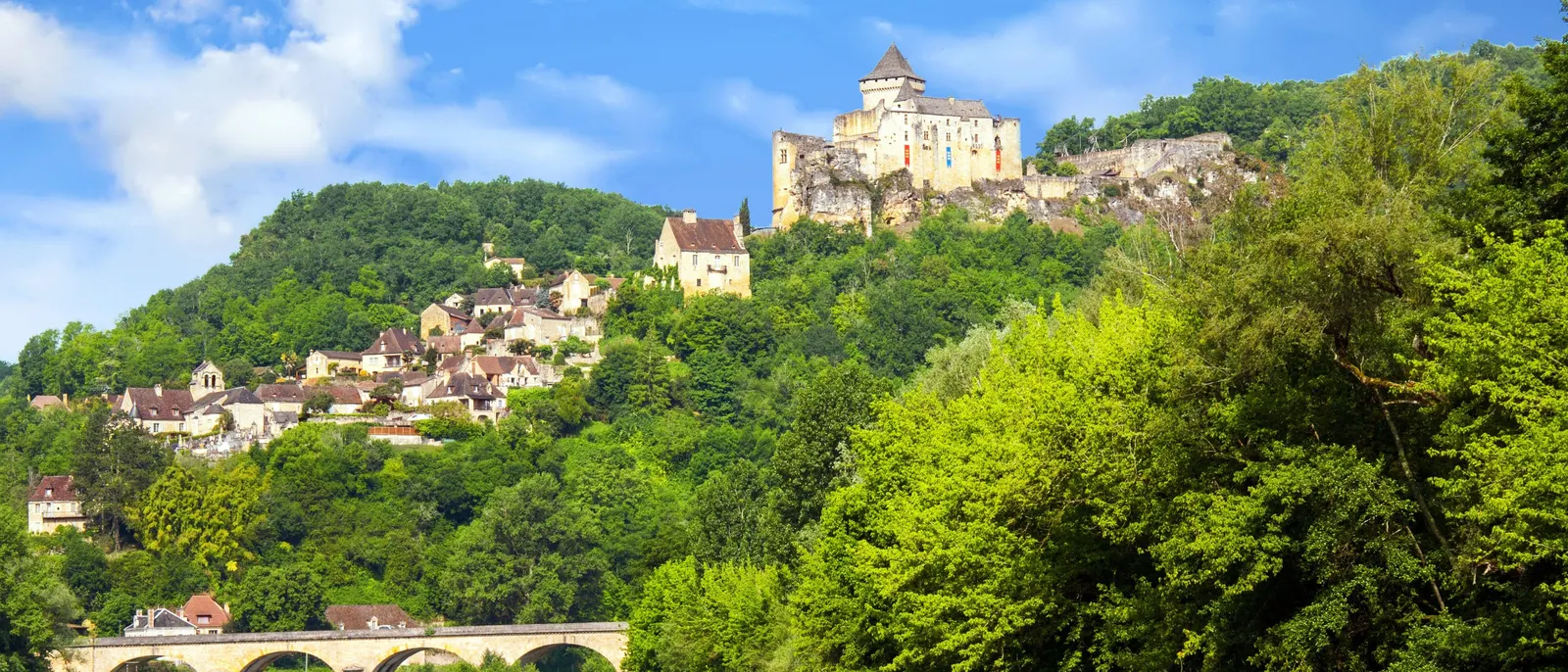
Castelnaud castle on its wooded spur, the village climbing the hillside and the stone bridge over the Dordogne, with the river in the foreground
Dordogne - Castelnaud-la-Chapelle - The castle and the Dordogne river

Frequently asked questions

Buying a house in the Dordogne: your questions

What budget do you need for a house in the Dordogne?

Over 12 months to end of June 2026, the median house in the Dordogne sold for €1,600/m²: the price of an ordinary home, not of a restored character house. A stone house with land, a pool and a view in the Périgord Noir sells well above it; a farmhouse to restore in the Périgord Vert costs far less to buy, with the works on top. Home Select sets out your full budget before the search: price, notary fees of 7 to 8%, works and upkeep.

Which part of the Dordogne is best for buying a house?

The Périgord Noir, around Sarlat and the Dordogne and Vézère valleys, has the most famous landscapes, at the highest prices. The Périgord Pourpre, around Bergerac, combines vineyards, bastide towns and an airport; the Périgord Blanc, around Périgueux, suits year-round living; the Périgord Vert, in the north, offers the most space for the money. Home Select helps you choose.

Can you convert a barn or tobacco barn into a house in the Dordogne?

Yes, if the planning rules allow it: in an agricultural or natural zone, the local plan must have designated the building as eligible for a change of use, and the permit may need the opinion of the state heritage architect. You also need water, electricity and room for a septic system on the plot. Home Select has these points checked before the offer and can make the purchase conditional on the permit.

Do houses in the Dordogne have septic tanks?

In the countryside, most are not on mains drainage: they have a septic tank or a small treatment plant, inspected by the local public sanitation service (SPANC). The inspection report, less than three years old, is attached to the sale; if the system fails, the buyer must carry out the works within a year. Home Select reads it before the offer and, where needed, uses it in the negotiation.

How do you get to the Dordogne from the UK or Paris?

From the UK, Bergerac airport has direct flights, many of them seasonal, and Bordeaux has them all year; from Paris, the TGV reaches Bordeaux in just over two hours. From Bordeaux, allow about an hour and a half by road to Bergerac or Périgueux and two and a half hours to Sarlat, itself under an hour from Brive and its trains to Paris. These times are indicative, and Home Select checks them with you.

Dordogne, Charente-Maritime or Provence: where should I buy a country house?

Over 12 months to end of June 2026, the median house reached €1,600/m² in the Dordogne, €2,500/m² in Charente-Maritime and €2,900/m² in the Vaucluse: for the same budget, the Périgord offers more stone, land and outbuildings. Charente-Maritime brings the ocean and its islands, Provence the light and summers of the south, the Dordogne its valleys and villages; Home Select helps you weigh them up.

Can British buyers still buy a house in the Dordogne after Brexit?

Yes: no rule restricts a British national from buying a house in France, and the process with the notary is unchanged. What has changed is the length of stay: without a long-stay visa, it is limited to 90 days in any 180 in the Schengen area. Home Select prepares the financing, currency exchange and remote signing with you, so the purchase fits around your visits.

How long does it take to buy in the Dordogne with a buyer’s agent?

The calendar depends on how rare the target property is in {nom} and on your availability: Home Select frames it at the brief, then holds it. Properties are first seen on video, and your decisive viewings are grouped into a single trip.

What are your fees in the Dordogne?

Home Select, a buyer’s agent in the Dordogne, charges 2.5% of the net purchase price (minimum €10,000 incl. VAT) on the Exclusive offer, or 1.5% on the Confidential offer for projects of €2m and above, plus 10% of the negotiated reduction in both cases. Home Select is paid on success only, and also on what you save: nothing is due until you have bought.

What happens next

  1. A buyer’s agent reads your request and answers within one working day.
  2. A first confidential conversation: how you will use the property, the real budget, the non-negotiable criteria, the timing.
  3. A written brief, and a search started within the week. Nothing is due until you have bought.

Your project in the Dordogne

A first confidential conversation, with no commitment. A buyer’s agent answers within one working day.

4.8/5
On Google (141 reviews)
1,200+
Buyers guided
100%
On success, nothing upfront

It takes 1 minute.

Further reading

Buying in the Dordogne: the other pages