Entrusting and tracking the keys of a property held from abroad: who holds what, the log, lock changes
A property held from afar is protected first by a strict key regime: identified sets, few holders, a dated log of every handover and return, a code key box for occasional call-outs. This dossier says who should hold what, how to keep track, when to change locks and codes, and what to do in case of loss or doubt.
By Jean Mascla, founder of Home SelectUpdated · 7 min read
Why the key regime decides everything else
Keys are the first access to the property, and poorly controlled circulation undermines the rest of the organisation. A key lent without a record, a copy forgotten with a departed contact, a code passed on by word of mouth: from abroad, you lose track of who can enter your home, and that ignorance has very concrete consequences. After a burglary with no sign of forced entry, the insurer will examine who held an access; after a botched intervention, liability will be discussed on the basis of handovers; day to day, a home that anyone can open is no longer a watched home.
The key discipline rests on four simple principles:
Labelled sets: each set carries a discreet mark, and you know at all times how many sets exist and where they are.
A limited number of holders: countable on the fingers of one hand, since each extra set divides your control.
A dated handover log: who, when, why, which set, and when it came back.
A coded key box: for occasional interventions, without multiplying holders.
Over the seasons, the key regime also becomes a shared language: the neighbour knows what is expected of them, the regular contact knows that one set is dedicated to them and nothing more, the concierge service knows its log will be read. This clarity avoids case-by-case bargaining, the natural ground of vagueness, and informal requests to borrow the bunch no longer arise once the regime is written down. In a block of flats, the caretaker may feature among useful contacts, but their role remains watching the common parts: unless a long-standing relationship exists, they hold none of your keys.
Who should hold what?
Legitimacy is reasoned profile by profile. You hold the full reference set, kept away from the property, never left on site. The trusted neighbour receives one set for external alerts and immediate emergencies. The regular contact, the one who attends for inspections and upkeep, holds a dedicated set. The concierge service, if it coordinates interventions, also keeps a dedicated set. Everything else goes through the key box.
Holder
Legitimacy
Record to keep
You
Owner: full reference set
Set kept away from the property, never left on site
The trusted neighbour
External alert, immediate emergency
Labelled set, logged handover, return at every trip back
The regular contact
Scheduled visits and inspections
Dedicated set, dated handover and return on each assignment
The concierge service
Coordination of interventions
Dedicated set, log kept and shared
The coded key box
Occasional technicians, surveys
Code noted in the file, changed after every external visit
The list stops there. No other profile holds a key: no spare under the doormat, no set left with someone met once, no bunch kept inside the property itself. If an occasional technician must enter, they go through the key box, whose code is changed after their visit, or through a delegated presence who welcomes them and locks up behind: the Home Select concierge service provides that presence.
How should each handover and return be logged?
The log comes down to a few columns and lives in the property file:
The date and time of the handover, and those of the return.
The holder’s name and the reason: inspection, emergency, intervention, viewing.
The set concerned, identified by its discreet mark.
The condition noted on return, with a photo if the visit involved work.
Every handover can be closed with a simple written message, however brief, fixing the date and the purpose. That record stands as proof in a dispute, and above all it maintains, in each holder, the sense of a framed trust rather than a bunch of keys doing the rounds. An up-to-date log is read in two minutes before any decision: you know who has what, since when, and why.
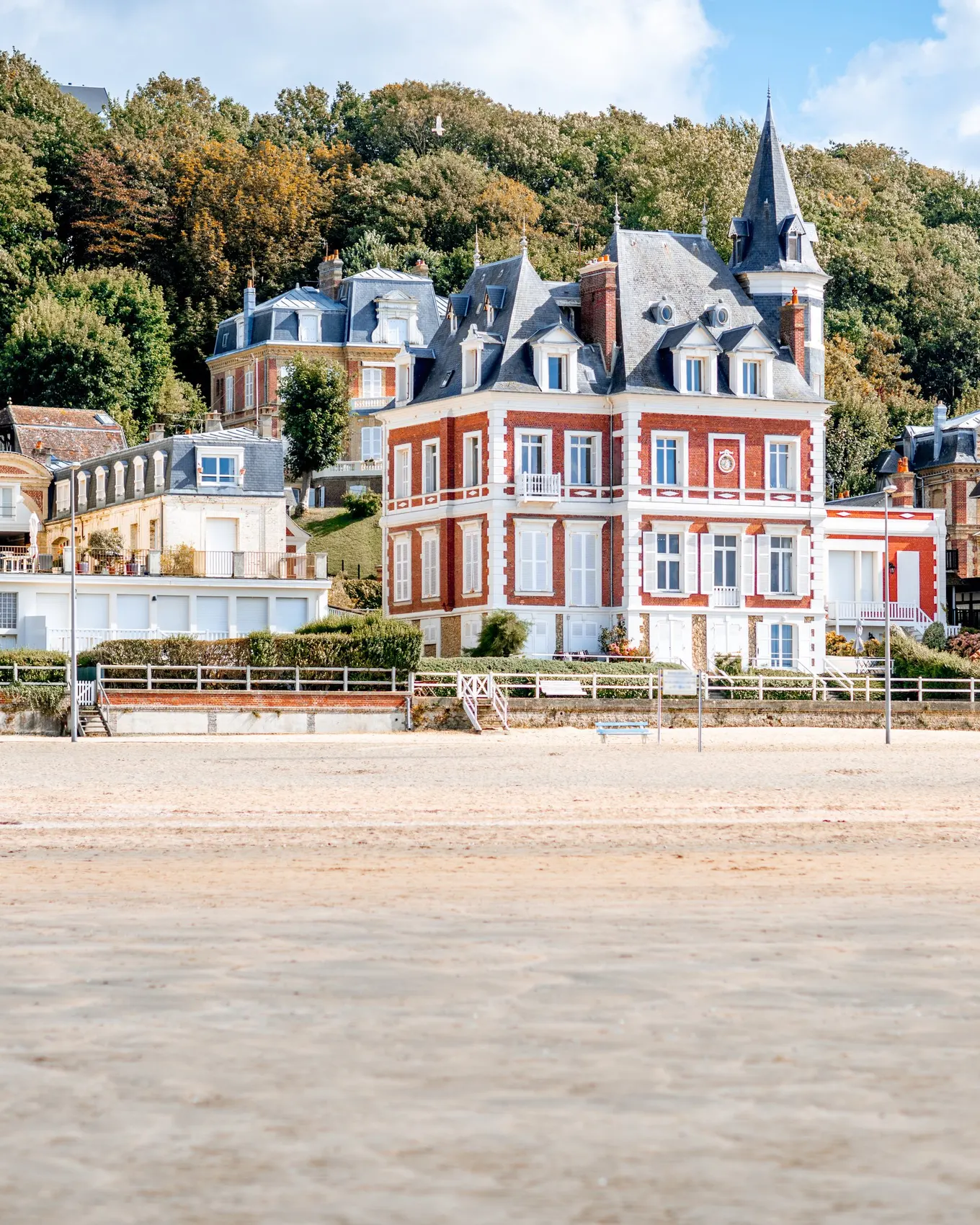
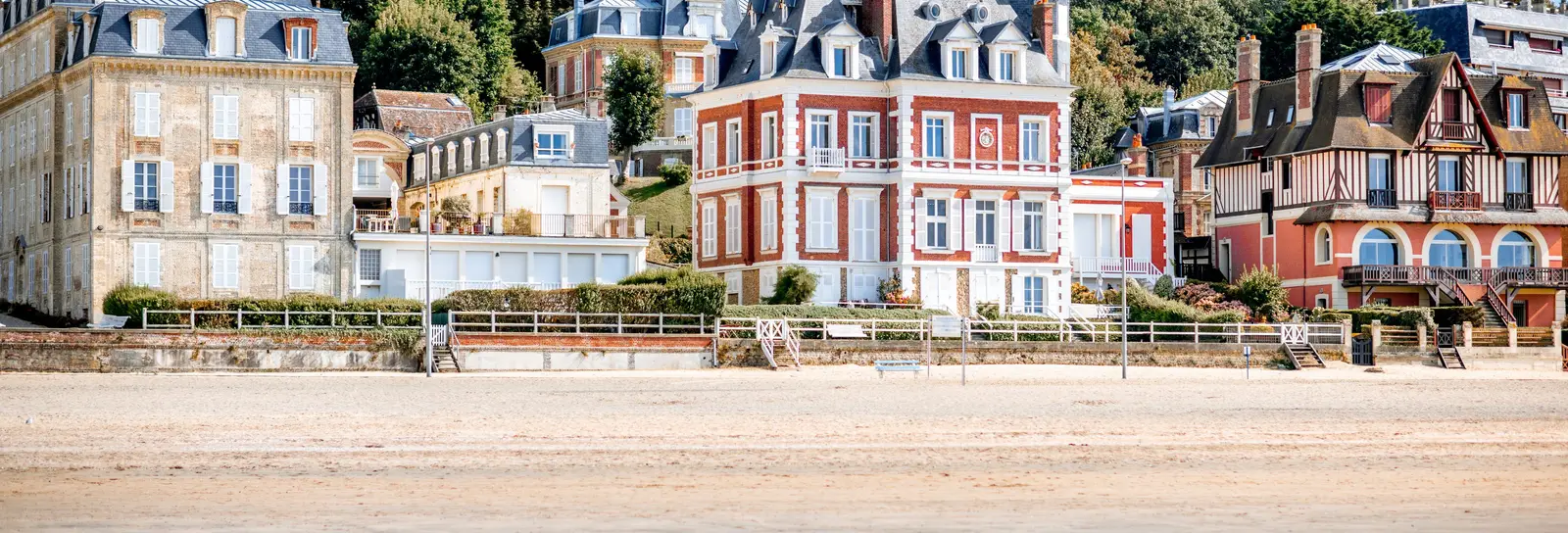
Trouville-sur-Mer, Normandie
Changing codes and locks, and when
Rotation is not excessive wariness: it is hygiene, applied at precise moments:
On taking possession of the property: the locks of a sold home have a history, have them changed or recoded before the first absence.
After the loss or theft of a key, even only suspected.
After the departure of a contact, without waiting for an incident.
After a troubling event: signs of attempted entry, a moved object, a door found open.
When changing the key-box code, systematically after every external technician’s visit.
Rotation covers everything that opens: locks, but also the gate code, the building entry code, the alarm code and the key-box code. A lock change without an alarm-code change leaves open what the other one closed.
In case of loss, theft or doubt
The scenario is a classic: the regular contact writes that they cannot find the set entrusted to them, or you discover the mark of an attempted break-in on a door. From abroad, the temptation is to wait for the next trip; that is almost always a mistake. The sequence to follow is short:
Establish the facts in writing: who lost what, when, in what circumstances, with photos if the doubt concerns an attempted break-in.
Report the theft or the attempt to the relevant services if the facts justify it, and keep the receipt for the insurer.
Have the locks concerned changed or recoded straight away, by an insured locksmith partner, with a quote you have approved.
Update the log: the missing set is recorded as such, the new sets enter the register, the codes change.
A lingering doubt always weighs more than a lock change: a key unaccounted for with a departed contact is an unknown access that may still be circulating. In the event of mere suspicion, changing the key-box code and the entry-code panel sometimes suffices; in the event of a certain loss of a full set, the lock is changed. In between, it is the established facts that decide, and your insurer will tell you what level of proof they expect.
A key regime is built in an hour and protects for years.
What Home Select organises for your property’s keys
A property held from abroad is prepared from the purchase. During the viewings, your Home Select property finder spots what will need upkeep; before the signing, they introduce the concierge service that will watch over the house in your absence.
After the keys, the Home Select concierge service organises the visits, the call-outs and the photographed reports. Tradespeople, the insurer and the managing agent act under their own responsibility; you decide on documents, wherever you are.
Frequently asked questions
How many key sets does a property run from abroad need?
Three or four at most: your reference set kept away from the property, one set with a trusted neighbour or the regular contact, one with the concierge service if you use one, and possibly a set in a key box for occasional visits. Every set is labelled and every handover is logged.
Is a coded key box reliable?
Yes, on three conditions: a sturdy model fixed to a solid support, a non-obvious code changed after every external visit, and a discreet location. It avoids multiplying holders, which beats a bunch of keys doing the rounds.
Should the locks be changed when buying a property?
Yes, or have them recoded: the keys of a sold home circulated before you, and you cannot count the existing sets. It is a reflex to align with taking possession, before the first long absence.
Who should hold what?
Legitimacy is reasoned profile by profile. You hold the full reference set, kept away from the property, never left on site. The trusted neighbour receives one set for external alerts and immediate emergencies. The regular contact, the one who attends for inspections and upkeep, holds a dedicated set. The concierge service, if it coordinates interventions, also keeps a dedicated set. Everything else goes through the key box.
When should locks and codes be changed?
When you take possession of the property, after a key is lost or stolen, even if only suspected, after a contact leaves and after any troubling event; the key box code changes after every visit by an outside technician. Rotation covers everything that opens: locks, gate, door code, alarm.
What should you do if a set of keys is lost?
Establish the facts in writing, report the theft or attempt if the facts justify it, have the locks concerned changed or recoded by an insured locksmith, then update the log. A mere suspicion can be settled by changing the codes; the certain loss of a full set requires changing the lock.
Preparing a purchase in France from abroad, or already an owner there? Describe your situation: a Home Select property finder answers within one working day, and the file starts with the right partners, in the right order.
Your request is already sent, simply pick what suits you.
A property finder calls you back within one working day.
🇫🇷+33
An error occurred. Please try again.
Then answer 3 quick questions to be matched with the right hunter.
Home Select processes your data (name, email, phone, project) to handle your request and contact you. It is recorded in our follow-up tool and read by the hunter in charge of your project. Our technical providers access it for hosting, email and checking that your email and number are real, some of them from the United States under the safeguards set by the GDPR. We keep it for three years after our last exchange, or five years after the end of our assignment if you entrust it to us, as French anti-money-laundering law requires. To access, correct or erase it, or to object to its use: contact@home-select.fr. Details in our privacy policy.
Your hunter calls you back within one working day.
Resume your request?
You started a request recently. Pick up where you left off, or start over.
Your answers are kept for 24 hours.
What is your project?
Takes 1 minute, no commitment.
Where are you looking?
Select one or more cities or areas
Your budget?
€
You pay only when Home Select finds it.
Anything to add?
Optional. Add any useful details: specifics about your search, constraints or your availability.
This helps your hunter prepare for your call.
An expert will contact you shortly
Your brief
Confidential search: your file goes to a senior hunter.
60 rue François 1er, 75008 Paris · FCI member
FeesOne month’s rent excluding charges, plus VAT, with a minimum of €2,000 including VAT. Payable only when the lease is signed. No application fee.
Step 1 of 2 · Your search
What are you looking for?
Furnished, unfurnished or both?
In which city?
One or more cities or areas.
€ / month
Charges included, as in the listings.
You would like to move in
Two minutes, no documents needed at this stage.
FeesOne month’s rent excluding charges, plus VAT, with a minimum of €2,000 including VAT. Payable only when the lease is signed. No application fee.
Step 2 of 2 · Your situation
Your situation
These answers let Home Select tell you quickly, and frankly, whether your search can succeed on the market in your city.
You are applying
€ / month
Before tax, regular bonuses included, for everyone applying.
Main applicant’s employment
Your company is based in France
Number of annual accounts filed
To strengthen your file
Optional for your profile. A guarantee reassures landlords.
Guarantor’s situation
€ / month
Who it is for, why you are moving, what matters to you. Do not include sensitive information (health, origin, religion, family situation).
Your contact details
🇫🇷+33
Reply within 24 business hours.
Home Select processes your data (name, email, phone, project, employment, income, guarantee) to review your rental request and contact you. Your answers are compared with the criteria landlords apply, then read by Home Select’s rental hunter. A request that cannot succeed receives a written reply within 24 business hours, and you can ask for it to be reviewed again at contact@home-select.fr. Our technical providers access it for hosting, email and checking that your email and number are real, some of them from the United States under the safeguards set by the GDPR. A request that does not lead to an assignment is erased after three months; otherwise, we keep your data for three years after our last exchange, or five years after the end of our assignment if you entrust it to us, as French anti-money-laundering law requires. To access, correct or erase it, or to object to its use: contact@home-select.fr. Details in our privacy policy.
FeesOne month’s rent excluding charges, plus VAT, with a minimum of €2,000 including VAT. Payable only when the lease is signed. No application fee.
Your file
Your file matches what landlords expect
Book your meeting with Stéphane Martins, rental hunter. He confirms it after reading your file, within 24 business hours.
Choose your time slot
Times shown in Paris time.
Confirmation arrives by email and text message.
FeesOne month’s rent excluding charges, plus VAT, with a minimum of €2,000 including VAT. Payable only when the lease is signed. No application fee.
Your request
Your request is in good hands
Stéphane Martins, rental hunter, is reviewing your file and will reply within 24 business hours.
You will receive a confirmation email.
You arrived through one of Home Select’s ads or campaigns.Ad measurement.Do you agree to Home Select measuring how well it works? Home Select will know which campaign brought you here and, if you get in touch, the ad platform will only learn that its ad worked, without receiving your contact details.Do you agree to Home Select measuring how well its ads work? If you arrive through one of them, Home Select will know which one and, if you get in touch, the ad platform will only learn that its ad worked, without receiving your contact details.Learn moreYour current choice: .