Leaving a property empty or keeping it alive: what emptiness costs, and the possible degrees of presence
A property left empty deteriorates faster than a lived-in one: damp settles, seals dry out, traps empty and let odours rise, and insurance often reduces its cover when vacancy drags on. Keeping it alive, even minimally, changes things. This dossier says what emptiness costs, and how to choose the right degree of presence when you live abroad.
By Jean Mascla, founder of Home SelectUpdated · 7 min read
What actually happens inside an empty home?
A lived-in home looks after itself without anyone thinking about it: windows are opened, water is run, rooms are heated, furniture is moved. An empty home simply endures. The air stagnates, condensation settles in the corners and behind wardrobes, and damp marks appear where nobody sees them. The silicone seals around the shower shrink then peel away, taps stiffen, the toilet cistern furs up. The water trapped in the drains’ U-bends slowly evaporates: once it is gone, odours from the soil stacks rise into the rooms, and a stale smell works its way into curtains, mattresses and cupboards.
These disorders share one trait: they progress silently. A tiny leak under the sink becomes a buckled floor; a damp patch on a wall becomes a whole surface to redo. Spotted during a regular visit, this damage is settled with one small job. Discovered a year later, during a stay or a buyer’s viewing, it is paid for in works and in negotiation.
Then come the signals of vacancy: an overflowing letterbox, shutters permanently closed, never a light in the evening. A home that looks empty can be spotted from the street, and not only by well-meaning people. Emptiness also sends a message to the neighbours and the building’s management: nobody will notice a problem for a long time.
Insuring an unoccupied property
Most home insurance policies distinguish the main residence, permanently occupied, from a vacant or unoccupied property. Beyond a period of vacancy defined in your specific terms, cover is often reduced, sometimes suspended, unless a specific clause has been agreed with the insurer. And if a claim occurs in an unoccupied property whose situation was never declared, compensation can be cut back, or refused.
The answer comes down to three steps. First, reread the policy to learn the permitted vacancy period and the obligations attached to it: some policies require periodic visits, with evidence to prove them. Next, declare the situation to the insurer if the contract requires it, rather than facing it after a loss. Finally, build a maintenance file: visit reports, dated photos, intervention invoices. A property that is monitored and documented defends itself far better with an insurer than one left to itself.
What does a lived-in property gain?
Keeping a property alive does not mean living in it: it means giving it, at regular intervals, the attention an occupied home receives naturally.
Airing: opening the windows in every room renews the air, dries out condensation and slows mould down.
Water: running every tap, flushing the toilet and topping up rarely used traps stops odours rising.
Early detection: a regular visit turns a water leak into a mop job rather than a dispute with the neighbour below.
Lived-in look: post collected, shutters adjusted, the property no longer shouts vacancy from the street.
Value: an aired, monitored and maintained home goes back on the market without a refurbishment project, and holds its worth.
These benefits compound over time. A home aired every month keeps its paintwork, floors and equipment in working order; a file of regular visits documents the property’s continuous upkeep; and on the day you sell or let it again, everything falls into place without heavy refurbishment. The real cost of emptiness only becomes visible when you try to part with the property.
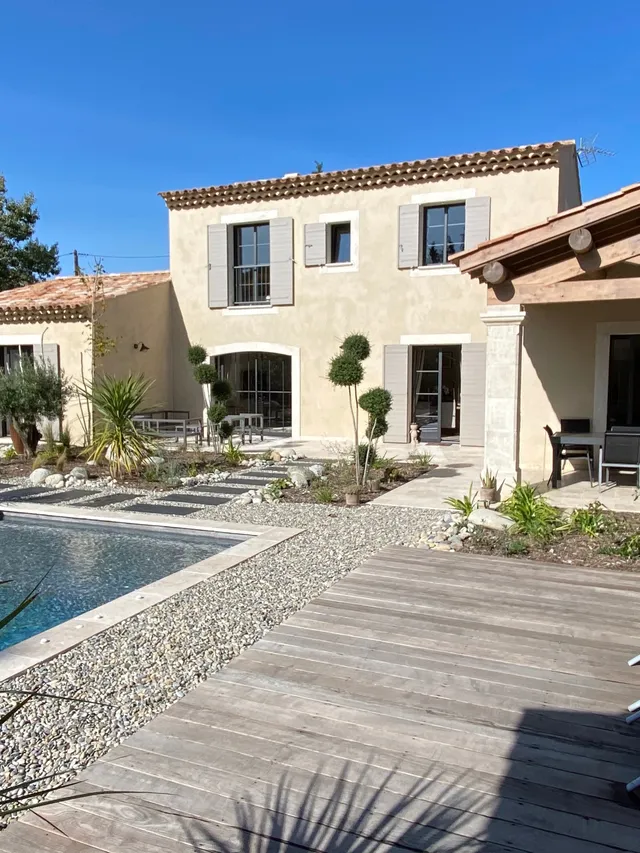
Fayence, Côte d’Azur
From empty to occupied: the degrees of presence
The table below sums up the possible arrangements, from total absence to full occupation.
wear, early detection, lived-in look, evidence for the insurer
Occasional stays
medium: travel needs planning
full airing, equipment restarted, close knowledge of the property
Home sitting
low once the framework is set
continuous human presence, routine care, immediate responsiveness
Periodic visits are the minimum foundation. A control visit with a photo report gives each call a dated record of the property’s condition, useful for you and for your insurer: it covers most of the risks of emptiness without upsetting your routine.
Occasional stays, a few weeks a year, do a property a world of good: full airing, the water heater and shutters brought back into service, and a chance to catch up on what distance hides. They simply require travel, and only cover the periods when you are there.
Home sitting follows a different logic: a trusted occupant lives in the property while you are away, airs it, looks after it and keeps it alive day to day, plants included. The framework, expectations and arrangements are set out on the home sitting page.
How do you organise presence from abroad?
The right arrangement depends on three parameters: the expected length of vacancy, the condition and age of the property, and your tolerance for the unexpected. A recent, sound home copes with spaced-out visits; an old flat, in a managed building, with ageing equipment, calls for a denser presence.
A few gestures are enough to keep a home minimally alive, at every visit:
air every room for a few minutes;
run water at every tap and flush the toilet;
pour a glass of water into rarely used traps;
inspect walls, ceilings and the space under sinks: damp marks, blistering, seals;
test taps, shutters and windows;
collect the post and vary the position of the shutters;
check the meters and switch off whatever should be off before leaving.
It remains to choose the right arrangement, from regular visits to home sitting, so that your property stays alive even when you are far away.
What Home Select organises for an unoccupied property
A property held from abroad is prepared from the purchase. During the viewings, your Home Select property finder spots what will need upkeep; before the signing, they introduce the concierge service that will watch over the house in your absence.
After the keys, the Home Select concierge service organises the visits, the call-outs and the photographed reports. Tradespeople, the insurer and the managing agent act under their own responsibility; you decide on documents, wherever you are.
Frequently asked questions
Is an empty home really less well covered by insurance?
Most often, yes. Most home insurance policies reduce their cover, or suspend it, when a home stays empty beyond a duration set out in the specific terms. Reread your policy and report the vacancy if the contract requires it.
How often should an empty property be visited?
A monthly rhythm is a sensible standard for a fully empty home, and quarterly is the bare minimum. Every visit should air the rooms, run the water and produce a photo report: these records also help with your insurer.
Is home sitting right for every property?
It suits homes in good condition and ready to live in, rather than properties mid-renovation. The principle is that a trusted occupant lives on site while you are away: set expectations in writing before handing over the keys.
What actually happens inside an empty home?
A lived-in home looks after itself without anyone thinking about it: windows are opened, water is run, rooms are heated, furniture is moved. An empty home simply endures. The air stagnates, condensation settles in the corners and behind wardrobes, and damp marks appear where nobody sees them. The silicone seals around the shower shrink then peel away, taps stiffen, the toilet cistern furs up. The water trapped in the drains’ U-bends slowly evaporates: once it is gone, odours from the soil stacks rise into the rooms, and a stale smell works its way into curtains, mattresses and cupboards.
What does a lived-in property gain?
Keeping a property alive does not mean living in it: it means giving it, at regular intervals, the attention an occupied home receives naturally. These benefits compound over time. A home aired every month keeps its paintwork, floors and equipment in working order; a file of regular visits documents the property’s continuous upkeep; and on the day you sell or let it again, everything falls into place without heavy refurbishment. The real cost of emptiness only becomes visible when you try to part with the property.
How do you organise presence from abroad?
The right arrangement depends on three parameters: the expected length of vacancy, the condition and age of the property, and your tolerance for the unexpected. A recent, sound home copes with spaced-out visits; an old flat, in a managed building, with ageing equipment, calls for a denser presence.
Preparing a purchase in France from abroad, or already an owner there? Describe your situation: a Home Select property finder answers within one working day, and the file starts with the right partners, in the right order.
Your request is already sent, simply pick what suits you.
A property finder calls you back within one working day.
🇫🇷+33
An error occurred. Please try again.
Then answer 3 quick questions to be matched with the right hunter.
Home Select processes your data (name, email, phone, project) to handle your request and contact you. It is recorded in our follow-up tool and read by the hunter in charge of your project. Our technical providers access it for hosting, email and checking that your email and number are real, some of them from the United States under the safeguards set by the GDPR. We keep it for three years after our last exchange, or five years after the end of our assignment if you entrust it to us, as French anti-money-laundering law requires. To access, correct or erase it, or to object to its use: contact@home-select.fr. Details in our privacy policy.
Your hunter calls you back within one working day.
Resume your request?
You started a request recently. Pick up where you left off, or start over.
Your answers are kept for 24 hours.
What is your project?
Takes 1 minute, no commitment.
Where are you looking?
Select one or more cities or areas
Your budget?
€
You pay only when Home Select finds it.
Anything to add?
Optional. Add any useful details: specifics about your search, constraints or your availability.
This helps your hunter prepare for your call.
An expert will contact you shortly
Your brief
Confidential search: your file goes to a senior hunter.
60 rue François 1er, 75008 Paris · FCI member
FeesOne month’s rent excluding charges, plus VAT, with a minimum of €2,000 including VAT. Payable only when the lease is signed. No application fee.
Step 1 of 2 · Your search
What are you looking for?
Furnished, unfurnished or both?
In which city?
One or more cities or areas.
€ / month
Charges included, as in the listings.
You would like to move in
Two minutes, no documents needed at this stage.
FeesOne month’s rent excluding charges, plus VAT, with a minimum of €2,000 including VAT. Payable only when the lease is signed. No application fee.
Step 2 of 2 · Your situation
Your situation
These answers let Home Select tell you quickly, and frankly, whether your search can succeed on the market in your city.
You are applying
€ / month
Before tax, regular bonuses included, for everyone applying.
Main applicant’s employment
Your company is based in France
Number of annual accounts filed
To strengthen your file
Optional for your profile. A guarantee reassures landlords.
Guarantor’s situation
€ / month
Who it is for, why you are moving, what matters to you. Do not include sensitive information (health, origin, religion, family situation).
Your contact details
🇫🇷+33
Reply within 24 business hours.
Home Select processes your data (name, email, phone, project, employment, income, guarantee) to review your rental request and contact you. Your answers are compared with the criteria landlords apply, then read by Home Select’s rental hunter. A request that cannot succeed receives a written reply within 24 business hours, and you can ask for it to be reviewed again at contact@home-select.fr. Our technical providers access it for hosting, email and checking that your email and number are real, some of them from the United States under the safeguards set by the GDPR. A request that does not lead to an assignment is erased after three months; otherwise, we keep your data for three years after our last exchange, or five years after the end of our assignment if you entrust it to us, as French anti-money-laundering law requires. To access, correct or erase it, or to object to its use: contact@home-select.fr. Details in our privacy policy.
FeesOne month’s rent excluding charges, plus VAT, with a minimum of €2,000 including VAT. Payable only when the lease is signed. No application fee.
Your file
Your file matches what landlords expect
Book your meeting with Stéphane Martins, rental hunter. He confirms it after reading your file, within 24 business hours.
Choose your time slot
Times shown in Paris time.
Confirmation arrives by email and text message.
FeesOne month’s rent excluding charges, plus VAT, with a minimum of €2,000 including VAT. Payable only when the lease is signed. No application fee.
Your request
Your request is in good hands
Stéphane Martins, rental hunter, is reviewing your file and will reply within 24 business hours.
You will receive a confirmation email.
You arrived through one of Home Select’s ads or campaigns.Ad measurement.Do you agree to Home Select measuring how well it works? Home Select will know which campaign brought you here and, if you get in touch, the ad platform will only learn that its ad worked, without receiving your contact details.Do you agree to Home Select measuring how well its ads work? If you arrive through one of them, Home Select will know which one and, if you get in touch, the ad platform will only learn that its ad worked, without receiving your contact details.Learn moreYour current choice: .