Equipping a home for short stays: the sturdy essentials, the spares and resetting between stays
Equipping a home for short stays follows a simple philosophy: sturdy and simple. Each item is chosen to serve, survive long absences and be replaced with a message from abroad. This dossier details the essentials room by room, the spares that save the day, and resetting the home between stays.
By Jean Mascla, founder of Home SelectUpdated · 7 min read
Why do "sturdy and simple" always win?
Absence wears objects harder than use does: winter damp, the heat of a sealed summer, the dust that settles, and the small creatures that settle too. A seldom-occupied home does not need precious objects; it needs objects that tolerate being forgotten.
Three principles guide every purchase:
Materials that age well: solid wood, metal, toughened glass, textiles washed at high temperature. What develops a patina without degrading.
Parts that are easy to replace: a standard model is rebought with one message; an exclusive piece demands a trip. For a property managed from afar, the identical beats the unique.
Nothing irreplaceable: the sentimental has no place in a home that stays shut for months. What cannot be replaced risks disappearing, and the emotional cost of a distant breakage is paid twice.
Simplicity of use matters just as much: anything understood without a manual serves everyone, you, your family, a guest. And anything repairable with a standard key can be repaired by any tradesperson.
Then there is the classic objection: is sturdy not dull? The experience of remotely managed homes says otherwise: a palette of natural materials and sober colours, repeated from one room to the next, carries more character than remarkable objects that deteriorate. Unity replaces the rare piece.
What should go in each room?
The checklist for a short-stay home reads room by room, each line pairing the sturdy version with its trap:
Room
Sturdy essential
To avoid
Kitchen
Heavy pans, toughened glass or stoneware crockery, solid tin opener and corkscrew
Maintenance kit, spare bulbs and fuses, basic products
Nothing: this is the only line where missing equipment is the mistake
Two lines deserve a word of explanation. The bed, because it carries most of the quality of a short stay: a mediocre mattress turns a jet-lagged night into a bad memory. The maintenance kit, because it holds the difference between a self-sufficient home and one that waits: bulbs, fuses, screwdriver set, glues, seals, cloths, and the appliance manuals, photographed and filed in the property file.
Finally, plan the arrival kit: what makes the first night possible without any shopping, something to drink and to eat, paper and bathroom basics, suitable adaptors and chargers. It is what turns a late arrival, a night train or a delayed flight, into a mere formality.
Which spares should you plan for?
Spares are the life insurance of a seldom-occupied home. What exists in duplicate never blocks a stay:
Keys: several sets, held by different people, with an up-to-date register of who holds what.
Manuals: a paper copy in the home, a photographed copy in the file, to steer a repair from a distance.
Bulbs and fuses: a stock matched to the home’s exact references, checked at every departure.
Textiles: a complete spare set, sofa cover, sheets, towels, to rotate through the wash.
Cleaning consumables: basic products, bags, extractor and vacuum filters where applicable, never to depend on a closed shop.
This register of spares lives in the property journal: every part used is crossed off, every replacement purchase recorded. At a distance, this list beats any memory.
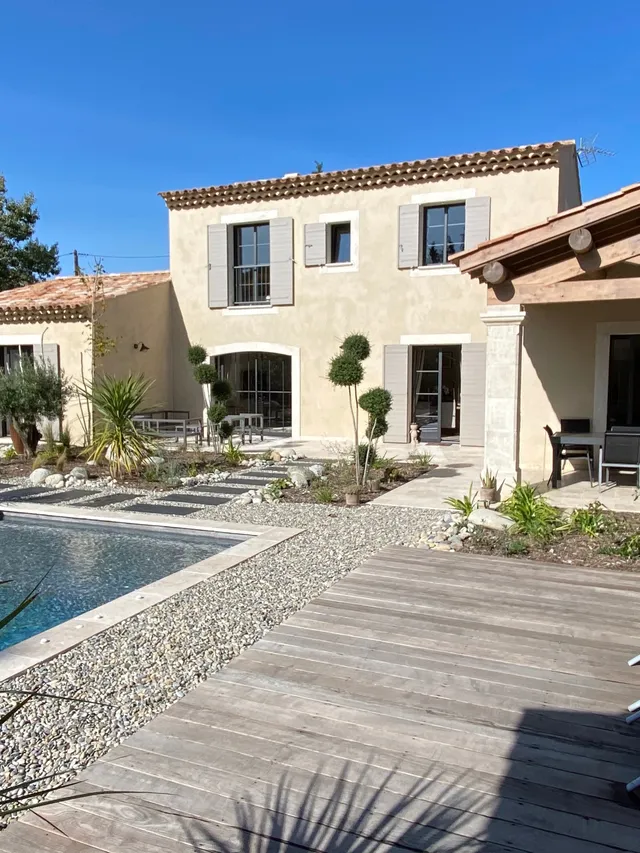
Morzine, Alpes
What should you do when something breaks between stays?
Breakage is almost always discovered from afar: in a photo from an inspection visit, in a tradesperson’s report, or on the evening of an arrival. The answer comes in three stages, always in the same order. Document first: photo of the object, reference noted in the file, circumstances if known. Decide next: repair or replace, the replaceable rule settles most cases, and the decision is taken in writing. Execute last: a local tradesperson swaps in the identical item or carries out the repair, and the action joins the property journal.
This is where standardisation pays: a known reference is rebought without hesitation or aesthetic debate, and the home returns to its state between two stays. A unique piece, on the other hand, reopens the whole design project for one broken object.
How do you reset the home between stays?
Departure closes the stay, but it is what prepares the next one. Three gestures, kept at every departure, are enough: a quick inventory of what has broken or worn out, immediate replacement of consumables, and putting the home into absence mode, heating on frost protection, shutters, air vents, water if needed. This cycle gains from following the seasons, the winter shutdown being the most demanding. The return, meanwhile, is prepared in advance: that is the role of the Home Select concierge service, which has the cleaning done, the equipment checked and the essentials restocked before you arrive, each step validated with photos.
Once the sturdy essentials are in place and documented, the floor is clear for the design project: steering it is described in the dossier on working with an interior designer remotely.
A successful short-stay home is recognisable by one sign: everyone arrives as if at home, with no survival shopping list.
What Home Select organises for equipping your home
Settling in is prepared during the search: the date of the deed sets that of the delivery, and the contracts are opened before the arrival. Your Home Select property finder keeps that calendar with you, from the preliminary contract to the first night.
We introduce the international remover, the tradespeople of the fit-out and the concierge service that receives deliveries and prepares the house. Transport, customs and works are theirs, under their responsibility: our role is that you arrive in a house that is ready.
Frequently asked questions
Do you need top-end equipment for a second home?
No: you need equipment that ages well. The right question is not the range but real sturdiness, ease of replacement and tolerance to being left empty. A simple sofa with washable covers serves a seldom-used home far better than a fragile piece that cannot be matched again from abroad.
What should be checked at the end of every stay?
Three things: condition, restocking and records. Note what has broken or worn out, replace at once what will be missing next stay, and log everything in the property journal so the list of spares stays accurate.
Why do "sturdy and simple" always win?
Absence wears objects harder than use does: winter damp, the heat of a sealed summer, the dust that settles, and the small creatures that settle too. A seldom-occupied home does not need precious objects; it needs objects that tolerate being forgotten.
What should go in each room?
The checklist for a short-stay home reads room by room, each line pairing the sturdy version with its trap: Two lines deserve a word of explanation. The bed, because it carries most of the quality of a short stay: a mediocre mattress turns a jet-lagged night into a bad memory. The maintenance kit, because it holds the difference between a self-sufficient home and one that waits: bulbs, fuses, screwdriver set, glues, seals, cloths, and the appliance manuals, photographed and filed in the property file.
Which spares should you plan for?
Spares are the life insurance of a seldom-occupied home. What exists in duplicate never blocks a stay: This register of spares lives in the property journal: every part used is crossed off, every replacement purchase recorded. At a distance, this list beats any memory.
What should you do when something breaks between stays?
Breakage is almost always discovered from afar: in a photo from an inspection visit, in a tradesperson’s report, or on the evening of an arrival. The answer comes in three stages, always in the same order. Document first: photo of the object, reference noted in the file, circumstances if known. Decide next: repair or replace, the replaceable rule settles most cases, and the decision is taken in writing. Execute last: a local tradesperson swaps in the identical item or carries out the repair, and the action joins the property journal.
How do you reset the home between stays?
Departure closes the stay, but it is what prepares the next one. Three gestures, kept at every departure, are enough: a quick inventory of what has broken or worn out, immediate replacement of consumables, and putting the home into absence mode, heating on frost protection, shutters, air vents, water if needed. This cycle gains from following the seasons, the winter shutdown being the most demanding. The return, meanwhile, is prepared in advance: that is the role of the Home Select concierge service, which has the cleaning done, the equipment checked and the essentials restocked before you arrive, each step validated with photos.
Preparing a purchase in France from abroad, or already an owner there? Describe your situation: a Home Select property finder answers within one working day, and the file starts with the right partners, in the right order.
Your request is already sent, simply pick what suits you.
A property finder calls you back within one working day.
🇫🇷+33
An error occurred. Please try again.
Then answer 3 quick questions to be matched with the right hunter.
Home Select processes your data (name, email, phone, project) to handle your request and contact you. It is recorded in our follow-up tool and read by the hunter in charge of your project. Our technical providers access it for hosting, email and checking that your email and number are real, some of them from the United States under the safeguards set by the GDPR. We keep it for three years after our last exchange, or five years after the end of our assignment if you entrust it to us, as French anti-money-laundering law requires. To access, correct or erase it, or to object to its use: contact@home-select.fr. Details in our privacy policy.
Your hunter calls you back within one working day.
Resume your request?
You started a request recently. Pick up where you left off, or start over.
Your answers are kept for 24 hours.
What is your project?
Takes 1 minute, no commitment.
Where are you looking?
Select one or more cities or areas
Your budget?
€
You pay only when Home Select finds it.
Anything to add?
Optional. Add any useful details: specifics about your search, constraints or your availability.
This helps your hunter prepare for your call.
An expert will contact you shortly
Your brief
Confidential search: your file goes to a senior hunter.
60 rue François 1er, 75008 Paris · FCI member
FeesOne month’s rent excluding charges, plus VAT, with a minimum of €2,000 including VAT. Payable only when the lease is signed. No application fee.
Step 1 of 2 · Your search
What are you looking for?
Furnished, unfurnished or both?
In which city?
One or more cities or areas.
€ / month
Charges included, as in the listings.
You would like to move in
Two minutes, no documents needed at this stage.
FeesOne month’s rent excluding charges, plus VAT, with a minimum of €2,000 including VAT. Payable only when the lease is signed. No application fee.
Step 2 of 2 · Your situation
Your situation
These answers let Home Select tell you quickly, and frankly, whether your search can succeed on the market in your city.
You are applying
€ / month
Before tax, regular bonuses included, for everyone applying.
Main applicant’s employment
Your company is based in France
Number of annual accounts filed
To strengthen your file
Optional for your profile. A guarantee reassures landlords.
Guarantor’s situation
€ / month
Who it is for, why you are moving, what matters to you. Do not include sensitive information (health, origin, religion, family situation).
Your contact details
🇫🇷+33
Reply within 24 business hours.
Home Select processes your data (name, email, phone, project, employment, income, guarantee) to review your rental request and contact you. Your answers are compared with the criteria landlords apply, then read by Home Select’s rental hunter. A request that cannot succeed receives a written reply within 24 business hours, and you can ask for it to be reviewed again at contact@home-select.fr. Our technical providers access it for hosting, email and checking that your email and number are real, some of them from the United States under the safeguards set by the GDPR. A request that does not lead to an assignment is erased after three months; otherwise, we keep your data for three years after our last exchange, or five years after the end of our assignment if you entrust it to us, as French anti-money-laundering law requires. To access, correct or erase it, or to object to its use: contact@home-select.fr. Details in our privacy policy.
FeesOne month’s rent excluding charges, plus VAT, with a minimum of €2,000 including VAT. Payable only when the lease is signed. No application fee.
Your file
Your file matches what landlords expect
Book your meeting with Stéphane Martins, rental hunter. He confirms it after reading your file, within 24 business hours.
Choose your time slot
Times shown in Paris time.
Confirmation arrives by email and text message.
FeesOne month’s rent excluding charges, plus VAT, with a minimum of €2,000 including VAT. Payable only when the lease is signed. No application fee.
Your request
Your request is in good hands
Stéphane Martins, rental hunter, is reviewing your file and will reply within 24 business hours.
You will receive a confirmation email.
You arrived through one of Home Select’s ads or campaigns.Ad measurement.Do you agree to Home Select measuring how well it works? Home Select will know which campaign brought you here and, if you get in touch, the ad platform will only learn that its ad worked, without receiving your contact details.Do you agree to Home Select measuring how well its ads work? If you arrive through one of them, Home Select will know which one and, if you get in touch, the ad platform will only learn that its ad worked, without receiving your contact details.Learn moreYour current choice: .