Mortgage or guarantee when you live abroad: the security the bank will take, and what it costs
No French bank lends without security. For a resident, a guarantee company settles the question in one line; for a borrower living abroad, that line often disappears, and the file falls back on a mortgage, which is dearer and heavier to undo. This dossier explains why, what the bank will take, and what each form of security costs on entry and on resale.
By Jean Mascla, founder of Home SelectUpdated · 6 min read
Why guarantees close to non-residents
A guarantee institution takes no charge over the property: it promises to pay the bank if you stop paying, then to turn against you. Its model therefore rests entirely on its ability to pursue you. A borrower who lives abroad, whose income lands in an account outside France and whose assets are elsewhere, is a risk it does not know how to recover. Some institutions accept residents of the European Union or Switzerland, where recovery procedures circulate; beyond that, refusal is the rule.
It is not a judgement on your solvency. It is a matter of the geography of recovery, and no file, however good, changes it.
The mortgage charge, and its two forms
When the guarantee slips away, the bank takes real security: a right registered on the financed property, allowing it to have the property sold if the loan is no longer paid, whatever country you live in. It is the natural security for a non-resident’s file, because it depends not on you but on the property, which is in France.
Since the reform of security law in force from 1 January 2022, it exists in two forms.
The lender’s special legal mortgage. It replaced the former lender’s lien. It can only secure the purchase of an existing property, not works or construction, but it is exempt from land registration tax: only the notary’s emoluments and the property security contribution remain. It is the cheapest real security, and the bank chooses it whenever it can.
The conventional mortgage. It secures any type of loan, including new builds, works and construction. It also bears land registration tax, 0.715 % of the secured amount, which makes it noticeably more expensive. It is required when the project includes a share of works financed by the loan.
In both cases, registration goes through the notary, who publishes it at the land registry at the same time as the deed of sale. It ranks from that date, and it survives the last repayment by one year.
The pledge, for wealth profiles
A third route exists for borrowers who hold a securities portfolio or a life insurance policy in France or in Europe: the pledge. The portfolio is given as security instead of the property, or alongside it. Private banks use it readily, notably on interest-only loans where the capital is repaid only at maturity. The advantage is twofold: no registration on the property, so nothing to release on resale, and a reading of the file based on assets rather than income, which partly sidesteps the discount applied to foreign-currency income described in our guide on borrowing capacity.
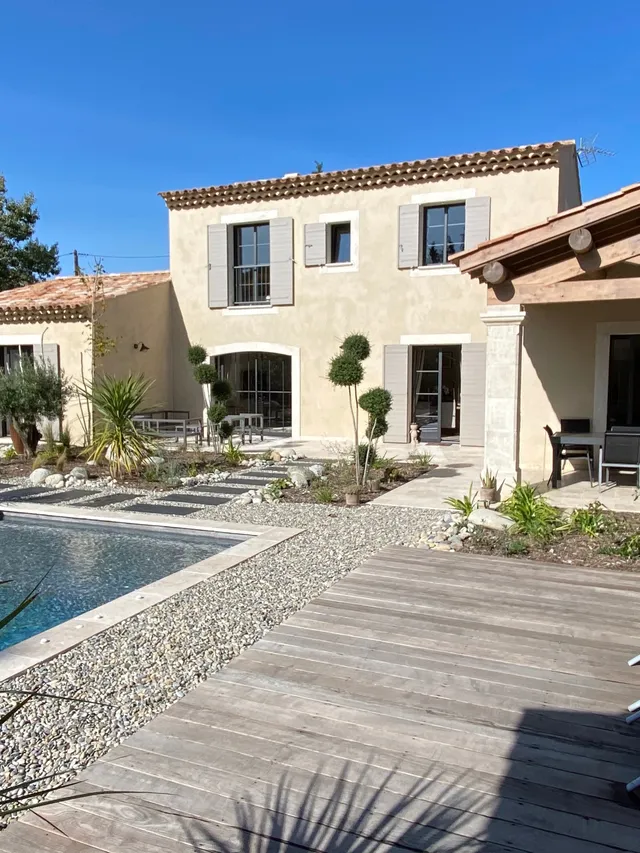
Sanary-sur-Mer, Provence
What each form of security costs, in and out
Security
On the way in
On early exit
Institutional guarantee
Commission and payment into a mutual fund
Nothing to release; part of the payment refunded
Lender’s special legal mortgage
Notary’s emoluments and property security contribution, no land registration tax
Release by notarial deed, charged
Conventional mortgage
The same, plus 0.715 % land registration tax
Release by notarial deed, charged
Pledge
Deed of pledge, reduced fees
Simple lifting of the pledge
The exit line is the one people forget. A mortgage charge does not lapse by itself on resale: if the loan is still running, or ended less than a year ago, the notary must draw up a release, and it has a cost. For a pied-à-terre kept for five years, that item deserves a place in the calculation from the start.
What it changes in the timetable and the total cost
The security is not a detail at the end of the file. Its cost enters the annual percentage rate, which the usury rate caps: a conventional mortgage on a file already heavy in insurance can push it over the limit and make the loan impossible to sign. It also weighs on the timetable, because registration requires the notary to be instructed early and to hold the accepted loan offer before fixing the signing.
That is one reason the partner broker deals with the security at the same time as the insurance, not afterwards: the two answer each other, and our guide on loan insurance from abroad shows the other half of the reasoning. What the bank will accept depends, finally, like everything else, on your country of residence: our guide to mortgages by country of residence sets it out country by country.
What Home Select organises for your loan’s security
Financing is prepared before the search. From the first meeting, your Home Select property finder puts you in touch with a broker used to non-residents, so that your offer arrives financed and the bank’s calendar fits within that of the preliminary contract.
Bank, currency, paperwork: we introduce the partners who handle these subjects every week, and we make sure the bank, the notaire and the currency provider receive the same documents. Each acts under their own responsibility; our role is that nothing is missing on the day the money must move.
Frequently asked questions
Why do guarantee institutions refuse non-residents?
Because their model relies on the ability to recover a debt from a defaulting borrower, and a debtor living abroad, with income and assets outside France, is far harder to pursue. Some institutions accept residents of the European Union or Switzerland; outside those areas, refusal is the rule and the bank falls back on a mortgage charge.
How much does a mortgage charge cost compared with a guarantee?
A conventional mortgage bears a land registration tax of 0.715 % of the secured amount, the notary’s emoluments and the property security contribution; the lender’s special legal mortgage, reserved for the purchase of an existing property, is exempt from the tax and costs markedly less. A guarantee costs a commission and a payment into a mutual fund, part of which is refunded at the end of the loan: it is cheaper overall, but it is not offered to everyone.
What happens if I sell before the end of the loan?
The mortgage charge must be released by a deed of discharge, drawn up by the notary at the sale and charged for, because it survives the last repayment by one year. With a guarantee there is nothing to release. For a property you expect to keep less than ten years, that exit cost is added to the comparison.
Which mortgage does the bank take on a non-resident’s property?
When the guarantee slips away, the bank takes real security: a right registered on the financed property, allowing it to have the property sold if the loan is no longer paid, whatever country you live in. It is the natural security for a non-resident’s file, because it depends not on you but on the property, which is in France.
What is a pledge over a portfolio?
A third route exists for borrowers who hold a securities portfolio or a life insurance policy in France or in Europe: the pledge. The portfolio is given as security instead of the property, or alongside it. Private banks use it readily, notably on interest-only loans where the capital is repaid only at maturity. The advantage is twofold: no registration on the property, so nothing to release on resale, and a reading of the file based on assets rather than income, which partly sidesteps the discount applied to foreign-currency income described in our guide on borrowing capacity.
Does the security change the loan’s calendar and cost?
The security is not a detail at the end of the file. Its cost enters the annual percentage rate, which the usury rate caps: a conventional mortgage on a file already heavy in insurance can push it over the limit and make the loan impossible to sign. It also weighs on the timetable, because registration requires the notary to be instructed early and to hold the accepted loan offer before fixing the signing.
Preparing a purchase in France from abroad, or already an owner there? Describe your situation: a Home Select property finder answers within one working day, and the file starts with the right partners, in the right order.
Your request is already sent, simply pick what suits you.
A property finder calls you back within one working day.
🇫🇷+33
An error occurred. Please try again.
Then answer 3 quick questions to be matched with the right hunter.
Home Select processes your data (name, email, phone, project) to handle your request and contact you. It is recorded in our follow-up tool and read by the hunter in charge of your project. Our technical providers access it for hosting, email and checking that your email and number are real, some of them from the United States under the safeguards set by the GDPR. We keep it for three years after our last exchange, or five years after the end of our assignment if you entrust it to us, as French anti-money-laundering law requires. To access, correct or erase it, or to object to its use: contact@home-select.fr. Details in our privacy policy.
Your hunter calls you back within one working day.
Resume your request?
You started a request recently. Pick up where you left off, or start over.
Your answers are kept for 24 hours.
What is your project?
Takes 1 minute, no commitment.
Where are you looking?
Select one or more cities or areas
Your budget?
€
You pay only when Home Select finds it.
Anything to add?
Optional. Add any useful details: specifics about your search, constraints or your availability.
This helps your hunter prepare for your call.
An expert will contact you shortly
Your brief
Confidential search: your file goes to a senior hunter.
60 rue François 1er, 75008 Paris · FCI member
FeesOne month’s rent excluding charges, plus VAT, with a minimum of €2,000 including VAT. Payable only when the lease is signed. No application fee.
Step 1 of 2 · Your search
What are you looking for?
Furnished, unfurnished or both?
In which city?
One or more cities or areas.
€ / month
Charges included, as in the listings.
You would like to move in
Two minutes, no documents needed at this stage.
FeesOne month’s rent excluding charges, plus VAT, with a minimum of €2,000 including VAT. Payable only when the lease is signed. No application fee.
Step 2 of 2 · Your situation
Your situation
These answers let Home Select tell you quickly, and frankly, whether your search can succeed on the market in your city.
You are applying
€ / month
Before tax, regular bonuses included, for everyone applying.
Main applicant’s employment
Your company is based in France
Number of annual accounts filed
To strengthen your file
Optional for your profile. A guarantee reassures landlords.
Guarantor’s situation
€ / month
Who it is for, why you are moving, what matters to you. Do not include sensitive information (health, origin, religion, family situation).
Your contact details
🇫🇷+33
Reply within 24 business hours.
Home Select processes your data (name, email, phone, project, employment, income, guarantee) to review your rental request and contact you. Your answers are compared with the criteria landlords apply, then read by Home Select’s rental hunter. A request that cannot succeed receives a written reply within 24 business hours, and you can ask for it to be reviewed again at contact@home-select.fr. Our technical providers access it for hosting, email and checking that your email and number are real, some of them from the United States under the safeguards set by the GDPR. A request that does not lead to an assignment is erased after three months; otherwise, we keep your data for three years after our last exchange, or five years after the end of our assignment if you entrust it to us, as French anti-money-laundering law requires. To access, correct or erase it, or to object to its use: contact@home-select.fr. Details in our privacy policy.
FeesOne month’s rent excluding charges, plus VAT, with a minimum of €2,000 including VAT. Payable only when the lease is signed. No application fee.
Your file
Your file matches what landlords expect
Book your meeting with Stéphane Martins, rental hunter. He confirms it after reading your file, within 24 business hours.
Choose your time slot
Times shown in Paris time.
Confirmation arrives by email and text message.
FeesOne month’s rent excluding charges, plus VAT, with a minimum of €2,000 including VAT. Payable only when the lease is signed. No application fee.
Your request
Your request is in good hands
Stéphane Martins, rental hunter, is reviewing your file and will reply within 24 business hours.
You will receive a confirmation email.
You arrived through one of Home Select’s ads or campaigns.Ad measurement.Do you agree to Home Select measuring how well it works? Home Select will know which campaign brought you here and, if you get in touch, the ad platform will only learn that its ad worked, without receiving your contact details.Do you agree to Home Select measuring how well its ads work? If you arrive through one of them, Home Select will know which one and, if you get in touch, the ad platform will only learn that its ad worked, without receiving your contact details.Learn moreYour current choice: .