The French banker’s draft: getting one in time when you live abroad, and checking the one you are handed
Many foreign buyers believe the banker’s draft has disappeared, and rediscover it at the worst moment: when a procedure requires one and three days remain. There is nothing archaic about it in France, it has simply become specialised. This dossier says where it is still required, how long it takes to obtain one from abroad, and how to check the one you are handed.
By Jean Mascla, founder of Home SelectUpdated · 6 min read
What sets it apart from an ordinary cheque?
It is drawn by the bank itself, not by you. The sum is debited from your account on issue and set aside, which gives the payee a certainty an ordinary cheque does not offer: the funds exist, they have already left.
Where it is still required, and where it no longer is
It is no longer used to pay for a property. Since 2013, any sum over 3,000 euros paid to the notaire for a property transaction must be sent by bank transfer: the price, the costs and the balance of the deposit go from your account to the practice’s, never by cheque.
It is still asked for where a procedure wants immediate certainty, without waiting for a transfer to clear: the guarantee handed to the lawyer before a court auction is the most common example, often as an alternative to a bank guarantee. Between private individuals, it is still used for sales where the buyer leaves with the item, a used car for instance.
So the first question is not “how do I get one?”, but “is it really required, and in what form?”. When the procedure’s document leaves the choice, a bank guarantee is sometimes easier to put together from abroad.
How long does it take to obtain?
Far longer than people imagine, when you are a non-resident.
First you need a funded French account, which assumes an incoming transfer already credited and, often, already checked. Then the request to issue, which is not always instant: depending on the institution, the draft is printed in branch, ordered remotely, or sent by post. Lastly the handover to the payee, who may require an original in person.
Each link takes days, and none of them speeds up. So reason backwards from the date the draft must be in the payee’s hands, not from the date you intend to ask for it.
To whose name, and for what amount?
Neither of these can be improvised, and neither can be corrected.
The payee must be named exactly as the procedure requires, and it is not always the person you have in mind: in several operations the draft is made out to a stakeholder or a designated third party, not to the seller. An error in the wording makes the draft unusable and means starting again.
The amount must be the one the reference document states, to the cent where it is the result of a regulated calculation. Ask for the exact wording in writing before going to the bank, and reread the draft before leaving the counter.
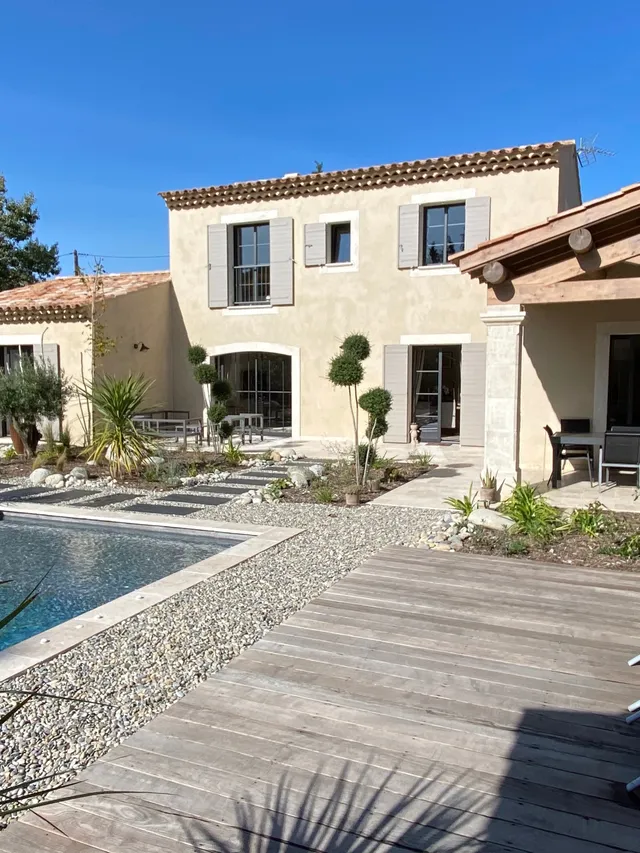
La Ciotat, Provence
And if you are the one receiving one?
Then caution changes sides, because forged banker’s drafts exist and they are well made. A piece of paper can carry the expected watermark, wording and signature without any account having been debited.
Only one check is worth anything: calling the issuing branch, on a number you found yourself in the bank’s official directory, and having the issue of the draft, its number and its amount confirmed. Never the number printed on the draft, never the one given to you by the person handing it over.
It is the same reflex that protects against transfer fraud: never validate a piece of information through the channel that brought it to you.
What to take away
The banker’s draft is an instrument of certainty, and that certainty is paid for in time. For a buyer living abroad it is therefore not handled as a means of payment but as an item in the file: identified early, its exact form checked, and the timetable traced back to the transfer that funds it.
What Home Select organises for your banker’s draft
Financing is prepared before the search. From the first meeting, your Home Select property finder puts you in touch with a broker used to non-residents, so that your offer arrives financed and the bank’s calendar fits within that of the preliminary contract.
Bank, currency, paperwork: we introduce the partners who handle these subjects every week, and we make sure the bank, the notaire and the currency provider receive the same documents. Each acts under their own responsibility; our role is that nothing is missing on the day the money must move.
Frequently asked questions
Can a banker’s draft be refused by the payee?
Yes. Nobody is obliged to accept a cheque, and a cautious professional may prefer a transfer, precisely because of forgeries. So ask in advance which means of payment is expected, rather than assuming a banker’s draft will be received as a cash equivalent.
How long does a banker’s draft stay valid?
Its validity is limited and is counted in months, which is ample for a planned operation. The real issue lies elsewhere: a draft issued and then unused must be returned to the bank for the sum to be released, and that return is easily forgotten once you have gone back abroad.
Can a foreign bank issue one?
An equivalent instrument exists in other countries, but it is neither recognised nor verifiable in the same way in France, and a French payee will often refuse it. Where the operation requires a French banker’s draft, it also requires, upstream, a French account.
What sets it apart from an ordinary cheque?
It is drawn by the bank itself, not by you. The sum is debited from your account on issue and set aside, which gives the payee a certainty an ordinary cheque does not offer: the funds exist, they have already left.
And if you are the one receiving one?
Then caution changes sides, because forged banker’s drafts exist and they are well made. A piece of paper can carry the expected watermark, wording and signature without any account having been debited.
How long does it take to obtain a banker’s draft from abroad?
Far longer than people imagine, when you are a non-resident. First you need a funded French account, which assumes an incoming transfer already credited and, often, already checked. Then the request to issue, which is not always instant: depending on the institution, the draft is printed in branch, ordered remotely, or sent by post. Lastly the handover to the payee, who may require an original in person.
Whom should a banker’s draft be made out to, and for what amount?
Neither of these can be improvised, and neither can be corrected. The payee must be named exactly as the procedure requires, and it is not always the person you have in mind: in several operations the draft is made out to a stakeholder or a designated third party, not to the seller. An error in the wording makes the draft unusable and means starting again.
Preparing a purchase in France from abroad, or already an owner there? Describe your situation: a Home Select property finder answers within one working day, and the file starts with the right partners, in the right order.
Your request is already sent, simply pick what suits you.
A property finder calls you back within one working day.
🇫🇷+33
An error occurred. Please try again.
Then answer 3 quick questions to be matched with the right hunter.
Home Select processes your data (name, email, phone, project) to handle your request and contact you. It is recorded in our follow-up tool and read by the hunter in charge of your project. Our technical providers access it for hosting, email and checking that your email and number are real, some of them from the United States under the safeguards set by the GDPR. We keep it for three years after our last exchange, or five years after the end of our assignment if you entrust it to us, as French anti-money-laundering law requires. To access, correct or erase it, or to object to its use: contact@home-select.fr. Details in our privacy policy.
Your hunter calls you back within one working day.
Resume your request?
You started a request recently. Pick up where you left off, or start over.
Your answers are kept for 24 hours.
What is your project?
Takes 1 minute, no commitment.
Where are you looking?
Select one or more cities or areas
Your budget?
€
You pay only when Home Select finds it.
Anything to add?
Optional. Add any useful details: specifics about your search, constraints or your availability.
This helps your hunter prepare for your call.
An expert will contact you shortly
Your brief
Confidential search: your file goes to a senior hunter.
60 rue François 1er, 75008 Paris · FCI member
FeesOne month’s rent excluding charges, plus VAT, with a minimum of €2,000 including VAT. Payable only when the lease is signed. No application fee.
Step 1 of 2 · Your search
What are you looking for?
Furnished, unfurnished or both?
In which city?
One or more cities or areas.
€ / month
Charges included, as in the listings.
You would like to move in
Two minutes, no documents needed at this stage.
FeesOne month’s rent excluding charges, plus VAT, with a minimum of €2,000 including VAT. Payable only when the lease is signed. No application fee.
Step 2 of 2 · Your situation
Your situation
These answers let Home Select tell you quickly, and frankly, whether your search can succeed on the market in your city.
You are applying
€ / month
Before tax, regular bonuses included, for everyone applying.
Main applicant’s employment
Your company is based in France
Number of annual accounts filed
To strengthen your file
Optional for your profile. A guarantee reassures landlords.
Guarantor’s situation
€ / month
Who it is for, why you are moving, what matters to you. Do not include sensitive information (health, origin, religion, family situation).
Your contact details
🇫🇷+33
Reply within 24 business hours.
Home Select processes your data (name, email, phone, project, employment, income, guarantee) to review your rental request and contact you. Your answers are compared with the criteria landlords apply, then read by Home Select’s rental hunter. A request that cannot succeed receives a written reply within 24 business hours, and you can ask for it to be reviewed again at contact@home-select.fr. Our technical providers access it for hosting, email and checking that your email and number are real, some of them from the United States under the safeguards set by the GDPR. A request that does not lead to an assignment is erased after three months; otherwise, we keep your data for three years after our last exchange, or five years after the end of our assignment if you entrust it to us, as French anti-money-laundering law requires. To access, correct or erase it, or to object to its use: contact@home-select.fr. Details in our privacy policy.
FeesOne month’s rent excluding charges, plus VAT, with a minimum of €2,000 including VAT. Payable only when the lease is signed. No application fee.
Your file
Your file matches what landlords expect
Book your meeting with Stéphane Martins, rental hunter. He confirms it after reading your file, within 24 business hours.
Choose your time slot
Times shown in Paris time.
Confirmation arrives by email and text message.
FeesOne month’s rent excluding charges, plus VAT, with a minimum of €2,000 including VAT. Payable only when the lease is signed. No application fee.
Your request
Your request is in good hands
Stéphane Martins, rental hunter, is reviewing your file and will reply within 24 business hours.
You will receive a confirmation email.
You arrived through one of Home Select’s ads or campaigns.Ad measurement.Do you agree to Home Select measuring how well it works? Home Select will know which campaign brought you here and, if you get in touch, the ad platform will only learn that its ad worked, without receiving your contact details.Do you agree to Home Select measuring how well its ads work? If you arrive through one of them, Home Select will know which one and, if you get in touch, the ad platform will only learn that its ad worked, without receiving your contact details.Learn moreYour current choice: .