Valuing your property for sale from abroad: cross-checking actual sales, listings and a reasoned opinion
Valuing a property for sale from abroad is not about guessing a price. The right price is built by cross-checking actual sales around the property, comparable listings and the reasoned opinion of a professional who has visited, then by replacing your eyes with a full video walk-through. This dossier says what each source brings, where it stops, and how to settle on a range that keeps serious buyers without underselling the property.
By Jean Mascla, founder of Home SelectUpdated · 8 min read
Which three sources should be crossed?
No single source is enough on its own. The price map tells you what has actually sold around your property. Listings tell you what is on the market today, and how stiff the competition is. A professional’s reasoned opinion tells you what your home is specifically worth, with its qualities and its flaws. The video capture, finally, stands in for your own eyes: without it, you are discussing a property you have not seen for months. Here is what each source contributes, and where its reach ends:
Source
What it teaches you
Its limit
The map of actual sales
The price actually paid, street by street, for comparable properties
It knows nothing about interior condition, service charges or works
Comparable listings
The price being asked today and the intensity of competition
An asking price is not an achieved price, and photos flatter everything
A professional’s reasoned opinion
The reading of the local market and the true value of the property’s assets
Its relevance assumes an on-site visit and knowledge of the area
The video and photo capture
Condition, layout, exposure and surroundings, without travelling
It documents, but does not replace the viewing of an interested buyer
The method consists in making these four views converge. When the map, the listings and the professional’s opinion tell the same story, the range is solid. When they contradict each other, the contradiction itself is information: it signals an atypical property, a moving market or an over-optimistic listing. Never pick the highest source: buyers will cross exactly the same data as you.
How should the map of actual sales be read?
The public records of completed sales brings together the transactions actually recorded, in other words prices paid, not prices hoped for. It is your best anchor, provided you use it methodically:
Keep only recent sales: markets move, and an older transaction reflects a setting that has gone.
Filter by type and size: comparing a two-room flat with a house and garden is meaningless.
Stay within the immediate perimeter: the same neighbourhood, ideally the same street, because gaps often play out from one block to the next.
Set aside atypical sales: lots sold in bulk, cellars or garages sold separately, transactions between relatives at levels unrelated to the market.
Then reason in ranges, never as a single figure. The average price per square metre smooths over considerable gaps between a high floor with a view and a ground floor facing the street, between a flat in a well-kept building and one in a tired block. The map sets the playing field; it does not name your price.
Why are comparable listings not enough?
Listings remain essential: they describe the direct competition your buyers will see, the number of similar properties offered at the same time, the arguments being used. But they share a structural flaw: they show asking prices, not achieved prices. Between the two come negotiation, the age of the listing and the eventual markdown.
Add the photographic bias: listings keep the best angles, the most flattering light, the wide-angle lens that enlarges every room. A buyer visits and corrects the impression; an owner abroad sees only the staging. Use listings, then, to gauge competition and positioning, never as proof of value. And watch how long comparable properties stay online: a listing that lingers for months signals a price the market is refusing.
What pitfalls await a valuation made from abroad?
Distance creates blind spots peculiar to non-resident owners. The main ones:
Flattering photos: a wide-angle lens and careful exposure turn a cramped room into a family living space. Without a size reference, the floor area reads larger than it is.
Floor level and charges misjudged: a high floor without a lift, heavy service charges, a façade refurbishment voted but not yet carried out all weigh on the price, and none of this shows in photos or in old memories.
Invisible works: roof, wiring, damp, joinery. What cannot be seen in a picture is spotted immediately at a viewing, and negotiated on the spot.
The micro-market: the side of the street, the proximity of a noisy road, the orientation, the neighbouring late-night business. Factors with no effect from a distance, decisive from a hundred metres away.
A market that has moved: your last stay dates back. In the meantime, local supply has changed, and perhaps demand too. Your memories are not market data.
Every one of these pitfalls is neutralised the same way: by sending someone to look for you.
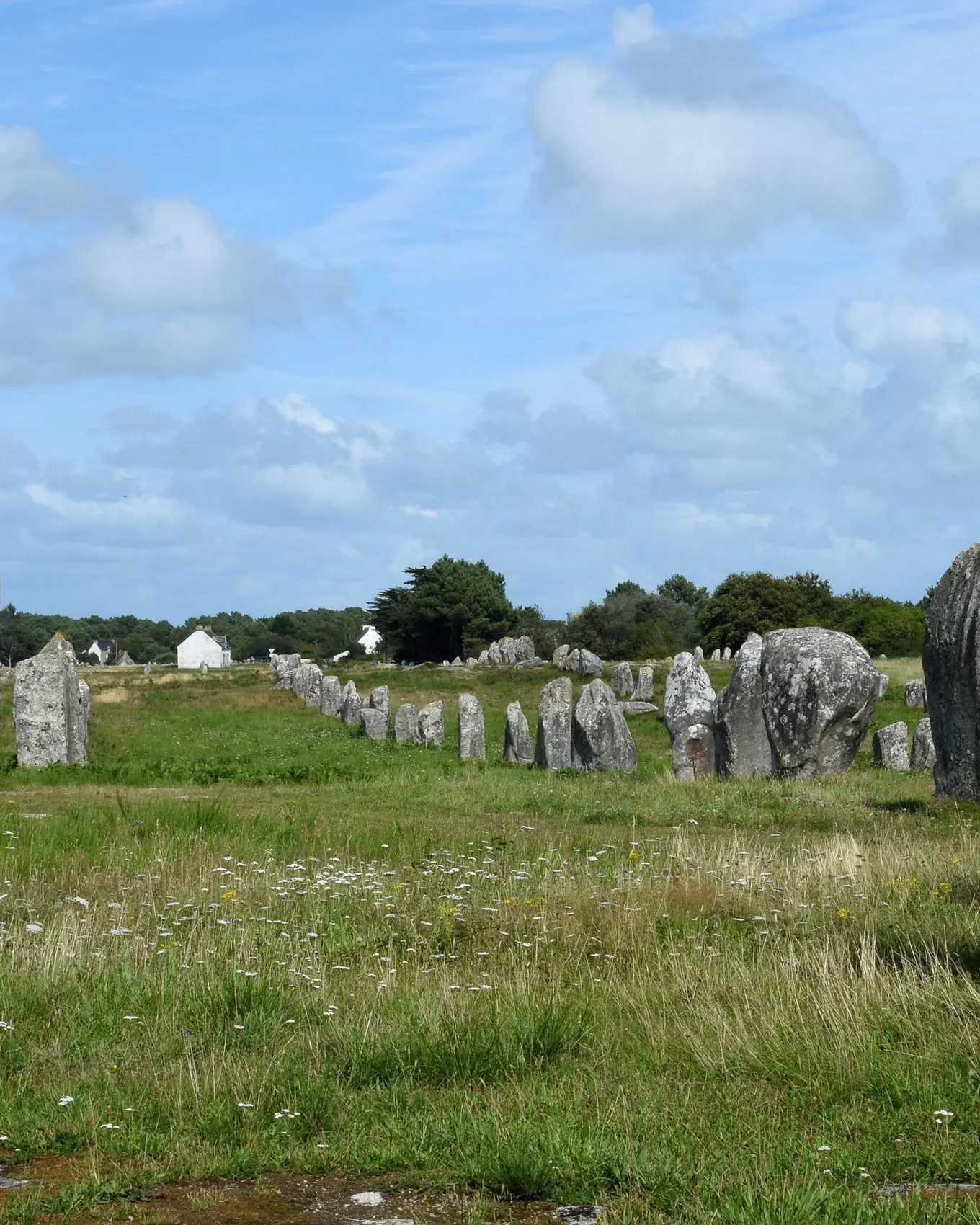
Carnac, Bretagne
How can you judge a property without travelling?
That is the role of a video and photo capture, carried out by someone who travels to the property for you. In practice, a useful capture is not a portfolio of pretty pictures: it is a complete and honest walkthrough, from the threshold of the building to the back of the loft, pausing on everything that bears on value. You would generally ask for:
The full run of the home, room by room, camera held without cuts, to judge volumes and circulation.
Close-ups on the sensitive points: consumer unit, windows, bathroom, any damp marks, condition of the kitchen.
The building and its surroundings: hall, staircase or lift, façade, the street in both directions, parking nearby.
The view and the exposure: what you see from the windows, the natural light at filming time, everything a buyer always asks about.
The elements a camera captures better than memory: street noise, smells, how the home flows.
Round out the capture with a live exchange with the person on site, at filming time: ask your questions in real time, have the camera linger on a doubtful corner, ask for a window to be opened to check the exposure. Combined with the price map and the listings, this material puts you in the position of someone who has visited.
How do you settle on a defensible sale price?
The synthesis remains. The map has set the ground, the listings the competition, the capture the condition. The professional who handles the sale, holder of the professional licence, adds what no data replaces: the reading of the field, knowledge of active buyers and the reasoned opinion, in writing, that will underpin the mandate.
Once the price is settled, the rest follows quickly: preparing the file of mandatory surveys, polishing the listing, organising viewings.
Every property blends objective data with quirks no table can capture.
What Home Select organises for valuing your property
Home Select is first a property finder, on the buyer’s side: we know what serious buyers look at and what makes a sale fail at the preliminary contract. When you sell or pass on a property, your property finder frames the calendar and the documents with you, remotely.
We introduce the notaire used to sellers and heirs who live abroad, the surveyor for the diagnostics, the tax adviser and the tax representative where your country requires one. The deeds, the diagnostics and the tax are theirs, under their responsibility: our role is that everything arrives in order, without you having to fly in.
Frequently asked questions
Can a property in France be valued without travelling?
Yes. By crossing the map of actual sales around the property, comparable listings and a professional’s reasoned view of the area, rounded out with a video capture filmed for you, you get a reliable range without boarding a plane.
Is the map of actual sale prices enough to set a price?
No. It shows what has actually sold around the property, but nothing about interior condition, service charges or works. It is the foundation, to be completed with current listings and above all with the visit of the professional who will handle the sale.
Who decides the final sale price?
You, the owner, based on the reasoned opinion of the partner holding the professional card who handles the sale.
Which three sources should be crossed?
No single source is enough on its own. The price map tells you what has actually sold around your property. Listings tell you what is on the market today, and how stiff the competition is. A professional’s reasoned opinion tells you what your home is specifically worth, with its qualities and its flaws. The video capture, finally, stands in for your own eyes: without it, you are discussing a property you have not seen for months. Here is what each source contributes, and where its reach ends:
How should the map of actual sales be read?
The public records of completed sales brings together the transactions actually recorded, in other words prices paid, not prices hoped for. It is your best anchor, provided you use it methodically: Then reason in ranges, never as a single figure. The average price per square metre smooths over considerable gaps between a high floor with a view and a ground floor facing the street, between a flat in a well-kept building and one in a tired block. The map sets the playing field; it does not name your price.
Why are comparable listings not enough?
Listings remain essential: they describe the direct competition your buyers will see, the number of similar properties offered at the same time, the arguments being used. But they share a structural flaw: they show asking prices, not achieved prices. Between the two come negotiation, the age of the listing and the eventual markdown.
What pitfalls await a valuation made from abroad?
Distance creates blind spots peculiar to non-resident owners. The main ones: Every one of these pitfalls is neutralised the same way: by sending someone to look for you.
How can you judge a property without travelling?
That is the role of a video and photo capture, carried out by someone who travels to the property for you. In practice, a useful capture is not a portfolio of pretty pictures: it is a complete and honest walkthrough, from the threshold of the building to the back of the loft, pausing on everything that bears on value. You would generally ask for:
How do you settle on a defensible sale price?
The synthesis remains. The map has set the ground, the listings the competition, the capture the condition. The professional who handles the sale, holder of the professional licence, adds what no data replaces: the reading of the field, knowledge of active buyers and the reasoned opinion, in writing, that will underpin the mandate.
Preparing a purchase in France from abroad, or already an owner there? Describe your situation: a Home Select property finder answers within one working day, and the file starts with the right partners, in the right order.
Your request is already sent, simply pick what suits you.
A property finder calls you back within one working day.
🇫🇷+33
An error occurred. Please try again.
Then answer 3 quick questions to be matched with the right hunter.
Home Select processes your data (name, email, phone, project) to handle your request and contact you. It is recorded in our follow-up tool and read by the hunter in charge of your project. Our technical providers access it for hosting, email and checking that your email and number are real, some of them from the United States under the safeguards set by the GDPR. We keep it for three years after our last exchange, or five years after the end of our assignment if you entrust it to us, as French anti-money-laundering law requires. To access, correct or erase it, or to object to its use: contact@home-select.fr. Details in our privacy policy.
Your hunter calls you back within one working day.
Resume your request?
You started a request recently. Pick up where you left off, or start over.
Your answers are kept for 24 hours.
What is your project?
Takes 1 minute, no commitment.
Where are you looking?
Select one or more cities or areas
Your budget?
€
You pay only when Home Select finds it.
Anything to add?
Optional. Add any useful details: specifics about your search, constraints or your availability.
This helps your hunter prepare for your call.
An expert will contact you shortly
Your brief
Confidential search: your file goes to a senior hunter.
60 rue François 1er, 75008 Paris · FCI member
FeesOne month’s rent excluding charges, plus VAT, with a minimum of €2,000 including VAT. Payable only when the lease is signed. No application fee.
Step 1 of 2 · Your search
What are you looking for?
Furnished, unfurnished or both?
In which city?
One or more cities or areas.
€ / month
Charges included, as in the listings.
You would like to move in
Two minutes, no documents needed at this stage.
FeesOne month’s rent excluding charges, plus VAT, with a minimum of €2,000 including VAT. Payable only when the lease is signed. No application fee.
Step 2 of 2 · Your situation
Your situation
These answers let Home Select tell you quickly, and frankly, whether your search can succeed on the market in your city.
You are applying
€ / month
Before tax, regular bonuses included, for everyone applying.
Main applicant’s employment
Your company is based in France
Number of annual accounts filed
To strengthen your file
Optional for your profile. A guarantee reassures landlords.
Guarantor’s situation
€ / month
Who it is for, why you are moving, what matters to you. Do not include sensitive information (health, origin, religion, family situation).
Your contact details
🇫🇷+33
Reply within 24 business hours.
Home Select processes your data (name, email, phone, project, employment, income, guarantee) to review your rental request and contact you. Your answers are compared with the criteria landlords apply, then read by Home Select’s rental hunter. A request that cannot succeed receives a written reply within 24 business hours, and you can ask for it to be reviewed again at contact@home-select.fr. Our technical providers access it for hosting, email and checking that your email and number are real, some of them from the United States under the safeguards set by the GDPR. A request that does not lead to an assignment is erased after three months; otherwise, we keep your data for three years after our last exchange, or five years after the end of our assignment if you entrust it to us, as French anti-money-laundering law requires. To access, correct or erase it, or to object to its use: contact@home-select.fr. Details in our privacy policy.
FeesOne month’s rent excluding charges, plus VAT, with a minimum of €2,000 including VAT. Payable only when the lease is signed. No application fee.
Your file
Your file matches what landlords expect
Book your meeting with Stéphane Martins, rental hunter. He confirms it after reading your file, within 24 business hours.
Choose your time slot
Times shown in Paris time.
Confirmation arrives by email and text message.
FeesOne month’s rent excluding charges, plus VAT, with a minimum of €2,000 including VAT. Payable only when the lease is signed. No application fee.
Your request
Your request is in good hands
Stéphane Martins, rental hunter, is reviewing your file and will reply within 24 business hours.
You will receive a confirmation email.
You arrived through one of Home Select’s ads or campaigns.Ad measurement.Do you agree to Home Select measuring how well it works? Home Select will know which campaign brought you here and, if you get in touch, the ad platform will only learn that its ad worked, without receiving your contact details.Do you agree to Home Select measuring how well its ads work? If you arrive through one of them, Home Select will know which one and, if you get in touch, the ad platform will only learn that its ad worked, without receiving your contact details.Learn moreYour current choice: .