Buying a property in France from Brazil: tax, financing, inheritance, visas
Brazilian buyers are a growing clientele in France, drawn to Paris, the French Riviera, the Alps and the South-West. Many hold a European passport through their origins, or have part of the family already settled in Europe: language and culture bring the countries close, law and tax call for method. Brazil is outside the European Union: the resale may require an accredited tax representative and social levies apply at the full rate. Two features dominate: moving funds out of Brazil, supervised by the Central Bank and taxed by the IOF, and the Brazilian taxation of income and assets held abroad, thoroughly reshaped in 2023. The 1971 France Brazil tax treaty prevents double taxation of income.
By Jean Mascla, founder of Home SelectUpdated · 9 min read
The buying process seen from Brazil
The French notaire secures the sale and the title, in a logic close to the Brazilian escritura pública. You can sign remotely by power of attorney, and the apostille has replaced consular legalisation since 2016.
What changes for you
A single notaire authenticates the sale, registers the title and secures the funds on their escrow account: a familiar setting for anyone who knows the Brazilian cartório, with one officer for the whole chain.
The preliminary agreement binds the parties, with a ten-day cooling-off period for the buyer, then the deed two to three months later.
Brazil applies the Apostille convention: your documents (civil status, power of attorney, supporting documents) are recognised without going through the consulate, translated by a sworn translator.
Points to watch
The deposit (5 to 10% of the price) is paid at the preliminary agreement, into the notaire’s escrow account: the transfer from Brazil is scheduled ahead.
A notarised, apostilled power of attorney takes several weeks: start it as soon as the offer is accepted.
The time difference and the public holidays of both countries go into the signing schedule.
Financing and paying from Brazil
A French mortgage remains possible for a Brazilian resident, but most purchases are made in cash; moving the funds out of Brazil is the first step to prepare.
What changes for you
French banks lend to Brazilian residents case by case, with a larger deposit, borrower insurance and a discount on income in reais.
Every transfer from Brazil goes through an exchange contract with a bank or an institution authorised by the Central Bank, with proof of the origin of the funds and of their destination.
The tax on financial transactions (IOF) applies to the exchange depending on the nature of the operation; its rate has changed in recent years and is checked at the time of the transfer.
Points to watch
The real is volatile against the euro: an exchange gap between the offer and the signing can weigh more than the acquisition costs.
Allow for the exchange and transfer lead time before each deadline: deposit, then balance at the notaire.
A euro account opened in advance, in France or in Europe, simplifies the payments after the purchase.
Tax while you own, and the declaration in Brazil
Your French rental income is taxed in France; as a Brazilian resident you also declare your income and assets abroad in Brazil, with a tax credit under the treaty.
What changes for you
French-source rental income is taxed in France, with a minimum rate of 20% for non-residents, unless a lower average rate is demonstrated.
Above 1.3 million euros of net French property assets, the wealth tax on property (IFI) applies.
A Brazilian tax resident is taxed in Brazil on worldwide income: the 2023 law on income abroad reorganised the taxation of rents and capital gains earned outside Brazil, with a credit for the tax paid in France under the 1971 treaty.
Points to watch
The property is declared in Brazil in the annual income tax return, among assets and rights abroad; above a certain level of assets outside Brazil, the declaration of Brazilian capital abroad to the Central Bank is added.
The property tax is due every year; a second home may also bear a residence tax.
The tax years coincide, but not the filing calendars nor the exchange rates used: keep the supporting documents on both sides.
Resale: capital gains and tax representative
As a resident outside the European Union, you fall under the non-resident capital gains regime and often have to appoint an accredited tax representative; the gain is also declared in Brazil.
What changes for you
The capital gain of non-residents is taxed in France at 19%, plus social levies, with allowances for the length of ownership.
Above a sale price of 150,000 euros, a resident outside the European Union must in principle appoint an accredited tax representative, subject to the cases of exemption.
In Brazil, the gain made on an asset abroad is taxed under Brazilian rules, the French tax paid being credited within the limits of the treaty.
Points to watch
The cost of the accredited tax representative (often a percentage of the price) is budgeted from the moment the property goes on sale.
Keep the invoices for works: they raise the acquisition price taken into account and reduce the gain in France.
The movement of the real between purchase and sale can create an exchange gain in Brazil, independent of the gain in euros.
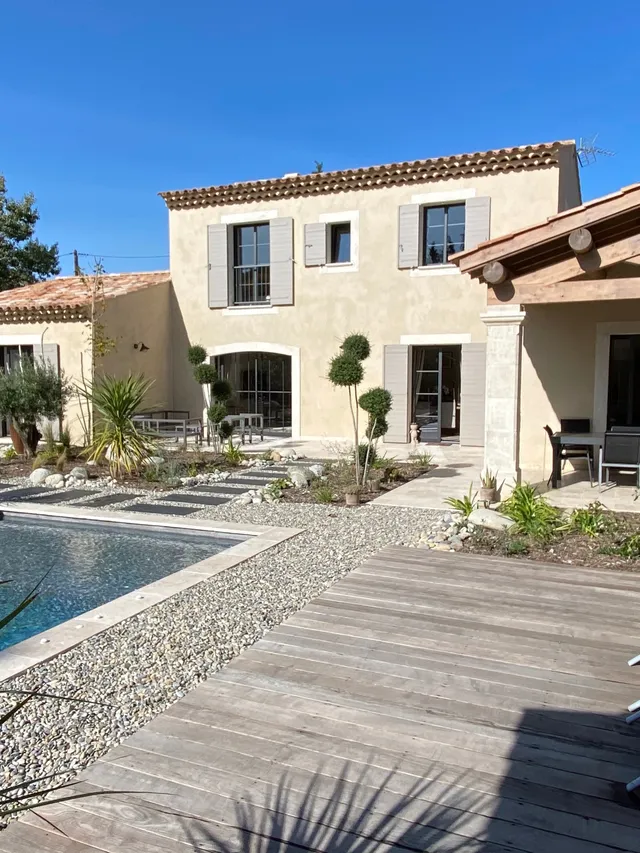
Saint-Tropez, Côte d’Azur
Social levies without European affiliation
As a Brazilian resident, you do not benefit from the exemption reserved for people affiliated to a European scheme: the levies apply at the full rate.
What changes for you
French-source property income and capital gains bear 17.2% of social levies.
The exemption from CSG and CRDS, open to people affiliated to a social security scheme of a European Union or European Economic Area state, of Switzerland or of the United Kingdom, does not apply to a resident of Brazil.
The France Brazil social security agreement coordinates pensions, not these levies: it is no exemption.
Points to watch
Factor 17.2% of social levies into your rental income projections from the outset.
The treatment of these levies in the Brazilian tax credit deserves a dedicated opinion: not all of them are treated as income tax.
Inheritance: forced heirship on both sides, no treaty
The French property falls under French inheritance law, which reserves a share for the children; Brazil also knows a reserved share, but no inheritance treaty binds the two countries.
What changes for you
French forced heirship protects the children on the property located in France; Brazilian law reserves half of the estate for the necessary heirs: two neighbouring logics, not to be confused.
The European regulation on successions allows you to choose by will the law of your nationality, Brazilian included, for the French property; the choice is formalised, it is not presumed.
French inheritance tax applies to the French property; the Brazilian transfer tax (ITCMD), set by each state, may also reach assets abroad depending on the applicable legislation: with no treaty, double taxation is prevented upstream.
Points to watch
Have the consistency between your Brazilian will and the fate of the French property checked.
The Brazilian matrimonial regime (partial community by default) affects the ownership of the property: the notaire qualifies it before the deed.
Split ownership and gifts are tools to be calibrated with advisers on both sides.
Stays: visa exemption and the Schengen rule
As a Brazilian national, you are exempt from the short-stay visa, but remain limited to 90 days in 180 in the Schengen area without a long-stay permit.
What changes for you
Brazilian nationals enter the Schengen area without a visa for a short stay.
The short stay remains limited to 90 days in any 180-day period, across the whole Schengen area.
To enjoy your property for longer, the long-stay visitor visa lifts this limit; a main home in France can make you a French tax resident.
Points to watch
Count your Schengen days across the whole area, Portugal and Spain included, not only in France.
The long-stay visa requires proof of means and health cover; the European entry and exit system now records the crossings.
Structuring: direct ownership or a company, seen from Brazil
Direct ownership is the simplest for a Brazilian resident; an SCI or any foreign company falls within the 2023 Brazilian rules on controlled foreign entities.
What changes for you
The SCI organises joint ownership and the gradual transfer of shares, but, held from Brazil, it may be treated as a controlled foreign entity and taxed every year on its results.
Ownership in your own name avoids this complexity and lets French forced heirship apply.
Split ownership prepares the transfer while keeping the use of the property.
Points to watch
Do not create an SCI by default: the decision is made before the purchase, with a tax adviser in both countries.
Every structure is declared in Brazil: omitting an asset or a shareholding abroad exposes you to penalties.
Frequently asked questions
Do I have to come to France to sign the purchase?
No. A notarised power of attorney, apostilled in Brazil and translated, allows you to sign the preliminary agreement and then the deed remotely; Home Select organises the signing with the notaire.
How do I transfer the funds from Brazil?
Through an exchange contract with a bank or an institution authorised by the Central Bank, with proof of the origin of the funds; the IOF tax applies depending on the operation, and the lead time is planned before each deadline.
Do I have to declare my French property in Brazil?
Yes: in the annual income tax return, as an asset abroad, and to the Central Bank above the threshold of the declaration of Brazilian capital abroad. Rents and the capital gain are declared too, with a credit for the French tax.
Do I need a visa to stay in my property?
Not for a short stay: Brazilians are exempt from the Schengen visa within the limit of 90 days in 180. Beyond that, a long-stay visitor visa is needed.
How is the capital gain taxed if I resell while living in Brazil?
As a resident outside the European Union, you fall under the non-resident capital gains regime and often have to appoint an accredited tax representative; the gain is also declared in Brazil.
Which social levies apply to a resident in Brazil?
As a Brazilian resident, you do not benefit from the exemption reserved for people affiliated to a European scheme: the levies apply at the full rate.
Can I borrow in France while living in Brazil?
A French mortgage remains possible for a Brazilian resident, but most purchases are made in cash; moving the funds out of Brazil is the first step to prepare.
How long can I stay in my French property?
As a Brazilian national, you are exempt from the short-stay visa, but remain limited to 90 days in 180 in the Schengen area without a long-stay permit.
You live in Brazil and you are preparing a purchase in France? Describe your project: a Home Select property finder answers within one working day, and the file starts with the right partners, in the right order.
Your request is already sent, simply pick what suits you.
A property finder calls you back within one working day.
🇫🇷+33
An error occurred. Please try again.
Then answer 3 quick questions to be matched with the right hunter.
Home Select processes your data (name, email, phone, project) to handle your request and contact you. It is recorded in our follow-up tool and read by the hunter in charge of your project. Our technical providers access it for hosting, email and checking that your email and number are real, some of them from the United States under the safeguards set by the GDPR. We keep it for three years after our last exchange, or five years after the end of our assignment if you entrust it to us, as French anti-money-laundering law requires. To access, correct or erase it, or to object to its use: contact@home-select.fr. Details in our privacy policy.
Your hunter calls you back within one working day.
Resume your request?
You started a request recently. Pick up where you left off, or start over.
Your answers are kept for 24 hours.
What is your project?
Takes 1 minute, no commitment.
Where are you looking?
Select one or more cities or areas
Your budget?
€
You pay only when Home Select finds it.
Anything to add?
Optional. Add any useful details: specifics about your search, constraints or your availability.
This helps your hunter prepare for your call.
An expert will contact you shortly
Your brief
Confidential search: your file goes to a senior hunter.
60 rue François 1er, 75008 Paris · FCI member
FeesOne month’s rent excluding charges, plus VAT, with a minimum of €2,000 including VAT. Payable only when the lease is signed. No application fee.
Step 1 of 2 · Your search
What are you looking for?
Furnished, unfurnished or both?
In which city?
One or more cities or areas.
€ / month
Charges included, as in the listings.
You would like to move in
Two minutes, no documents needed at this stage.
FeesOne month’s rent excluding charges, plus VAT, with a minimum of €2,000 including VAT. Payable only when the lease is signed. No application fee.
Step 2 of 2 · Your situation
Your situation
These answers let Home Select tell you quickly, and frankly, whether your search can succeed on the market in your city.
You are applying
€ / month
Before tax, regular bonuses included, for everyone applying.
Main applicant’s employment
Your company is based in France
Number of annual accounts filed
To strengthen your file
Optional for your profile. A guarantee reassures landlords.
Guarantor’s situation
€ / month
Who it is for, why you are moving, what matters to you. Do not include sensitive information (health, origin, religion, family situation).
Your contact details
🇫🇷+33
Reply within 24 business hours.
Home Select processes your data (name, email, phone, project, employment, income, guarantee) to review your rental request and contact you. Your answers are compared with the criteria landlords apply, then read by Home Select’s rental hunter. A request that cannot succeed receives a written reply within 24 business hours, and you can ask for it to be reviewed again at contact@home-select.fr. Our technical providers access it for hosting, email and checking that your email and number are real, some of them from the United States under the safeguards set by the GDPR. A request that does not lead to an assignment is erased after three months; otherwise, we keep your data for three years after our last exchange, or five years after the end of our assignment if you entrust it to us, as French anti-money-laundering law requires. To access, correct or erase it, or to object to its use: contact@home-select.fr. Details in our privacy policy.
FeesOne month’s rent excluding charges, plus VAT, with a minimum of €2,000 including VAT. Payable only when the lease is signed. No application fee.
Your file
Your file matches what landlords expect
Book your meeting with Stéphane Martins, rental hunter. He confirms it after reading your file, within 24 business hours.
Choose your time slot
Times shown in Paris time.
Confirmation arrives by email and text message.
FeesOne month’s rent excluding charges, plus VAT, with a minimum of €2,000 including VAT. Payable only when the lease is signed. No application fee.
Your request
Your request is in good hands
Stéphane Martins, rental hunter, is reviewing your file and will reply within 24 business hours.
You will receive a confirmation email.
You arrived through one of Home Select’s ads or campaigns.Ad measurement.Do you agree to Home Select measuring how well it works? Home Select will know which campaign brought you here and, if you get in touch, the ad platform will only learn that its ad worked, without receiving your contact details.Do you agree to Home Select measuring how well its ads work? If you arrive through one of them, Home Select will know which one and, if you get in touch, the ad platform will only learn that its ad worked, without receiving your contact details.Learn moreYour current choice: .