Buying a hôtel particulier in France, whole or divided into apartments
Buying a hôtel particulier, a grand private townhouse, means buying an urban residence built for a single family, its courtyard, its grand staircase and often a garden at the heart of an old city. This guide from Home Select, a buyer’s agent on the buyer’s side since 2011, tells you where these residences are still sold, how to read their price, what a historic-monument listing or a division into apartments changes, and how to negotiate the purchase.
By Jean Mascla, founder of Home SelectUpdated · 14 min read
What is a hôtel particulier?
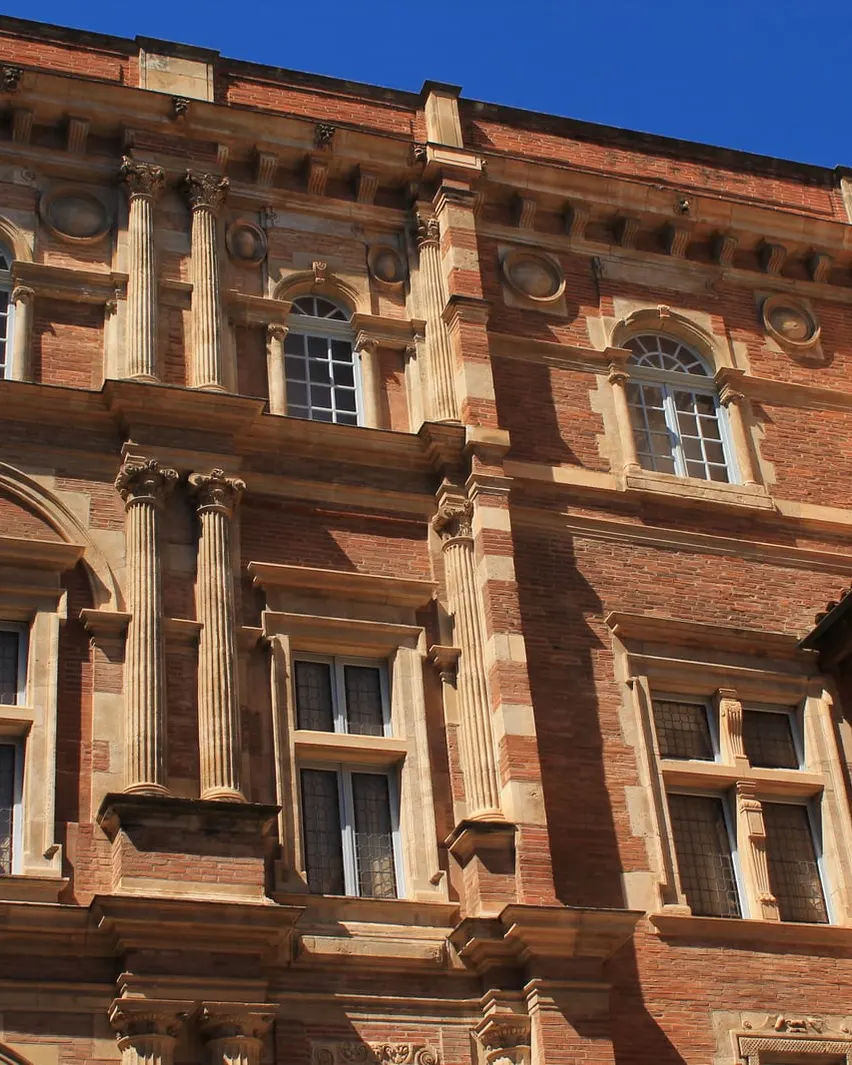
The hôtel particulier is the townhouse of a family of the nobility, the law courts or trade, built between the 16th and the 19th century. Its classic plan is that of the residence “between courtyard and garden”: on the street, a wall or a wing of outbuildings pierced by a porte cochère; behind it, the cour d’honneur (main courtyard); at the far end, the main building, with its grand staircase, its reception rooms en enfilade and, on the other side, the garden. In Toulouse and Lyon, the Renaissance gave it courtyards with galleries and stair towers; in Aix, Montpellier and Bordeaux, the 17th and 18th centuries gave it façades of carved stone, wrought ironwork and plaster decoration (gypseries).
The word has no legal definition: a listing may use it for a large maison de maître or a handsome old apartment building. Three signs mark out the true hôtel particulier: it was built for a single family, not to be let floor by floor; it is organised around a courtyard or a grand staircase; and its architecture is signed, by a style, a decoration, sometimes an architect’s name. The maison de maître, simpler and later, has neither cour d’honneur nor porte cochère; the château is the country residence, with its land.
The words of the listings and what they really cover.
Type
What defines it
What you buy
Whole hôtel particulier
Courtyard, porte cochère, grand staircase, garden
A residence, its courtyard and outbuildings, a heritage to maintain
Divided hôtel particulier
The same building, split into lots in the 20th century
A character apartment and its share of the common parts
Maison de maître
Symmetrical façade, high ceilings, walled garden
A large bourgeois house, in town or village
Old apartment building
Built to be let floor by floor, shared stairwell
A whole building or lots, without a cour d’honneur
Where to buy a hôtel particulier in France?
Hôtels particuliers are concentrated in the old provincial capitals, cities of parliament, trade or university, whose old centres came through the 19th century without major boulevards being cut through them. Five of them form the heart of Home Select’s search; Paris, which has the most, is served by homeselect.paris and its agents of the Marais, Saint-Germain-des-Prés and the Faubourg Saint-Honoré.
Aix-en-Provence: the Mazarin quarter and the Cours Mirabeau
A city of parliament, Aix built the Mazarin quarter in the 17th century on a regular plan, with hôtels of golden stone, doorways held by atlantes and walled gardens, then the Cours Mirabeau and its hôtels with wrought-iron balconies. Many are divided; a few remain whole, behind their porte cochère. The page on buying a hôtel particulier in Aix-en-Provence describes the streets, the prices and the pitfalls, in the Provence area.
Bordeaux: the Triangle d’Or, the Chartrons and Saint-Pierre
The Bordeaux 18th century left hôtels of merchants and parliamentarians in golden stone, with mascarons and wrought-iron balconies, in the Triangle d’Or, around the Jardin Public, in Saint-Pierre and along the Chartrons. The protected sector, one of the largest in France, covers most of them. See buying a hôtel particulier in Bordeaux, and the maison de maître in Bordeaux for the simpler residences of the stone-built districts.
Toulouse: the hôtels of the pastel merchants
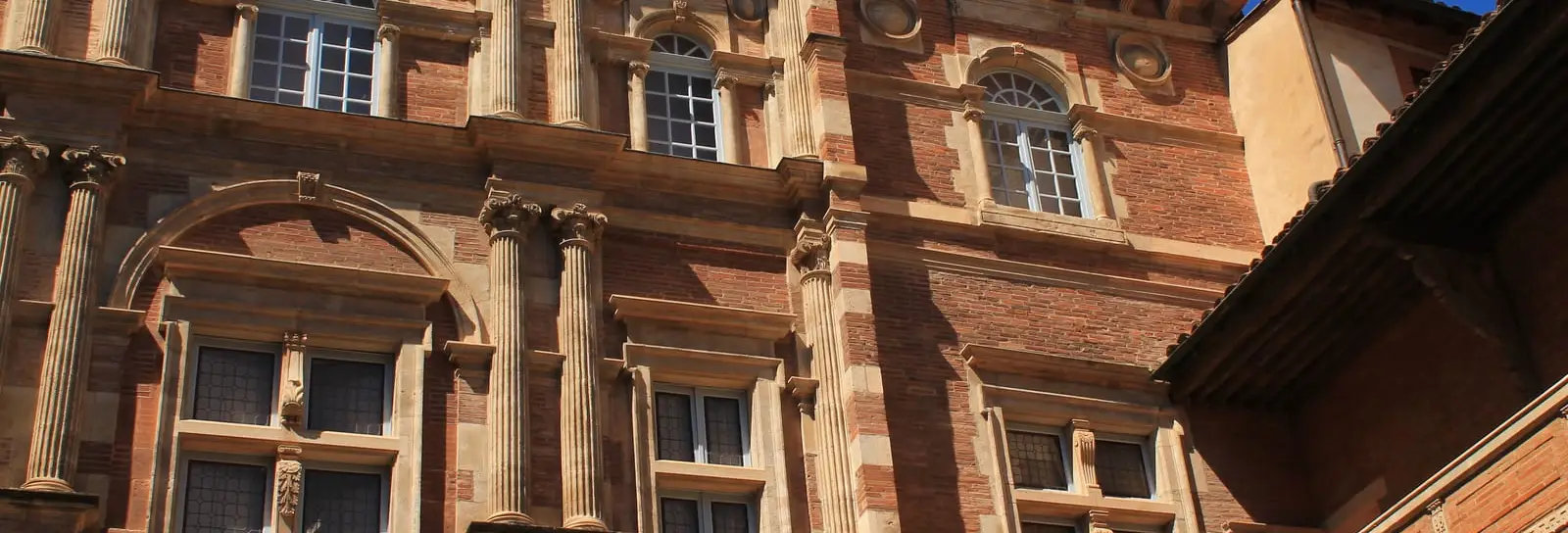
The pastel dye fortune gave Toulouse, in the 16th century, the finest Renaissance hôtels in France, in brick and stone, with courtyard, gallery and stair tower: the hôtels d’Assézat, de Bernuy, de Pierre, and dozens of others between the Carmes, the Dalbade and Saint-Étienne. Many now hold character apartments. The page on buying a hôtel particulier in Toulouse describes its districts, and the page on the maison de maître in Toulouse the brick-built faubourgs.
Montpellier, Nîmes and the Languedoc
The Écusson, the old centre of Montpellier, holds more than seventy hôtels particuliers of the 17th and 18th centuries, hidden behind sober façades: the courtyard, the balustraded staircase and the plasterwork are discovered only once the door is passed. See buying a hôtel particulier in Montpellier. In Nîmes, the hôtels of trade and the law surround the Maison Carrée and the Arena; in Uzès, the first duchy of France has its hôtels of golden stone, in the Occitanie area.
Lyon: from the Vieux Lyon to Ainay
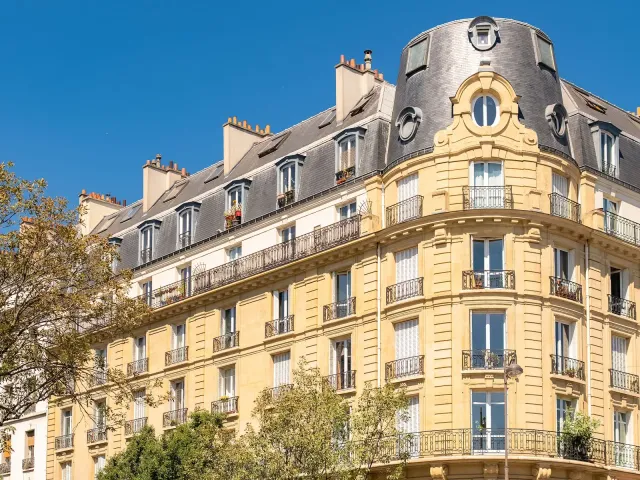
The Renaissance courtyards of the Vieux Lyon, with their arcaded galleries and spiral stair towers, are the hôtels of Italian merchants and bankers; the Presqu’île and the Ainay quarter have their 17th- and 18th-century hôtels, with courtyard and garden. Almost all are divided. The page on buying a hôtel particulier in Lyon describes this market of character apartments, with its ceiling heights and its old co-ownership regulations.
Avignon and the other old cities
Avignon intra-muros (Avignon) keeps the hôtels of cardinals and parliamentarians; La Rochelle, shipowners’ hôtels with courtyards; Albi, brick hôtels around the cathedral. Nantes, Dijon, Rennes, Lille and Versailles have them too, which Home Select searches remotely, with its network of partners: the search is run on the residence, not on the city.
How much does a hôtel particulier cost?
No public statistic gives the price of a hôtel particulier. The DVF register of sales, published by the tax administration, files whole residences among houses, without distinguishing the hôtel with a courtyard from the townhouse, and divided hôtels among apartments. The median price for houses in a city therefore gives a distant benchmark, useful to place the market, never to value a residence.
House sales over 12 months to end of June 2026, DVF / DGFiP via data.gouv.fr, October 2026 release, 12 months to end of June 2026. The register does not single out hôtels particuliers: these are market benchmarks, not prices of residences.
The price of a whole hôtel is formed elsewhere: the address and the street, the courtyard and the garden, the quality of the surviving decoration, staircases, panelling, plasterwork, fireplaces, the condition of roofs and structure, any listing, and the possible use, home alone or home and offices. Two neighbouring residences of the same size can sell at one to three times the price. Comparable sales are sought in the same city, over several years, and from the notaires more than from the listings.
An apartment in a divided hôtel is compared, for its part, with the old apartments of the city: in Lyon the median is €4,400/m², in Bordeaux €4,100/m², in Aix-en-Provence €4,900/m² (DVF / DGFiP via data.gouv.fr, October 2026 release, 12 months to end of June 2026). The étage noble, the main floor, with its ceiling heights and its decoration, is negotiated above; the former outbuildings, the mezzanine floors and the attics, below, especially when they depend on a service staircase.
Whole or divided: what to check in a hôtel under co-ownership?
Most hôtels particuliers were divided in the 20th century. You then buy a lot: the whole étage noble, an apartment in a wing, an open floor in the former outbuildings, a maid’s room under the roof. The courtyard, the grand staircase, the roof and the façades are common parts: their upkeep, sometimes heavy, is decided at the general meeting and paid in proportion to your share. The co-ownership regulations, often old, set what each owner may do with their lot and with the courtyard.
The co-ownership regulations and the descriptive statement of division: the building’s purpose, the permitted use of the lots, the enjoyment of the courtyard and garden.
The minutes of the last three general meetings and the works voted or under discussion: façade cleaning, roof, staircase, utilities.
The maintenance log, the overall technical survey if one exists, and the works fund already built up.
The lawful status of works done in the lot: a mezzanine, a relocated kitchen, a blocked fireplace are checked against the regulations and the permit.
The condition of the old common parts, which the survey of the lot does not cover: roof timbers, floors, downpipes, courtyard façade.
Historic monuments, heritage sites: what protection changes
A hôtel particulier may be listed (classé) or registered (inscrit) as a monument historique, in its entirety or for certain parts only: a façade, a staircase, a painted ceiling. Works on the protected parts are subject to the authorisation and control of the State’s services; near a monument, and in a site patrimonial remarquable, works that alter the exterior, and sometimes the interior, appearance are subject to the agreement of the architecte des Bâtiments de France. The old centres of Bordeaux, Lyon, Aix, Montpellier, Toulouse and Avignon are covered by these protections.
Protection prevents neither living in the house nor modernising it: it requires things to be done by the rules, with the materials and skills of old buildings, and it lengthens the timetable. It also opens aid: grants from the State and local authorities for the restoration of the protected parts and, for the owner of a monument historique who undertakes to preserve it, a tax regime specific to restoration costs, to be studied with an adviser before the purchase. The label of the Fondation du patrimoine can complement this aid for an unprotected but characteristic building.
The exact protection record: listed or registered, in whole or for which parts, since when.
The authorisations obtained for recent works, and those refused: a past refusal tells you what you will not be able to do.
The safeguarding plan or the enhancement plan of the site patrimonial remarquable, which may impose rules room by room.
The name of a heritage architect, to bring in before the offer to cost the restoration.
Occitanie -Toulouse -A Renaissance mansion
What should you check in the structure of a hôtel particulier?
Structure, roof and façades
Old timber floors on beams sometimes carry loads they were never built to carry; a library, an office with archives or a heavy tiled floor are checked against their span. The roof timbers and the covering, slate, round tiles or flat tiles depending on the region, are read from the attic, and the courtyard façades, often less maintained than the street side, from the courtyard. Cleaning and repointing a dressed-stone façade runs to hundreds of thousands of euros on a large hôtel.
Damp, utilities and heating
Vaulted cellars, paved courtyards and floors without a crawl space concentrate damp; rising damp shows at the foot of the walls. The water, electricity and heating systems of an old residence have often been redone piecemeal: a complete upgrade is costed before the offer, as is the insulation possible under roofs and behind decoration that cannot be touched.
The surveys and their limits
The technical survey file covers lead, frequent in paint from before 1949, asbestos for any building from before 1997, termites in the zones delimited by prefectoral order, electricity, gas and energy performance. A residence rated E, F or G is sold with an energy audit, but the surveys say nothing of the roof timbers, the floors or the decoration: that is the role of the heritage architect, and of a structural engineer when a raised roof or a new opening is planned.
Roof, roof timbers and attic, seen from inside, with the date of the last renewal.
Floors, beams and joists: sagging, insects, permissible loads.
Walls and cellars: rising damp, infiltration on the courtyard side, lime or cement renders.
Utilities: electricity, water, drainage, heating, and what the protection allows you to change.
Decoration, protected or not: panelling, plasterwork, fireplaces, parquet floors, staircases, and their condition.
Living, entertaining, working: the uses of a hôtel particulier
A hôtel particulier suits a family that entertains, a collector’s house, a professional who sets up a practice on the ground floor and lives upstairs, a foundation or a company that places its head office there. Each use calls for a check: the purpose set by the co-ownership regulations or the local urban plan, the change of use to request to move from home to office or the reverse, the accessibility rules of premises open to the public, parking.
For a head office, offices or a practice, Home Select also searches for premises and the walls that hold them: the page on the search for commercial premises and offices and the library dossier on buying the walls of commercial premises describe that search. For a second home in town, a pied-à-terre on the étage noble of a divided hôtel is often simpler to live in and to close up than a whole residence, whose roofs and courtyard demand upkeep all year round.
How do you negotiate a hôtel particulier?
A hôtel particulier has no market price in the usual sense: it has a seller, often a family or an estate, a history, and a condition. The negotiation is therefore won on facts: the comparable sales of the city, found with the notaires and in the DVF register, the costing of the restoration by a heritage architect, the estimates for the common parts in a divided hôtel, the delays imposed by a listing. A buyer whose financing is ready and whose file is complete obtains more than a buyer in a hurry.
The comparable sales, over several years and in the same city, residence by residence.
The written costing of the restoration and the upgrade, handed over with the offer.
The works voted or foreseeable in the co-ownership, and the existing works fund.
The constraints of the protection: timetable, materials, authorisations to obtain.
The seller’s calendar: an estate, a division between heirs or a departure weigh more than an asking price.
How Home Select searches for a hôtel particulier
The search for a hôtel particulier begins with a precise brief: the city or cities, the use, whole or divided, the overall budget, restoration included, and the timetable. Home Select then canvasses the whole market, listings, notaires, families and partners, qualifies each lead on documents, then in a commented video pre-viewing, before the buyer travels. For a buyer living abroad, the method is the same, remotely, up to the decisive viewings grouped into a single trip.
The brief: cities, use, overall budget and timetable, set by video call or phone.
The search across the whole market, off-market included, and the qualification of each residence on documents.
The commented video pre-viewing, then the decisive viewings, with a heritage architect if the residence warrants it.
The reading of the file: protection, co-ownership regulations, minutes, surveys, title deeds and easements.
The offer and the negotiation, based on comparable sales and the costing of the works, then the preliminary sale agreement and the deed.
The fees are due only on success: 2.5% of the net purchase price with the Exclusive offer, minimum €10,000 incl. VAT, or the Confidential offer, at 1.5%, for projects of €2m and above, presented only on off-market properties; on top of these, 10% of the negotiated reduction. The steps of a property purchase in France and the access to off-market properties complete this guide.
Frequently asked questions
What is the difference between a hôtel particulier and a maison de maître?
The hôtel particulier is a family’s urban residence, built between courtyard and garden behind a porte cochère, with a grand staircase and a signed architecture. The maison de maître is a large bourgeois house, in town or village, with a symmetrical façade and high ceilings, without a cour d’honneur. In the listings the two words blur: the plan, the decoration and the history decide.
Can you buy a whole hôtel particulier outside Paris?
Yes, but rarely and almost never through a listing: the whole hôtels of Aix, Bordeaux, Toulouse, Montpellier or Lyon are passed down within families and sold through notaires and networks. The search is prepared well in advance, with a complete buyer’s file. Most hôtels particuliers are divided today: you then buy the étage noble or a character apartment.
What does the listing of a hôtel particulier as a historic monument change?
Works on the protected parts are subject to the authorisation and control of the State’s services, and the surroundings of the monument are overseen by the architecte des Bâtiments de France. Protection prevents neither living in the house nor modernising it; it imposes rules, lengthens the timetable and opens aid and a specific tax regime, to be studied before the offer.
How much does a hôtel particulier cost?
There is no public price: the DVF register files hôtels particuliers among houses or apartments, without singling them out. The price is formed on the address, the courtyard, the garden, the decoration, the condition and the protection. In Bordeaux, the median price for houses is €4,800/m², but a whole, restored hôtel is negotiated far above, residence by residence.
Can you set up your practice or offices in a hôtel particulier?
Often, provided the purpose allows it: the co-ownership regulations for a divided hôtel, the local urban plan and, where needed, a change of use to move from home to office. Premises open to the public must also meet accessibility rules. Home Select also searches for professional premises and the walls that hold them.
Can a foreign buyer purchase a hôtel particulier in France?
Yes, without restriction. A foreign or non-resident buyer purchases under the same conditions as a resident, with a notaire, by power of attorney if needed. Half of Home Select’s clients are expatriates or international buyers, and the search is run remotely, with video pre-viewings, up to the decisive viewings.
How long does it take to buy a hôtel particulier?
The search for a whole hôtel is counted in months, because supply is rare and discreet; that of an apartment in a divided hôtel follows the pace of the city’s market. Once the property is found, the offer, the preliminary sale agreement and the deed follow the calendar of an ordinary sale, lengthened by the authorisations if the residence is listed and works are planned.
What are Home Select’s fees for a hôtel particulier?
The same as for any search: 2.5% of the net purchase price with the Exclusive offer, minimum €10,000 incl. VAT, or 1.5% with the Confidential offer for projects of €2m and above, plus 10% of the negotiated reduction. Nothing is due until you have bought.
Describe the hôtel particulier you are looking for, its city, its use and your timetable: Home Select will tell you what it is realistic to find, and how.
Your request is already sent, simply pick what suits you.
A buyer’s agent calls you back within one working day.
🇫🇷+33
An error occurred. Please try again.
Then answer 3 quick questions to be matched with the right hunter.
Home Select processes your data (name, email, phone, project) to handle your request and contact you. It is recorded in our follow-up tool and read by the hunter in charge of your project. Our technical providers access it for hosting, email and checking that your email and number are real, some of them from the United States under the safeguards set by the GDPR. We keep it for three years after our last exchange, or five years after the end of our assignment if you entrust it to us, as French anti-money-laundering law requires. To access, correct or erase it, or to object to its use: contact@home-select.fr. Details in our privacy policy.
Your hunter calls you back within one working day.
Resume your request?
You started a request recently. Pick up where you left off, or start over.
Your answers are kept for 24 hours.
What is your project?
Takes 1 minute, no commitment.
Where are you looking?
Select one or more cities or areas
Your budget?
€
You pay only when Home Select finds it.
Anything to add?
Optional. Add any useful details: specifics about your search, constraints or your availability.
This helps your hunter prepare for your call.
An expert will contact you shortly
Your brief
Confidential search: your file goes to a senior hunter.
60 rue François 1er, 75008 Paris · FCI member
FeesOne month’s rent excluding charges, plus VAT, with a minimum of €2,000 including VAT. Payable only when the lease is signed. No application fee.
Step 1 of 2 · Your search
What are you looking for?
Furnished, unfurnished or both?
In which city?
One or more cities or areas.
€ / month
Charges included, as in the listings.
You would like to move in
Two minutes, no documents needed at this stage.
FeesOne month’s rent excluding charges, plus VAT, with a minimum of €2,000 including VAT. Payable only when the lease is signed. No application fee.
Step 2 of 2 · Your situation
Your situation
These answers let Home Select tell you quickly, and frankly, whether your search can succeed on the market in your city.
You are applying
€ / month
Before tax, regular bonuses included, for everyone applying.
Main applicant’s employment
Your company is based in France
Number of annual accounts filed
To strengthen your file
Optional for your profile. A guarantee reassures landlords.
Guarantor’s situation
€ / month
Who it is for, why you are moving, what matters to you. Do not include sensitive information (health, origin, religion, family situation).
Your contact details
🇫🇷+33
Reply within 24 business hours.
Home Select processes your data (name, email, phone, project, employment, income, guarantee) to review your rental request and contact you. Your answers are compared with the criteria landlords apply, then read by Home Select’s rental hunter. A request that cannot succeed receives a written reply within 24 business hours, and you can ask for it to be reviewed again at contact@home-select.fr. Our technical providers access it for hosting, email and checking that your email and number are real, some of them from the United States under the safeguards set by the GDPR. A request that does not lead to an assignment is erased after three months; otherwise, we keep your data for three years after our last exchange, or five years after the end of our assignment if you entrust it to us, as French anti-money-laundering law requires. To access, correct or erase it, or to object to its use: contact@home-select.fr. Details in our privacy policy.
FeesOne month’s rent excluding charges, plus VAT, with a minimum of €2,000 including VAT. Payable only when the lease is signed. No application fee.
Your file
Your file matches what landlords expect
Book your meeting with Stéphane Martins, rental hunter. He confirms it after reading your file, within 24 business hours.
Choose your time slot
Times shown in Paris time.
Confirmation arrives by email and text message.
FeesOne month’s rent excluding charges, plus VAT, with a minimum of €2,000 including VAT. Payable only when the lease is signed. No application fee.
Your request
Your request is in good hands
Stéphane Martins, rental hunter, is reviewing your file and will reply within 24 business hours.
Home Select processes your data (name, email, phone, project) to handle your request and contact you. It is recorded in our follow-up tool and read by the hunter in charge of your project. Our technical providers access it for hosting, email and checking that your email and number are real, some of them from the United States under the safeguards set by the GDPR. We keep it for three years after our last exchange, or five years after the end of our assignment if you entrust it to us, as French anti-money-laundering law requires. To access, correct or erase it, or to object to its use: contact@home-select.fr. Details in our privacy policy.
Home Select processes your data (name, email, phone, project, employment, income, guarantee) to review your rental request and contact you. Your answers are compared with the criteria landlords apply, then read by Home Select’s rental hunter. A request that cannot succeed receives a written reply within 24 business hours, and you can ask for it to be reviewed again at contact@home-select.fr. Our technical providers access it for hosting, email and checking that your email and number are real, some of them from the United States under the safeguards set by the GDPR. A request that does not lead to an assignment is erased after three months; otherwise, we keep your data for three years after our last exchange, or five years after the end of our assignment if you entrust it to us, as French anti-money-laundering law requires. To access, correct or erase it, or to object to its use: contact@home-select.fr. Details in our privacy policy.
You arrived through one of Home Select’s ads or campaigns.Ad measurement.Do you agree to Home Select measuring how well it works? Home Select will know which campaign brought you here and, if you get in touch, the ad platform will only learn that its ad worked, without receiving your contact details.Do you agree to Home Select measuring how well its ads work? If you arrive through one of them, Home Select will know which one and, if you get in touch, the ad platform will only learn that its ad worked, without receiving your contact details.Learn moreYour current choice: .