Buying a longère in Brittany, Normandy and western France
Buying a longère means buying the farmhouse of western France: low, built lengthways in local stone and roofed with slate or thatch, in a hamlet or at the end of a lane, a few kilometres from the sea or from an old town. This guide from Home Select, a buyer’s agent on the buyer’s side since 2011, tells you where these houses are sold, how to read their price, what to check in their walls, roof and drainage, what you will be able to extend, and how to negotiate.
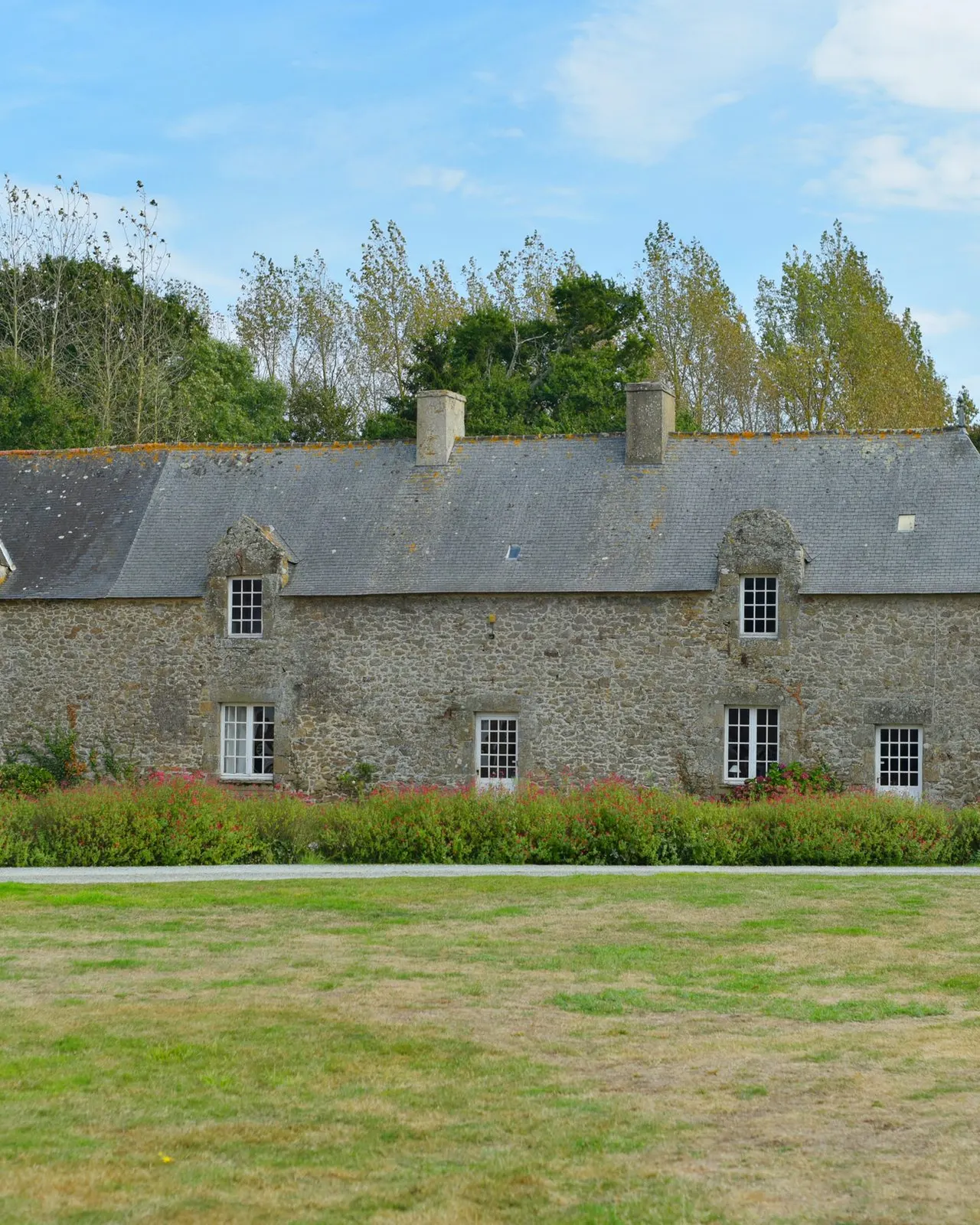
A stone Breton longère, its granite dormers and slate roof in front of a lawn
By Jean Mascla, founder of Home SelectUpdated · 14 min read
What is a longère?
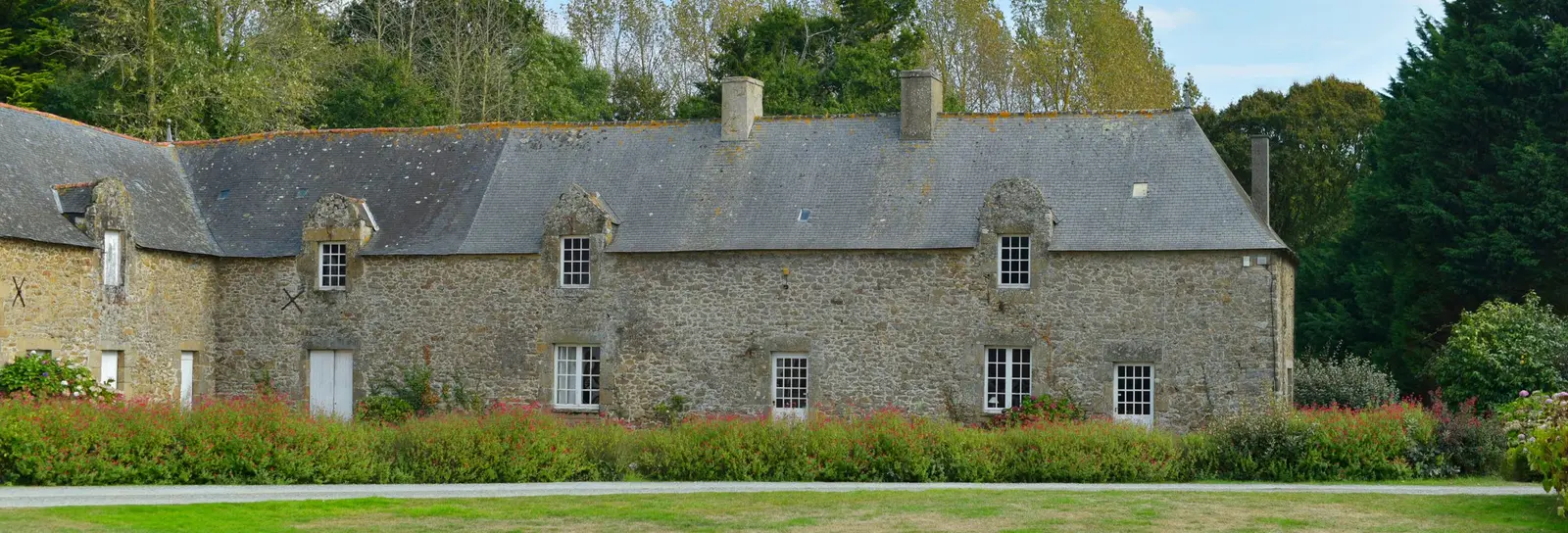
The longère is the house of the countryside of western France: a low house, on one level under a loft, whose rooms line up lengthways, each with its own door onto the yard, and which the cowsheds, the barn or the pigsty extend under the same roof. Built between the 17th and the 19th century by farmers and craftsmen, it turns its façade to the south or the east, and its blind wall to the sea wind. The word comes from Brittany and Normandy; in the Vendée people speak rather of a maison basse (low house), and in the Pays de la Loire of a longère, as in Brittany.
The materials tell the region. Granite and schist, with dressed granite surrounds, in Brittany; timber framing, flint, brick and sometimes thatch in Normandy; white limestone under round tiles in the Vendée, the Charente and the Pays de Retz; tuffeau and schist in Anjou and the Mayenne. Renovated, the longère becomes a single-storey family home, with its converted loft and its former outbuildings opened into large rooms; it is one of the most sought-after character homes, because it is simple to live in and to close up.
The main families of longères and what sets them apart.
Longère
Where
What sets it apart
Breton longère
Côte d’Émeraude, Morbihan, Finistère
Granite or schist, slate, stone dormers, a chimney at each gable
Penty
Brittany, above all the Finistère and the Morbihan
The small longère of one or two rooms, a fisherman’s or labourer’s house
Norman longère
Pays d’Auge, Pays de Caux, Cotentin
Timber framing or flint, thatch or slate, apple trees around
Vendée low house
Vendée, the islands, the Charente
White limestone, round tiles, coloured shutters, low height
Angevin or Mayenne longère
Anjou, Mayenne, Sarthe
Tuffeau or schist, slate, sometimes a bread oven
Where to buy a longère?
A longère is sought in the countryside, but a nearby countryside: within a quarter of an hour of a beach, a railway station or an old town is what most buyers ask for. The five areas below concentrate Home Select’s search; elsewhere, in the Mayenne, in Anjou or in the Cotentin, the search is run remotely, with the network of partners.
Saint-Malo, Cancale and the Côte d’Émeraude
In the Clos-Poulet, between Saint-Malo, Cancale and the Rance, the granite longère stands beside the malouinière and the village house: hamlets of Saint-Coulomb and Saint-Méloir, the countryside of Saint-Jouan, the banks of the Rance. The page on buying a longère near Saint-Malo describes these hamlets; towards Dinard and Saint-Briac, longères become rarer and dearer, in the Brittany area.
Vannes, the Gulf of Morbihan and Carnac
Around Vannes, the peninsulas of Rhuys and Séné, Baden, Arradon and Plougoumelen keep granite and schist longères under slate, in hamlets that look over the gulf. See buying a longère near Vannes. Towards Carnac and La Trinité-sur-Mer, the longère and the penty sell a few minutes from the beaches, often without a listing.
The Pink Granite Coast and the Finistère
Around Perros-Guirec, Trégastel and Trébeurden, the longère is in pink granite, in the hamlets of the Trégor; in the Finistère, the penty of the Bigouden country and the Crozon peninsula, and the longère of the Léon, with a slate roof and granite gables. These markets are smaller and more discreet: the search there is prepared well in advance, through the network.
Normandy: the Pays d’Auge, the Côte Fleurie and the Pays de Caux
In the Pays d’Auge, behind Honfleur, Deauville and Trouville, the longère is half-timbered, under slate or thatch, amid the pastures and the apple trees; towards Cabourg and the Pays de Caux, it turns to flint and brick. The page on buying a longère near Honfleur describes this market, in the Normandy area.
The Vendée, the islands and the Atlantic coast
On Noirmoutier, on the Île de Ré and on Belle-Île-en-Mer, the low house with coloured shutters is the longère of the islands, rare and sought-after; on the mainland, from the Vendée to the Charente, in the Atlantic coast area, the white limestone longère can still be found at gentler prices, within half an hour of the sea.
How much does a longère cost?
No public statistic gives the price of a longère. The DVF register of sales, published by the tax administration, files it among houses, with the modern detached houses and the village houses. The median price for houses in a commune therefore gives a market benchmark; above all, it tells the gap between the coast and inland, which makes the price of a longère more than its floor area does.
House sales over 12 months to end of June 2026, DVF / DGFiP via data.gouv.fr, October 2026 release, 12 months to end of June 2026. The register does not single out longères: these are market benchmarks, not prices of longères.
The price of a longère is formed on four things: the distance to the sea or to the town, the hamlet and what surrounds it, the land and its outbuildings, the condition of the building. A restored longère in a hamlet five minutes from a beach of the Côte d’Émeraude or the Gulf of Morbihan is negotiated well above the median; the same longère to renovate, twenty kilometres inland, well below. Comparable sales are sought in the same commune and the neighbouring communes, over several years.
The budget has three lines: the purchase price; the renovation, which a project manager used to old buildings costs before the offer, roof, walls, joinery, utilities, drainage, insulation; and the upkeep, modest on a single-storey longère, heavier when the outbuildings are many. The library dossier on the renovation budget for an older property details these items.
What should you check in the structure of a longère?
The stone walls and damp
The walls of a longère are thick, built with earth or lime mortar, without foundations and almost always without a crawl space: damp rises from the ground, and a cement render, a sealed slab or a badly designed lining traps it. Rising damp is read at the foot of the walls, with saltpetre and blistering renders, and you check that past renovations kept breathable materials, lime, hemp, earth. In the zones delimited by prefectoral order, dry rot (mérule), the fungus of damp timber, is looked for behind panelling and under floors.
The roof, the roof timbers and the thatch
The roof is the first item of expense: slate, nailed or hooked, is read from the loft and from outside, with its ridges, flashings and dormers; the thatch of Norman longères and a few Breton ones is redone in sections, by a thatcher, every twenty to thirty years depending on exposure. The roof timbers, in oak or chestnut, are checked piece by piece: sagging, insects, joints, and the span of the loft joists if you want to convert it.
Drainage, water and electricity
Few longères are connected to mains drainage: the private drainage, septic tank and drain field, is subject to a compulsory inspection attached to the sale file, and a non-compliant installation must be redone within the year after the purchase. Water sometimes comes from a well, to be tested; electricity and heating have often been redone piecemeal. The energy performance certificate of an uninsulated longère is often poor: a house rated E, F or G is sold with an energy audit, which proposes scenarios of works.
Walls: rising damp, saltpetre, renders, materials of past renovations.
Roof and roof timbers: slate or thatch, ridges, flashings, dormers, timber of the roof structure, span of the joists.
Private drainage: inspection report, compliance, cost of bringing it up to standard.
Water, electricity, heating: well, connections, consumer unit, compliance.
Dry rot, termites and radon: zones delimited by order, surveys, radon measurement in granite soils.
Extending a longère, converting the loft, converting an outbuilding
Almost every buyer wants to open up, extend or convert their longère: cut large openings in the south wall, convert the loft, open the cowshed into a living room, turn the barn into guest accommodation. Each of these projects depends on the local urban plan and the zoning of the plot: in an agricultural or natural zone, an extension is limited and the change of use of an outbuilding is possible only if the building is listed for it; in a hamlet zoned as urban, the rules are more flexible. Near a monument or in a site patrimonial remarquable (protected heritage area), the architecte des Bâtiments de France gives his agreement on openings, joinery and materials.
Near the sea, the Loi Littoral comes on top: outside built-up areas, the 100-metre strip measured from the upper limit of the shore cannot be built on, extensions are limited in the areas close to the shore, and an isolated building cannot extend beyond what the local urban plan allows. A longère in open coastal countryside is therefore often kept as it is, which is also what makes its value. The guide to buying by the sea details these rules.
The zoning of the plot in the local urban plan and the extension rules that apply to it.
The list of buildings whose change of use is permitted, for a barn or a cowshed.
The planning certificate and, where needed, the opinion of the architecte des Bâtiments de France, requested before the offer.
The lawful status of works already done: a conservatory, an opening or a loft converted without permission can sometimes be regularised, and sometimes not.
A stone Breton longère, its granite dormers and slate roof in front of a lawn
The land, the hamlet and the neighbours
A longère is bought with its land and its hamlet. The land is judged on its boundaries, often old and imprecise, on the rights of way that cross it, a farm track or a neighbour’s access, on any farm lease over the agricultural plots, on the wetlands and streams that border it, and on its orientation. The hamlet is judged at every hour: the working farm next door, with its noises and smells, the road, the houses closed for the winter, and what the neighbouring plots still allow to be built.
The surveyor’s plan or the boundary marking, to fix boundaries that are often old.
Easements: rights of way, shared well, pipes, farm track.
The farm lease or the agricultural use of the plots sold with the house.
Wetlands, streams and the risks of flooding or marine submersion.
The neighbourhood: working farm, road, possible buildings around.
How much should you budget for the renovation?
The costing comes before the offer. On a longère, five items recur: the roof and the roof timbers; the walls, lime renders, stone pointing, drainage at the foot of the walls; the joinery and the new openings; the utilities, electricity, plumbing, heating, drainage; the insulation, through the loft, the floor and the joinery, without trapping damp in the walls. A project manager or a craftsman used to old buildings costs them on site.
The five items of a longère, and the moment when the buyer needs to know them.
Item
What makes it vary
When it is costed
Roof and roof timbers
Slate or thatch, condition of the timber, dormers
Before the offer, from the loft
Walls and damp
Renders to redo, drainage, pointing, dry rot
Before the offer, after a rainy day
Drainage
Inspection report, soil, available area
Before the offer, with the report
Utilities and heating
What has been redone, energy audit
Before the offer, by a professional
Openings and extensions
Planning rules, architecte des Bâtiments de France, Loi Littoral
Before the offer, with the planning certificate
Aid for energy renovation and, for a characteristic longère, the label of the Fondation du patrimoine can lighten the bill; they are checked before the offer, with their conditions. The library dossier on the energy renovation of an older property explains how to insulate a stone house without damaging it.
How do you negotiate a longère?
A longère to renovate often stays on the market for a long time, because local buyers measure the works; a restored longère five minutes from the sea goes in a few days, often before the listing. In the first case, the negotiation is won on facts: the comparable sales of the commune, the written costing of the works, the drainage report, the limits of the planning rules. In the second, it is won on the speed and the solidity of the buyer’s file, financing included.
The comparable sales, over several years, in the commune and the neighbouring communes.
The written costing of the works and the drainage report, handed over with the offer.
The time spent on the market and the history of the asking prices.
The limits of the planning rules and the Loi Littoral, which bound the projects.
The seller’s calendar: an estate, a division between heirs or a departure weigh more than an asking price.
How Home Select searches for a longère
The search begins with a brief: coast or countryside, the distance to the sea or the station, the land, the outbuildings, the condition accepted, the overall budget, works included, and the timetable. Home Select then canvasses the whole market, listings, notaires, partners and owners, qualifies each longère on documents then in a commented video pre-viewing, and brings the buyer over only for the decisive viewings, grouped into a single trip. For a buyer abroad, the method is the same, remotely.
The brief: area, distance to the sea, land, outbuildings, condition accepted, overall budget and timetable.
The search across the whole market, off-market included, and the qualification of each longère on documents.
The commented video pre-viewing, then the decisive viewings, with a project manager if the house warrants it.
The reading of the file: surveys, drainage report, planning rules, easements, boundary marking.
The offer and the negotiation, based on comparable sales and the costing of the works, then the preliminary sale agreement and the deed.
The fees are due only on success: 2.5% of the net purchase price with the Exclusive offer, minimum €10,000 incl. VAT, or the Confidential offer, at 1.5%, for projects of €2m and above, presented only on off-market properties; on top of these, 10% of the negotiated reduction. The steps of a property purchase in France and the access to off-market properties complete this guide.
Frequently asked questions
What is the difference between a longère and a penty?
The longère is the low, elongated rural house of western France, whose rooms and former outbuildings line up under a single roof. The penty is its little Breton sister: a house of one or two rooms, of a fisherman or a labourer, in granite under slate. Both are renovated in the same way; the penty lends itself above all to a simple second home.
What should you check before buying a longère?
Four points: damp in the stone walls, without foundations or crawl space; the roof and the roof timbers, slate or thatch; the private drainage, whose inspection report is attached to the sale; and what the local urban plan allows for extending or converting an outbuilding. In the zones delimited by prefectoral order, dry rot (mérule) is looked for too.
Can you extend a longère or convert its barn?
It depends on the zoning of the plot in the local urban plan: in an urban zone, extensions are generally possible; in an agricultural or natural zone, they are limited and a barn changes use only if it is listed for it in the plan. Near the sea, the Loi Littoral further bounds extensions. Ask for a planning certificate before the offer.
What does the Loi Littoral change for a longère near the sea?
Outside built-up areas, the 100-metre strip measured from the upper limit of the shore cannot be built on, and extensions are limited in the areas close to the shore. An isolated longère in coastal countryside is therefore often kept as it is: a constraint for the project, and a protection for its value.
How much does a longère cost?
There is no public price: the DVF register files longères among houses. Around Saint-Malo, the median price for houses is €4,400/m², but a restored longère five minutes from the sea is negotiated well above, and a longère to renovate inland well below. Count three lines: the price, the renovation and the upkeep.
What is private drainage, and who has to redo it?
A longère not connected to the mains treats its waste water on site, through a septic tank and a drain field. The inspection report of the public drainage service, less than three years old, is attached to the sale; if the installation is not compliant, the buyer must redo it within the year after the deed. Its cost is estimated before the offer and negotiated.
Can a foreign buyer purchase a longère in France?
Yes, without restriction. A foreign or non-resident buyer purchases under the same conditions as a resident, with a notaire, by power of attorney if needed. Half of Home Select’s clients are expatriates or international buyers, and the search is run remotely, with video pre-viewings, up to the decisive viewings.
What are Home Select’s fees for a longère?
The same as for any search: 2.5% of the net purchase price with the Exclusive offer, minimum €10,000 incl. VAT, or 1.5% with the Confidential offer for projects of €2m and above, plus 10% of the negotiated reduction. Nothing is due until you have bought.
Describe the longère you are looking for, its coast or its countryside, its land and your timetable: Home Select will tell you what it is realistic to find, and how.
Your request is already sent, simply pick what suits you.
A buyer’s agent calls you back within one working day.
🇫🇷+33
An error occurred. Please try again.
Then answer 3 quick questions to be matched with the right hunter.
Home Select processes your data (name, email, phone, project) to handle your request and contact you. It is recorded in our follow-up tool and read by the hunter in charge of your project. Our technical providers access it for hosting, email and checking that your email and number are real, some of them from the United States under the safeguards set by the GDPR. We keep it for three years after our last exchange, or five years after the end of our assignment if you entrust it to us, as French anti-money-laundering law requires. To access, correct or erase it, or to object to its use: contact@home-select.fr. Details in our privacy policy.
Your hunter calls you back within one working day.
Resume your request?
You started a request recently. Pick up where you left off, or start over.
Your answers are kept for 24 hours.
What is your project?
Takes 1 minute, no commitment.
Where are you looking?
Select one or more cities or areas
Your budget?
€
You pay only when Home Select finds it.
Anything to add?
Optional. Add any useful details: specifics about your search, constraints or your availability.
This helps your hunter prepare for your call.
An expert will contact you shortly
Your brief
Confidential search: your file goes to a senior hunter.
60 rue François 1er, 75008 Paris · FCI member
FeesOne month’s rent excluding charges, plus VAT, with a minimum of €2,000 including VAT. Payable only when the lease is signed. No application fee.
Step 1 of 2 · Your search
What are you looking for?
Furnished, unfurnished or both?
In which city?
One or more cities or areas.
€ / month
Charges included, as in the listings.
You would like to move in
Two minutes, no documents needed at this stage.
FeesOne month’s rent excluding charges, plus VAT, with a minimum of €2,000 including VAT. Payable only when the lease is signed. No application fee.
Step 2 of 2 · Your situation
Your situation
These answers let Home Select tell you quickly, and frankly, whether your search can succeed on the market in your city.
You are applying
€ / month
Before tax, regular bonuses included, for everyone applying.
Main applicant’s employment
Your company is based in France
Number of annual accounts filed
To strengthen your file
Optional for your profile. A guarantee reassures landlords.
Guarantor’s situation
€ / month
Who it is for, why you are moving, what matters to you. Do not include sensitive information (health, origin, religion, family situation).
Your contact details
🇫🇷+33
Reply within 24 business hours.
Home Select processes your data (name, email, phone, project, employment, income, guarantee) to review your rental request and contact you. Your answers are compared with the criteria landlords apply, then read by Home Select’s rental hunter. A request that cannot succeed receives a written reply within 24 business hours, and you can ask for it to be reviewed again at contact@home-select.fr. Our technical providers access it for hosting, email and checking that your email and number are real, some of them from the United States under the safeguards set by the GDPR. A request that does not lead to an assignment is erased after three months; otherwise, we keep your data for three years after our last exchange, or five years after the end of our assignment if you entrust it to us, as French anti-money-laundering law requires. To access, correct or erase it, or to object to its use: contact@home-select.fr. Details in our privacy policy.
FeesOne month’s rent excluding charges, plus VAT, with a minimum of €2,000 including VAT. Payable only when the lease is signed. No application fee.
Your file
Your file matches what landlords expect
Book your meeting with Stéphane Martins, rental hunter. He confirms it after reading your file, within 24 business hours.
Choose your time slot
Times shown in Paris time.
Confirmation arrives by email and text message.
FeesOne month’s rent excluding charges, plus VAT, with a minimum of €2,000 including VAT. Payable only when the lease is signed. No application fee.
Your request
Your request is in good hands
Stéphane Martins, rental hunter, is reviewing your file and will reply within 24 business hours.
Home Select processes your data (name, email, phone, project) to handle your request and contact you. It is recorded in our follow-up tool and read by the hunter in charge of your project. Our technical providers access it for hosting, email and checking that your email and number are real, some of them from the United States under the safeguards set by the GDPR. We keep it for three years after our last exchange, or five years after the end of our assignment if you entrust it to us, as French anti-money-laundering law requires. To access, correct or erase it, or to object to its use: contact@home-select.fr. Details in our privacy policy.
Home Select processes your data (name, email, phone, project, employment, income, guarantee) to review your rental request and contact you. Your answers are compared with the criteria landlords apply, then read by Home Select’s rental hunter. A request that cannot succeed receives a written reply within 24 business hours, and you can ask for it to be reviewed again at contact@home-select.fr. Our technical providers access it for hosting, email and checking that your email and number are real, some of them from the United States under the safeguards set by the GDPR. A request that does not lead to an assignment is erased after three months; otherwise, we keep your data for three years after our last exchange, or five years after the end of our assignment if you entrust it to us, as French anti-money-laundering law requires. To access, correct or erase it, or to object to its use: contact@home-select.fr. Details in our privacy policy.
You arrived through one of Home Select’s ads or campaigns.Ad measurement.Do you agree to Home Select measuring how well it works? Home Select will know which campaign brought you here and, if you get in touch, the ad platform will only learn that its ad worked, without receiving your contact details.Do you agree to Home Select measuring how well its ads work? If you arrive through one of them, Home Select will know which one and, if you get in touch, the ad platform will only learn that its ad worked, without receiving your contact details.Learn moreYour current choice: .