Which region of France for a British buyer? The Channel, the South-West, the Mediterranean and the Alps
The British have been buying in France for half a century, and Brexit did not change their right to buy: it changed how they stay, how they finance and how they pass property on. This dossier compares the regions they choose, with the real prices of recorded sales, then says what a buyer living across the Channel must settle before signing.
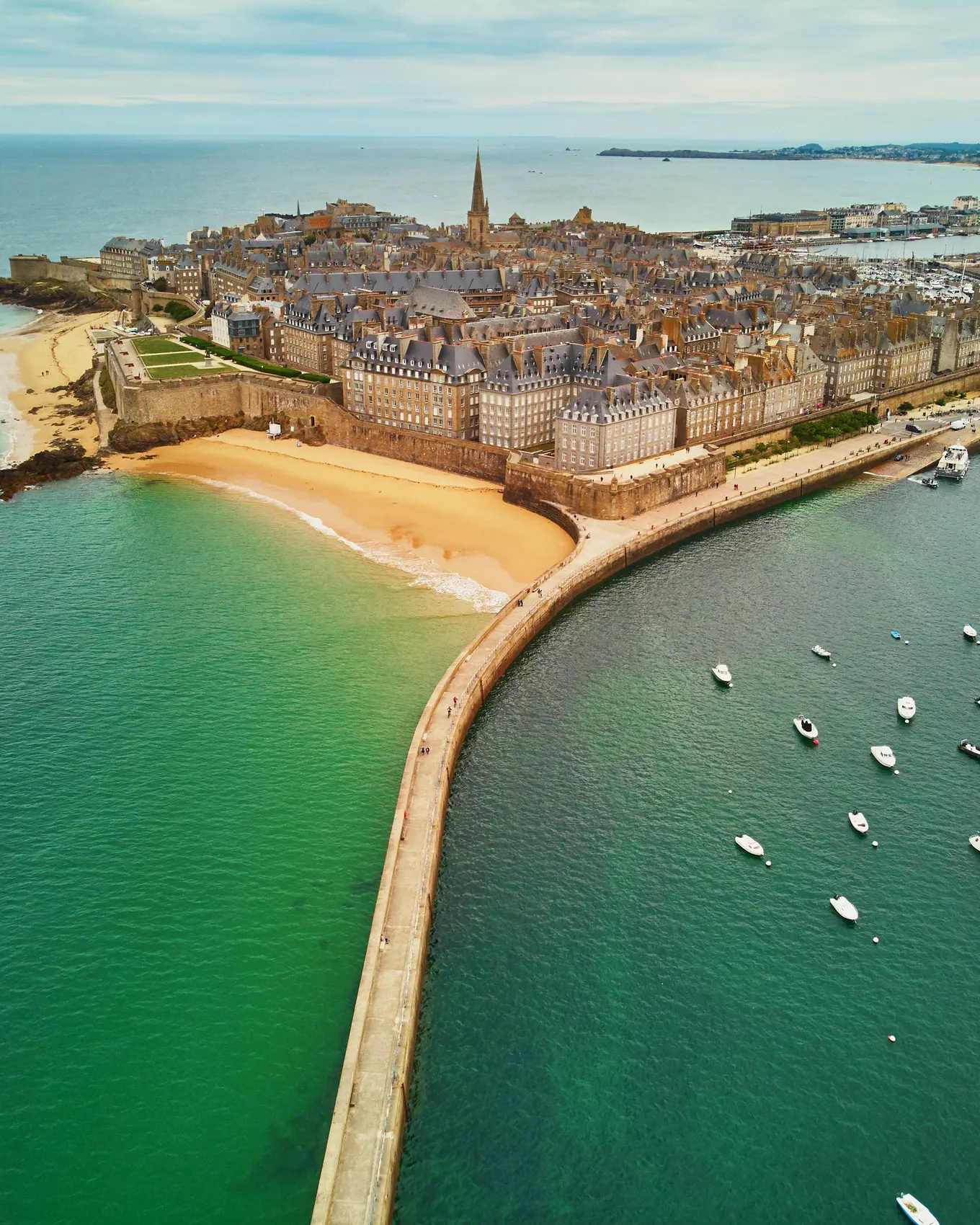
Brittany -Saint-Malo -The walled city from the air
By Jean Mascla, founder of Home SelectUpdated · 10 min read
What changed for a British buyer since Brexit
Nothing for the purchase itself: French property law does not distinguish nationalities, and a British citizen buys a flat, a house or a château on the same terms as a French one. Three things changed. The stay, first: without a visa, a British citizen spends at most 90 days in any 180-day period in the Schengen area, France included; beyond that, they apply for a long-stay visa, the visitor visa for a second home occupied several months a year. Border crossings are now recorded by the European entry and exit system, and an electronic travel authorisation has been announced.
Financing, next: a French bank still lends to a UK resident, with a larger deposit, more documents and a discount on income in pounds. Tax, finally: the France-UK treaty still prevents double taxation, the income and the capital gain of a French property remain taxed in France, and a UK resident affiliated to the social security of their country benefits, on proof, from the 7.5% solidarity levy instead of the 17.2% social charges on resale. The dossier Buying in France from the United Kingdom details each of these points.
The Channel: Brittany, Normandy, the Opal Coast
The regions closest to the United Kingdom keep their faithful: people come by car on the ferries, come back often, stay all year. Brittany sells granite houses facing the sea and longères inland; Normandy its manors, its villas in Deauville and its houses in Honfleur; the Opal Coast its villas in Le Touquet. The real prices of recorded sales give the scale: €4,400/m² for a house in Saint-Malo, €4,700/m² in Dinard, €6,200/m² in Deauville, €8,900/m² in Le Touquet (DVF / DGFiP via data.gouv.fr, October 2026 release, 12 months to end of June 2026).
For whom: buyers who will come often, by car, with the animals, and want a house that can be lived in all year.
The homes: fishermen’s houses and seaside villas on the coast, longères and manors inland, seafront flats in Dinard and Deauville.
The pitfalls: the coastal law that freezes extensions, individual drainage to check inland, damp in old houses, the increased residence tax in seaside municipalities.
This is the British France par excellence, that of honey-stone houses, restored farms and bastide villages, where a community settled since the 1990s has its shops, its associations and its English-speaking tradespeople. Prices there remain the gentlest of the regions in this dossier, and the choice of character homes is the widest; in return, an isolated property resells more slowly, and access depends on regional airports and their seasonal routes.
For whom: buyers who want space, a garden, an outbuilding, village life, and accept the car for everything.
The homes: maisons de maître, restored farms and barns, mills, small châteaux and manors, whose rules the château guide and the character homes guide describe.
The pitfalls: roofs and timber frames, drainage, rights of way, works carried out remotely, and a narrower resale market than on the coasts.
The Atlantic South-West: Bordeaux, Arcachon, the Basque Country
Between the vines and the ocean, the Basque Country and the Atlantic coast attract British buyers who want a lively city and a beach: Bordeaux and its échoppes, Arcachon and Cap Ferret, Biarritz and its surf coast. The real prices: €4,100/m² for a flat in Bordeaux, €8,000/m² for a house in Arcachon, €7,900/m² in Biarritz (DVF / DGFiP via data.gouv.fr, October 2026 release, 12 months to end of June 2026).
For whom: working or recently retired buyers, who want a city, the ocean and direct flights.
The homes: échoppes and hôtels particuliers in Bordeaux, villas of the Ville d’Hiver in Arcachon, neo-Basque houses and seafront flats in Biarritz.
The pitfalls: the coastal law and the erosion of the shoreline on the bay and the Landes coast, the old co-owned buildings of Biarritz, the increased residence tax.
The Mediterranean South: Provence, the Riviera, Languedoc
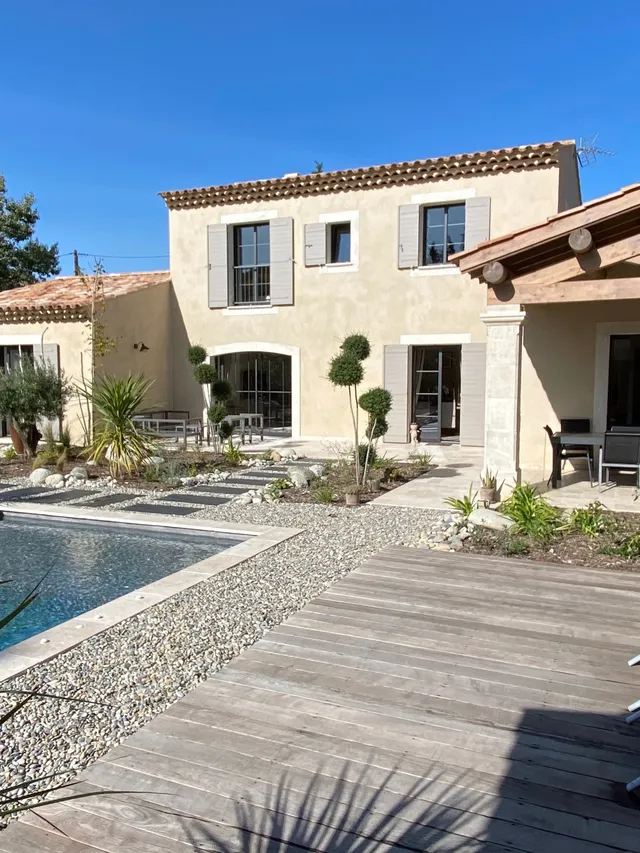
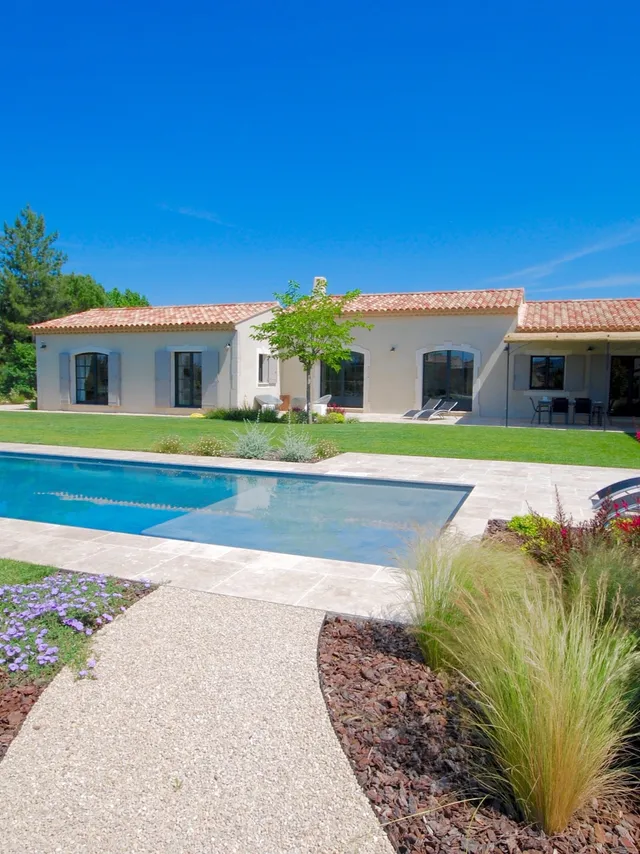
The South is the choice of those who want winter sun and an international life. The French Riviera lines up the most expensive markets of this dossier, €4,900/m² for a flat in Nice and €6,800/m² for a house in Antibes; Provence offers the bastides of the Aix countryside, €6,000/m² for a house in Aix-en-Provence, and the villages of the Luberon; Languedoc, from Uzès, €3,800/m² for a house, to Montpellier, remains the most affordable South (DVF / DGFiP via data.gouv.fr, October 2026 release, 12 months to end of June 2026).
For whom: buyers who will come in every season, by plane, and want an international community, schools and hospitals.
The homes: bourgeois flats and villas with a view on the Riviera, bastides and mas in Provence, village houses and hôtels particuliers in Languedoc.
The pitfalls: fire risk and compulsory brush clearing, water and boreholes, seafront co-owned buildings, off-market homes that sell without a listing.
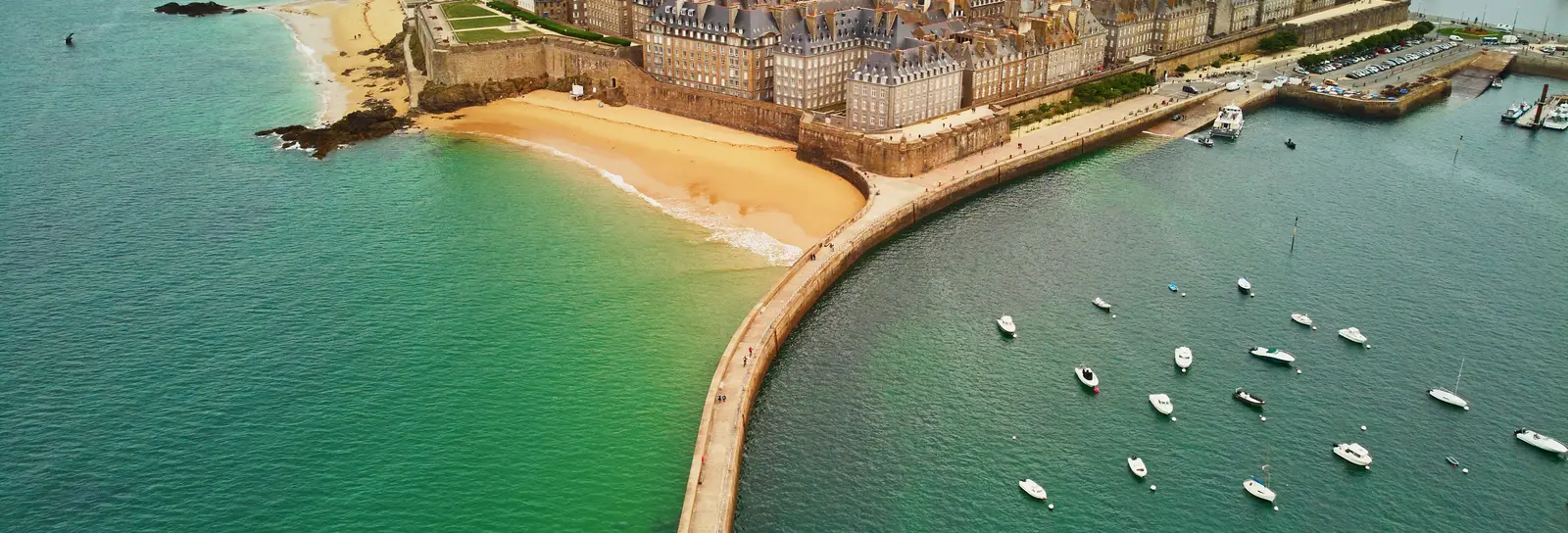
Brittany -Saint-Malo -The walled city from the air
The Alps and the lakes: skiing, and summer
French resorts welcome a faithful British clientele every winter, and a share of it buys: a flat in Chamonix, €10,000/m²; in Megève, €9,400/m²; in Courchevel, €11,800/m²; or, to live year-round, in Annecy, €5,100/m² (DVF / DGFiP via data.gouv.fr, October 2026 release, 12 months to end of June 2026). The Alps have also opened up to summer, which changes resale and use.
For whom: skiers who want a home of their own rather than a rental every winter, and families looking for a lake in summer.
The homes: flats in high-end residences, old chalets to renovate, new chalets bought off-plan.
The pitfalls: mountain co-owned buildings and their charges, regulated holiday lets, open fireplaces banned in the Arve valley, aspect and altitude that make the price.
The markers are the medians of recorded sales (DVF / DGFiP via data.gouv.fr, October 2026 release, 12 months to end of June 2026); a home with a view, on the water or ski-in ski-out sells well above.
Money: the pound, the loan, the costs
The price is paid in euros, into the notaire’s account: a buyer who sells in pounds fixes the rate with a currency specialist, sometimes months ahead, so that the reduction negotiated on the price is not taken back by the currency market. The dossier on paying in a foreign currency explains the tools. A French loan remains possible: the bank asks for a larger deposit than from a resident, discounts income in pounds and wants loan insurance; the dossier on the loan for a non-resident says what to gather.
The costs are the same as for a French buyer: around 7 to 8% of the price on an existing home, under 3% on a new build, plus the buyer’s agent’s fee, due on success. The total cost of buying as a non-resident lays them out in a minute, on completion, every year and on resale, in pounds sterling if you wish; the documents checklist lists what the notaire and the bank will ask a UK resident for.
The pitfalls of a British purchase in France
No automatic survey: the seller provides the compulsory diagnostic reports, but the state of the roof, the timber frame and the drainage is checked by a building surveyor at the buyer’s request, before the offer.
Withdrawal: ten days after the preliminary contract, without reason; after that, only a condition precedent releases.
Forced heirship: a share of the estate goes to the children, unless the will chooses English, Welsh, Scottish or Northern Irish law, as the European regulation allows a British citizen to do; the dossier on inheritance details it.
The matrimonial regime: a couple married in the United Kingdom buys under a regime the French notaire must characterise; the dossier on the foreign matrimonial regime explains the consequences.
The residence tax on a second home, increased by up to 60% in the tense municipalities of the coast and the resorts.
The 90 days: a second home occupied more than 90 days in 180 requires a long-stay visa, to be prepared before the purchase, not after.
The France-UK tax treaty settles the double taxation of income and capital gains; a tax adviser used to both countries refers to it from the purchase.
What Home Select does for a British buyer
Home Select has been a buyer’s agent since 2011: brief by video call, search across the whole market and off-market homes, video pre-viewings, decisive viewings grouped into a single trip, negotiation on actual sales, then coordination of the bilingual notaire, the broker for non-residents, the currency specialist and the sworn translator through to the keys. The Buying from abroad page describes this journey in English.
The fee is due on success only: 2.5% incl. VAT of the net purchase price with the Exclusive Offer, minimum €10,000 incl. VAT, or 1.5% incl. VAT with the Confidential Offer for projects of €2M and above, plus 10% incl. VAT of the negotiated reduction; the details are on the fees page.
Frequently asked questions
Can a British citizen still buy in France after Brexit?
Yes, exactly as before: no authorisation is needed to buy a home in France, whatever the nationality. Brexit changed the stay, limited to 90 days in 180 without a visa, financing, a little more demanding, and a few rules of tax and inheritance, not the right to buy.
How long can a British citizen spend in their second home in France?
Without a visa, at most 90 days in any 180-day period across the whole Schengen area. To spend more time there, a long-stay visitor visa is applied for before departure, with means and insurance conditions; it is renewable. A specialist lawyer prepares the application; the purchase does not replace it.
Where do the British buy most in France?
Historically in the rural South-West, Dordogne, Charente and Lot, then in Brittany and Normandy for proximity, in Provence and on the Riviera for the climate, in the Alps for skiing. The cities of Bordeaux, Nice and Annecy attract more and more buyers who want a year-round life.
Does a French bank lend to a UK resident?
Yes, with a larger deposit than from a resident, a discount on income in pounds, more documents, translated, and loan insurance. A broker used to non-residents puts several banks in competition; Home Select introduces them from the brief.
Which social charges on resale for a UK resident?
The 7.5% solidarity levy instead of the 17.2% social charges, on proof of affiliation to British social security, the agreement concluded with the United Kingdom having kept the coordination of the schemes. The 19% capital gains tax applies besides, with the allowances for years of ownership.
Can a British citizen choose English law for their succession in France?
Yes. The European succession regulation lets any national of a State, member of the Union or not, submit their succession to the law of their nationality by a clause in their will; France applies that choice, which sets aside French forced heirship. The notaire drafts this clause before the purchase.
Do I have to travel to France to buy?
Once, for the grouped decisive viewings, and not always: the preliminary contract is often signed remotely by electronic signature, the deed by apostilled power of attorney. Home Select runs the search, the video pre-viewings and the negotiation from the brief through to the keys.
Which region resells best?
Those where buyers are both local and international and where sales are numerous: the Riviera, the Basque Country, Bordeaux, Annecy, the large Alpine resorts. An isolated property in the rural South-West resells, but more slowly; recorded sales, public in France, measure that liquidity municipality by municipality.
The Channel, the South-West, the Mediterranean or the Alps? Describe your project: a Home Select buyer’s agent calls you back within one working day to set the region, the budget in pounds and euros, and the timeline, with no commitment.
Your request is already sent, simply pick what suits you.
A buyer’s agent calls you back within one working day.
🇫🇷+33
An error occurred. Please try again.
Then answer 3 quick questions to be matched with the right hunter.
Home Select processes your data (name, email, phone, project) to handle your request and contact you. It is recorded in our follow-up tool and read by the hunter in charge of your project. Our technical providers access it for hosting, email and checking that your email and number are real, some of them from the United States under the safeguards set by the GDPR. We keep it for three years after our last exchange, or five years after the end of our assignment if you entrust it to us, as French anti-money-laundering law requires. To access, correct or erase it, or to object to its use: contact@home-select.fr. Details in our privacy policy.
Your hunter calls you back within one working day.
Resume your request?
You started a request recently. Pick up where you left off, or start over.
Your answers are kept for 24 hours.
What is your project?
Takes 1 minute, no commitment.
Where are you looking?
Select one or more cities or areas
Your budget?
€
You pay only when Home Select finds it.
Anything to add?
Optional. Add any useful details: specifics about your search, constraints or your availability.
This helps your hunter prepare for your call.
An expert will contact you shortly
Your brief
Confidential search: your file goes to a senior hunter.
60 rue François 1er, 75008 Paris · FCI member
FeesOne month’s rent excluding charges, plus VAT, with a minimum of €2,000 including VAT. Payable only when the lease is signed. No application fee.
Step 1 of 2 · Your search
What are you looking for?
Furnished, unfurnished or both?
In which city?
One or more cities or areas.
€ / month
Charges included, as in the listings.
You would like to move in
Two minutes, no documents needed at this stage.
FeesOne month’s rent excluding charges, plus VAT, with a minimum of €2,000 including VAT. Payable only when the lease is signed. No application fee.
Step 2 of 2 · Your situation
Your situation
These answers let Home Select tell you quickly, and frankly, whether your search can succeed on the market in your city.
You are applying
€ / month
Before tax, regular bonuses included, for everyone applying.
Main applicant’s employment
Your company is based in France
Number of annual accounts filed
To strengthen your file
Optional for your profile. A guarantee reassures landlords.
Guarantor’s situation
€ / month
Who it is for, why you are moving, what matters to you. Do not include sensitive information (health, origin, religion, family situation).
Your contact details
🇫🇷+33
Reply within 24 business hours.
Home Select processes your data (name, email, phone, project, employment, income, guarantee) to review your rental request and contact you. Your answers are compared with the criteria landlords apply, then read by Home Select’s rental hunter. A request that cannot succeed receives a written reply within 24 business hours, and you can ask for it to be reviewed again at contact@home-select.fr. Our technical providers access it for hosting, email and checking that your email and number are real, some of them from the United States under the safeguards set by the GDPR. A request that does not lead to an assignment is erased after three months; otherwise, we keep your data for three years after our last exchange, or five years after the end of our assignment if you entrust it to us, as French anti-money-laundering law requires. To access, correct or erase it, or to object to its use: contact@home-select.fr. Details in our privacy policy.
FeesOne month’s rent excluding charges, plus VAT, with a minimum of €2,000 including VAT. Payable only when the lease is signed. No application fee.
Your file
Your file matches what landlords expect
Book your meeting with Stéphane Martins, rental hunter. He confirms it after reading your file, within 24 business hours.
Choose your time slot
Times shown in Paris time.
Confirmation arrives by email and text message.
FeesOne month’s rent excluding charges, plus VAT, with a minimum of €2,000 including VAT. Payable only when the lease is signed. No application fee.
Your request
Your request is in good hands
Stéphane Martins, rental hunter, is reviewing your file and will reply within 24 business hours.
Home Select processes your data (name, email, phone, project) to handle your request and contact you. It is recorded in our follow-up tool and read by the hunter in charge of your project. Our technical providers access it for hosting, email and checking that your email and number are real, some of them from the United States under the safeguards set by the GDPR. We keep it for three years after our last exchange, or five years after the end of our assignment if you entrust it to us, as French anti-money-laundering law requires. To access, correct or erase it, or to object to its use: contact@home-select.fr. Details in our privacy policy.
Home Select processes your data (name, email, phone, project, employment, income, guarantee) to review your rental request and contact you. Your answers are compared with the criteria landlords apply, then read by Home Select’s rental hunter. A request that cannot succeed receives a written reply within 24 business hours, and you can ask for it to be reviewed again at contact@home-select.fr. Our technical providers access it for hosting, email and checking that your email and number are real, some of them from the United States under the safeguards set by the GDPR. A request that does not lead to an assignment is erased after three months; otherwise, we keep your data for three years after our last exchange, or five years after the end of our assignment if you entrust it to us, as French anti-money-laundering law requires. To access, correct or erase it, or to object to its use: contact@home-select.fr. Details in our privacy policy.
You arrived through one of Home Select’s ads or campaigns.Ad measurement.Do you agree to Home Select measuring how well it works? Home Select will know which campaign brought you here and, if you get in touch, the ad platform will only learn that its ad worked, without receiving your contact details.Do you agree to Home Select measuring how well its ads work? If you arrive through one of them, Home Select will know which one and, if you get in touch, the ad platform will only learn that its ad worked, without receiving your contact details.Learn moreYour current choice: .