France, Portugal or Spain: where to buy a second home? Costs, taxes, resale, inheritance, visas
A buyer who lives outside Europe, or in northern Europe, often hesitates between the three countries of the continent’s south-west. All three sell sun, sea and old stone; they do not sell the same rights, the same taxes or the same legal safety. This dossier sets side by side what to know before choosing, item by item, then what France adds for someone buying from afar.
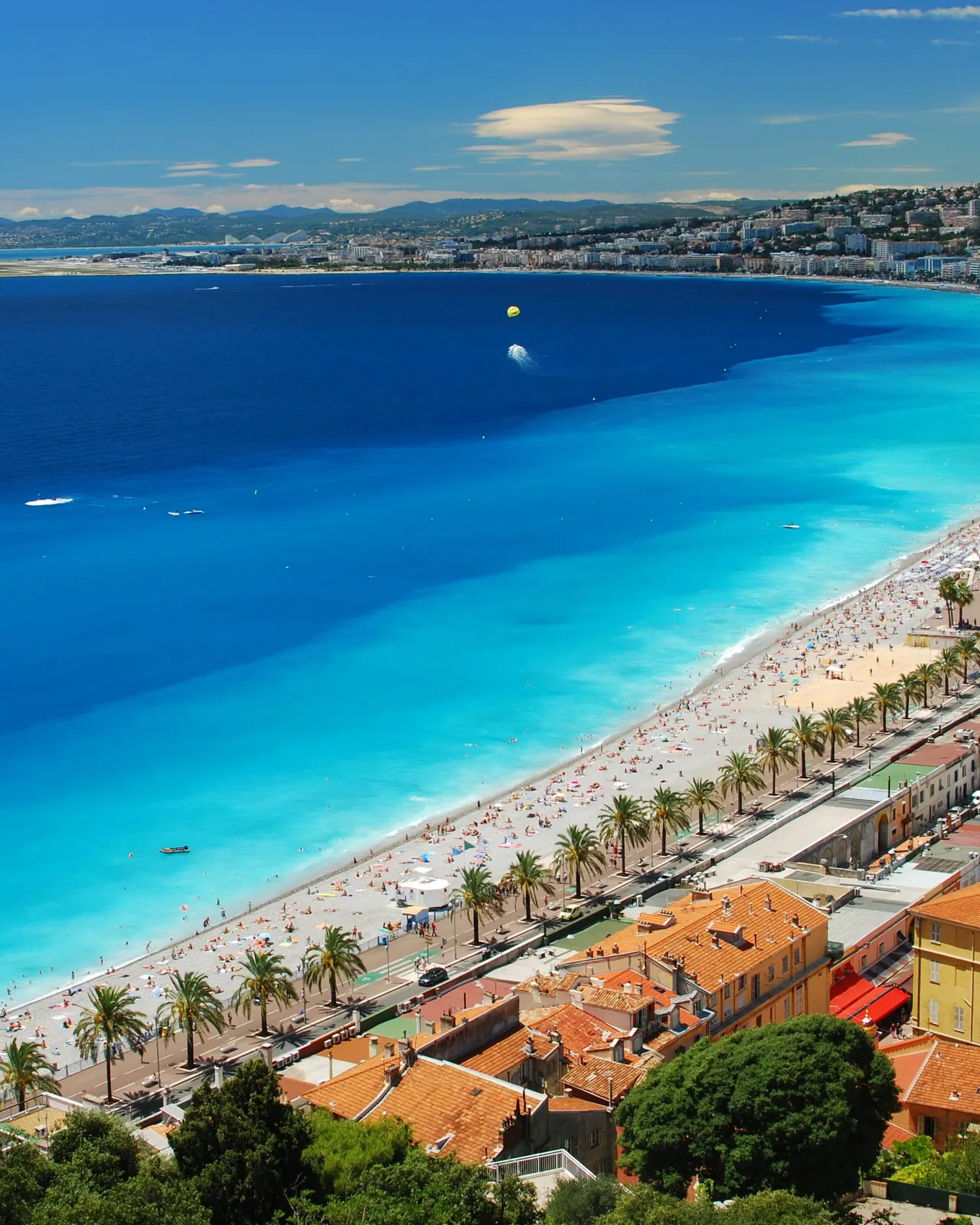
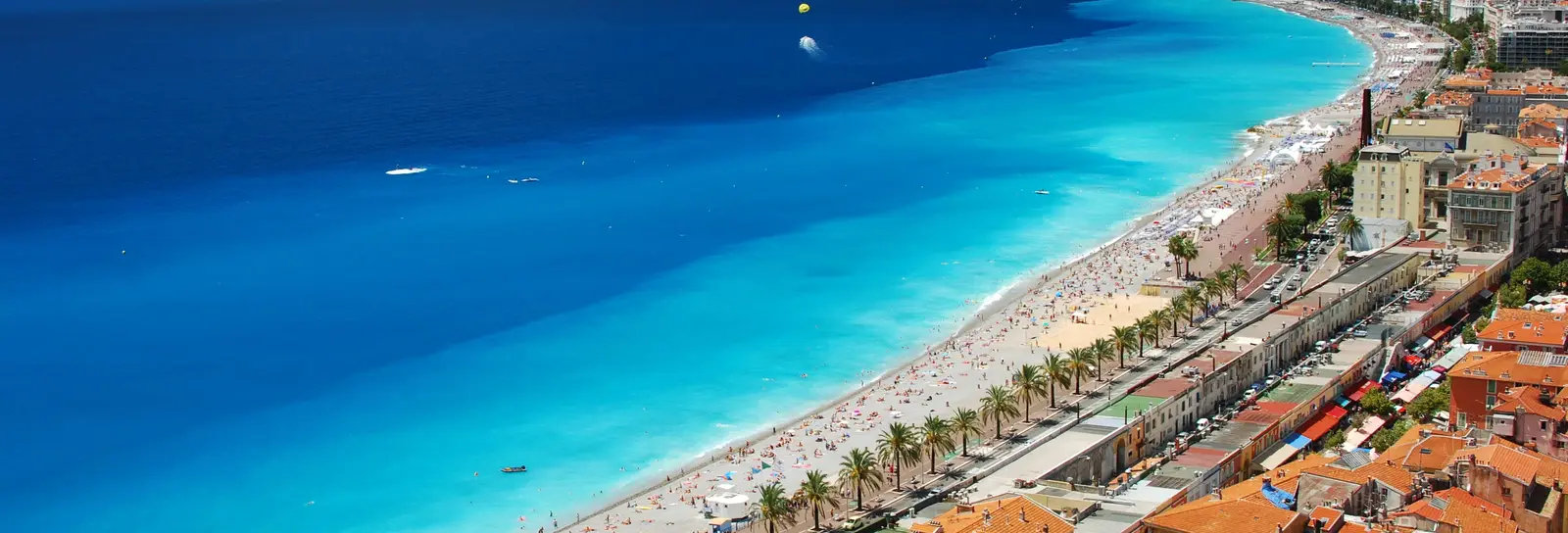
French Riviera -Nice -The Baie des Anges from the heights
By Jean Mascla, founder of Home SelectUpdated · 10 min read
Three countries, three ways of buying
In France, a single notaire, a public officer, authenticates the sale and registers the title: the preliminary contract binds both parties, the buyer has ten days to withdraw, and the deed follows two to three months later. In Spain, the private deposit contract (arras) binds from signature, with no cooling-off period, and the notario authenticates the deed without guaranteeing the title the way his French counterpart does: the land registry and the buyer’s lawyer do that work. In Portugal, the promissory contract binds just as firmly, and the escritura is signed before a notary or a solicitador.
France: one notaire, a 5 to 10% deposit held in escrow, ten days to withdraw, a title registered at the land registry.
Spain: a deposit often of 10%, lost if the buyer withdraws, doubled if the seller withdraws; a lawyer recommended to check charges, permits and community debts.
Portugal: a promissory contract with a sinal, checks of the habitation licence and of debts to be made beforehand, a deed before a notary.
How much does the purchase itself cost?
All three countries levy duties on the purchase, but neither at the same rate nor on the same base. The table below gives the orders of magnitude in force on 5 November 2026, for an existing home bought by an individual; the firm figure comes from the notaire, the notario or the solicitador.
Item
France
Spain
Portugal
Duties on purchase (existing home)
Transfer duties, around 5.8% to 6.3%
ITP of 6 to 10% depending on the autonomous community
Progressive IMT, up to 7.5% for a second home
Other costs
Notary fees, land registration contribution, disbursements: 7 to 8% in all
Notario, registry, lawyer: 1 to 2% more
Stamp duty 0.8%, notary and registry
New build
Reduced tax, 2 to 3% in all, VAT included in the price
This is the item comparisons forget, and the one that weighs most over twenty years. France taxes ownership: the property tax, due by every owner, and the residence tax, kept on second homes and increased by up to 60% in the tense municipalities of the coast and the mountains. Above €1.3M of net property assets located in France, the wealth tax on property is added, on a progressive scale, for a non-resident as for a resident.
Spain asks for the IBI, the equivalent of the property tax, and above all a non-resident income tax calculated on a notional income from the second home, even when unoccupied: 1.1% or 2% of the cadastral value, taxed at 19% for a resident of the European Union and 24% for others. The wealth tax depends on the autonomous community, some have reduced it to zero, and a national tax known as the solidarity tax targets net assets above €3M.
Portugal levies the IMI, between 0.3% and 0.45% of the tax value depending on the municipality, and the AIMI, an additional tax on the share of tax value above €600,000 per owner, beyond which the rates rise in bands. The dossier on the holding tax of a non-resident details the French case; the wealth tax calculator does the sum.
And on the day you sell?
In France, a non-resident’s capital gain bears 19% tax and 17.2% social charges, reduced to 7.5% for a seller affiliated to a social security scheme of the European Economic Area or Switzerland; allowances for each year of ownership erase the tax after twenty-two years and the social charges after thirty. A seller living outside the Union appoints a tax representative, unless exempt.
In Spain, the buyer withholds 3% of the price and pays it to the tax office on behalf of the non-resident seller, who then declares the gain and recovers any excess. In Portugal, since 2023, a non-resident’s capital gain is taxed like a resident’s, at progressive rates on half of the gain, after the end of the previous flat regime.
France has forced heirship: a share of the estate goes to the children whatever the will says. But the European succession regulation lets a foreign national submit their whole estate to the law of their nationality, by a clause in their will, and France applies that choice. Inheritance tax between parents and children applies after an allowance of €100,000 per child; the surviving spouse is exempt.
In Spain, inheritance tax is regional and varies enormously from one community to another, some granting almost complete allowances to close relatives. In Portugal, there is no inheritance tax between spouses, ascendants and descendants; other heirs pay a 10% stamp duty.
French Riviera -Nice -The Baie des Anges from the heights
Does a purchase give the right to stay?
No, and no longer in any of the three countries. Portugal removed property from the investments giving access to its golden visa in October 2023; Spain abolished its own in April 2025; France has never tied a residence permit to a property purchase. A non-EU national stays 90 days in any 180-day period in the Schengen area, whatever the country, and applies for a long-stay visa to stay longer: the visitor visa in France, the D7 visa in Portugal, the non-lucrative visa in Spain, each with its own means conditions.
The dossiers by country of residence say, country by country, what a purchase changes and does not change for staying; visa procedures belong to a specialist lawyer, whom Home Select can introduce.
Climate, access, season: three souths that do not look alike
The French Riviera and Provence offer mild winters and a season that stretches from April to October, with year-round life in the cities; the Algarve and the Costa del Sol have even brighter winters and resorts that live mostly in summer. Access matters as much as climate: an international airport nearby, direct flights to the country of residence, a high-speed rail station. France lines up more of them than the other two along its coasts and in its mountains, from the Alps to the Basque Country.
Living year-round: the large cities of the French Mediterranean, Nice, Aix-en-Provence, Montpellier, keep their shops, schools and hospitals all year.
Coming by season: the resorts of all three countries close part of their shutters in winter; the villages of the French hinterland, Luberon or Alpilles, remain inhabited.
Keeping a city pied-à-terre: Bordeaux, Lyon or Annecy resell and let all year round.
What France offers that the other two do not
Price transparency, first. Every sale completed in France is published in the Demandes de valeurs foncières database, address by address, price and surface included: a buyer knows what the building next door sold for before making an offer. Neither Spain nor Portugal opens its registers that way. On that basis, the median for flats reaches €4,900/m² in Nice, €4,100/m² in Bordeaux and €5,100/m² in Annecy; the median for houses €6,000/m² in Aix-en-Provence and €7,900/m² in Biarritz (DVF / DGFiP via data.gouv.fr, October 2026 release, 12 months to end of June 2026).
The safety of the deed, next: a single notaire, liable on his own assets, checks the title, the easements, the planning rules, the surveys and the seller’s debts before signing; the deposit sleeps in an escrow account. The market, finally: character homes, bastides, maisons de maître, chalets, hôtels particuliers, in number and in depth, a share of which sells without a listing. The off-market guide explains how one gets access.
How to choose: six questions before deciding
The use: living year-round, coming by season, or keeping a pied-à-terre that you lend. The answer already rules out half of the places.
The season: mild winter or long summer? A resort that closes in winter does not suit someone who wants to spend Christmas there.
Access: how many direct flights from your country, how many stopovers, a rail station? A home that is hard to reach is visited little and resells less well.
Annual taxation: increased residence tax, Spanish notional income, Portuguese AIMI, French wealth tax: do the sum over twenty years, not over the year of purchase.
Inheritance: your children, your spouse, the law of your nationality. This point sometimes decides the country on its own.
Resale: a deep market, published sales, local and international buyers. The liquidity of a property costs less at purchase than at resale.
The second home guide takes these questions up for France, region by region, with the pitfalls specific to the coast and the mountains.
What Home Select does for a buyer who chooses France
Home Select has been a buyer’s agent since 2011: the search and the negotiation are carried out for the buyer alone, across the whole market and off-market homes, with video pre-viewings and decisive viewings grouped into a single trip. Around the purchase, Home Select introduces the bilingual notaire, the broker for non-residents, the tax adviser and the currency specialist used to the buyer’s country, then follows the remote signing through to the keys.
The fee is due on success only: 2.5% incl. VAT of the net purchase price with the Exclusive Offer, minimum €10,000 incl. VAT, or 1.5% incl. VAT with the Confidential Offer for projects of €2M and above, plus 10% incl. VAT of the negotiated reduction. The details are on the fees page, the way of working on the method page.
Frequently asked questions
Can a foreigner buy freely in all three countries?
Yes. None of the three countries makes the purchase of a home by a foreigner subject to authorisation, whatever the nationality. Special rules exist for certain land and military zones in Spain, and for agricultural property in France, where a land agency may exercise a right of pre-emption.
Where are purchase costs lowest?
On an existing home the three countries are close: 7 to 8% in France, 7 to 12% in Spain depending on the autonomous community once the notario, the registry and the lawyer are added, 8 to 9% in Portugal with stamp duty. On a new build France is clearly cheaper, around 2 to 3% of duties, VAT being in the price.
Which country taxes the ownership of a second home most?
It depends on the value of the property and the region. A modest home pays little everywhere; a €1.5M home bears in France the wealth tax and an increased residence tax, in Spain a taxed notional income and, depending on the region, the wealth tax, in Portugal the AIMI on the share above €600,000. Only a twenty-year calculation, with a tax adviser, settles it.
Does buying give a visa or residence permit?
No longer in any of the three countries. Portugal excluded property from its golden visa in October 2023, Spain abolished its own in April 2025 and France never had one. A stay of more than 90 days in 180 requires a long-stay visa, with means conditions specific to each country.
Can you buy remotely in all three countries?
Yes, by power of attorney in each. In France, the preliminary contract is often signed remotely by electronic signature and the deed by apostilled notarised power of attorney; the ten-day cooling-off period protects the buyer who has not yet checked everything. In Spain and Portugal, the private contract binds from signature: every check must come first.
How does a foreigner pass a French property on to their children?
By will, choosing the law of their nationality to escape French forced heirship, as the European succession regulation allows, or by organising ownership from the purchase: split of ownership, civil company, gift. The notaire prepares it before the preliminary contract, not after.
Why are French prices public?
Because the tax administration publishes every sale for value in the Demandes de valeurs foncières database, with the address, the price, the surface and the date, since 2014 for France outside Alsace-Moselle. Home Select checks every property proposed against these sales, address by address, before setting the price of an offer.
What does a buyer’s agent do that you cannot do alone?
They search the whole market, including homes that are not listed, set aside what does not meet the brief, view by video, check the price against actual sales, negotiate, then coordinate notaire, broker and translator through to the keys. Home Select negotiates 6% on average off the asking price and is paid on success only.
Still hesitating between two countries, or have you chosen France? Describe your project: a Home Select buyer’s agent calls you back within one working day to set the budget, the region and the timeline, with no commitment.
Your request is already sent, simply pick what suits you.
A buyer’s agent calls you back within one working day.
🇫🇷+33
An error occurred. Please try again.
Then answer 3 quick questions to be matched with the right hunter.
Home Select processes your data (name, email, phone, project) to handle your request and contact you. It is recorded in our follow-up tool and read by the hunter in charge of your project. Our technical providers access it for hosting, email and checking that your email and number are real, some of them from the United States under the safeguards set by the GDPR. We keep it for three years after our last exchange, or five years after the end of our assignment if you entrust it to us, as French anti-money-laundering law requires. To access, correct or erase it, or to object to its use: contact@home-select.fr. Details in our privacy policy.
Your hunter calls you back within one working day.
Resume your request?
You started a request recently. Pick up where you left off, or start over.
Your answers are kept for 24 hours.
What is your project?
Takes 1 minute, no commitment.
Where are you looking?
Select one or more cities or areas
Your budget?
€
You pay only when Home Select finds it.
Anything to add?
Optional. Add any useful details: specifics about your search, constraints or your availability.
This helps your hunter prepare for your call.
An expert will contact you shortly
Your brief
Confidential search: your file goes to a senior hunter.
60 rue François 1er, 75008 Paris · FCI member
FeesOne month’s rent excluding charges, plus VAT, with a minimum of €2,000 including VAT. Payable only when the lease is signed. No application fee.
Step 1 of 2 · Your search
What are you looking for?
Furnished, unfurnished or both?
In which city?
One or more cities or areas.
€ / month
Charges included, as in the listings.
You would like to move in
Two minutes, no documents needed at this stage.
FeesOne month’s rent excluding charges, plus VAT, with a minimum of €2,000 including VAT. Payable only when the lease is signed. No application fee.
Step 2 of 2 · Your situation
Your situation
These answers let Home Select tell you quickly, and frankly, whether your search can succeed on the market in your city.
You are applying
€ / month
Before tax, regular bonuses included, for everyone applying.
Main applicant’s employment
Your company is based in France
Number of annual accounts filed
To strengthen your file
Optional for your profile. A guarantee reassures landlords.
Guarantor’s situation
€ / month
Who it is for, why you are moving, what matters to you. Do not include sensitive information (health, origin, religion, family situation).
Your contact details
🇫🇷+33
Reply within 24 business hours.
Home Select processes your data (name, email, phone, project, employment, income, guarantee) to review your rental request and contact you. Your answers are compared with the criteria landlords apply, then read by Home Select’s rental hunter. A request that cannot succeed receives a written reply within 24 business hours, and you can ask for it to be reviewed again at contact@home-select.fr. Our technical providers access it for hosting, email and checking that your email and number are real, some of them from the United States under the safeguards set by the GDPR. A request that does not lead to an assignment is erased after three months; otherwise, we keep your data for three years after our last exchange, or five years after the end of our assignment if you entrust it to us, as French anti-money-laundering law requires. To access, correct or erase it, or to object to its use: contact@home-select.fr. Details in our privacy policy.
FeesOne month’s rent excluding charges, plus VAT, with a minimum of €2,000 including VAT. Payable only when the lease is signed. No application fee.
Your file
Your file matches what landlords expect
Book your meeting with Stéphane Martins, rental hunter. He confirms it after reading your file, within 24 business hours.
Choose your time slot
Times shown in Paris time.
Confirmation arrives by email and text message.
FeesOne month’s rent excluding charges, plus VAT, with a minimum of €2,000 including VAT. Payable only when the lease is signed. No application fee.
Your request
Your request is in good hands
Stéphane Martins, rental hunter, is reviewing your file and will reply within 24 business hours.
Home Select processes your data (name, email, phone, project) to handle your request and contact you. It is recorded in our follow-up tool and read by the hunter in charge of your project. Our technical providers access it for hosting, email and checking that your email and number are real, some of them from the United States under the safeguards set by the GDPR. We keep it for three years after our last exchange, or five years after the end of our assignment if you entrust it to us, as French anti-money-laundering law requires. To access, correct or erase it, or to object to its use: contact@home-select.fr. Details in our privacy policy.
Home Select processes your data (name, email, phone, project, employment, income, guarantee) to review your rental request and contact you. Your answers are compared with the criteria landlords apply, then read by Home Select’s rental hunter. A request that cannot succeed receives a written reply within 24 business hours, and you can ask for it to be reviewed again at contact@home-select.fr. Our technical providers access it for hosting, email and checking that your email and number are real, some of them from the United States under the safeguards set by the GDPR. A request that does not lead to an assignment is erased after three months; otherwise, we keep your data for three years after our last exchange, or five years after the end of our assignment if you entrust it to us, as French anti-money-laundering law requires. To access, correct or erase it, or to object to its use: contact@home-select.fr. Details in our privacy policy.
You arrived through one of Home Select’s ads or campaigns.Ad measurement.Do you agree to Home Select measuring how well it works? Home Select will know which campaign brought you here and, if you get in touch, the ad platform will only learn that its ad worked, without receiving your contact details.Do you agree to Home Select measuring how well its ads work? If you arrive through one of them, Home Select will know which one and, if you get in touch, the ad platform will only learn that its ad worked, without receiving your contact details.Learn moreYour current choice: .