Buying a property in France from China: funds, tax, signing, inheritance, visas
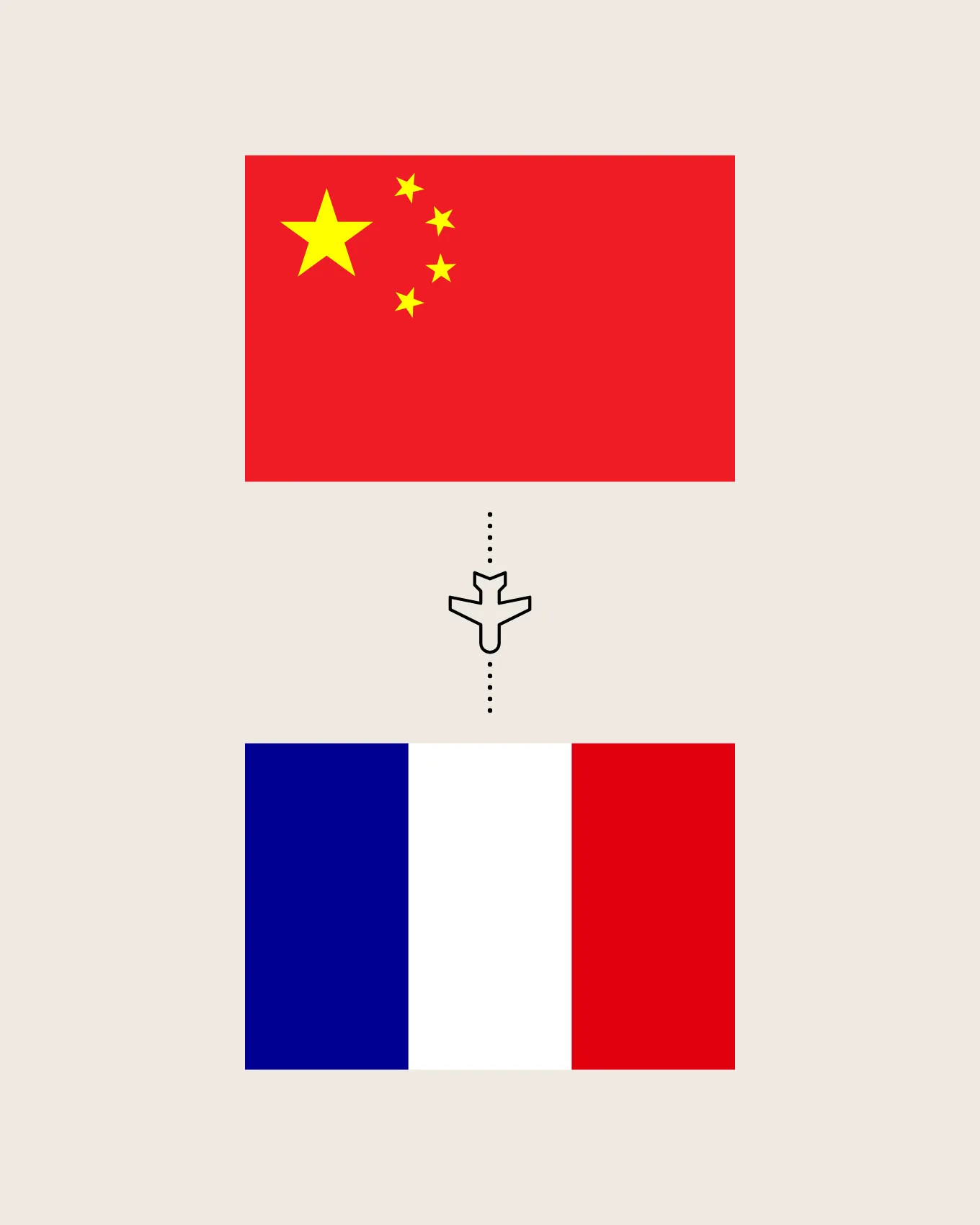
Buyers from mainland China look above all at Paris, the French Riviera and the Bordeaux region, for a family home, a pied-à-terre or a property to pass on. French sale law is the same for them as for any buyer: a foreigner buys freely in France, before a notaire. Three subjects nonetheless change the whole journey. First the funds, because Chinese exchange controls do not let the money for a property purchase abroad leave freely. Then tax, governed by the France China tax agreement, which leaves the taxation of the property to France. Finally language and documents, since the deed is signed in French and your Chinese papers must be recognised in France. This guide takes them in the order in which they arise.
By Jean Mascla, founder of Home SelectUpdated · 10 min read
The purchase process seen from China
A single notaire, a public officer, secures the sale, checks the funds and registers title. Everything can be signed without travelling to France, provided the power of attorney and the language are prepared.
What changes for you
You first sign a preliminary contract (compromis or promesse), with a ten day cooling off period for the buyer, then the final deed two to three months later (Service-Public).
The deposit, usually 5 to 10 % of the price, is paid at the preliminary contract into the notaire’s client account, never to the seller; acquisition costs come to about 7 to 8 % of the price for an existing property and 2 to 3 % for a new build, which our calculator works out for your price.
The final deed is written in French: a buyer who does not understand French is assisted by an interpreter, a condition of the validity of their consent, and a notaire who speaks your language makes the whole journey simpler.
Points to watch
To sign without travelling, the power of attorney is given by video call with the French notaire, or before a notary in China with an apostille and a sworn translation: allow several weeks.
An international transfer needs preparing: timing, fees, exchange, and a phone check of the notaire’s bank details before every payment.
The timeline of the purchase depends first on the funds being available in Europe, which is settled before the offer (next chapter).
Bringing the funds: Chinese exchange controls
It is the first question of a purchase from China, and it is not settled in France: China regulates the outflow of capital, and a property purchase abroad cannot go through the individual foreign exchange quota. Our guide to exchange controls explains why this must come before the offer.
Currency bought within this quota cannot be used to buy property abroad; since 2017, the bank has required the use of the funds to be declared on every foreign currency purchase.
Splitting the transaction between several people, relatives or friends, to pool their quotas is forbidden.
Points to watch
In practice, the funds for the purchase must already be lawfully outside mainland China, or leave it through an authorised channel, and their origin must be provable.
In France, the notaire and the bank check the source of funds under anti money laundering rules: the funds come from an account in the buyer’s name, with the documents that trace their history.
Settle the financing before signing a preliminary contract: funds that do not arrive by the date of the deed make the sale fail, and the deposit can be lost.
Financing: own funds or a loan in France
A non-resident can borrow in France: no rule reserves credit for residents. Banks ask for a larger down payment and read income in a foreign currency with a discount, as our guide to the non-resident mortgage explains.
What changes for you
The down payment expected ranges in practice from 20 to 40 % of the price depending on the country of residence and the currency of the income, and acquisition costs are paid from own funds.
The debt ratio is capped at 35 % of income, borrower’s insurance included, over 25 years at most; our mortgage calculator gives the orders of magnitude.
A French loan does not solve the exchange question: the down payment and the costs must come from funds already available outside mainland China.
Points to watch
Borrower’s insurance involves a health questionnaire, sometimes medical tests: start it as soon as a bank shows interest.
Allow two to three months for a loan approval, and include a mortgage condition in the preliminary contract.
The conversion into euros is decided before the offer: an exchange rate swing can cost more than the acquisition costs.
The France China tax agreement and tax while you own
France and China are bound by a tax agreement signed in Beijing on 26 November 2013, in force since 28 December 2014 and applied since 1 January 2015; it replaced the 1984 convention (text of the agreement).
What changes for you
Income from immovable property located in France is taxable in France; China credits the French tax against the Chinese tax due on that income.
French source income of a non-resident is taxed at a minimum rate of 20 %, unless you can show a lower average rate, and the property tax remains due every year.
Above 1.3 million euros of net French real estate, the property wealth tax (IFI) applies, even while resident in China.
Points to watch
The agreement covers neither Hong Kong, nor Macao, nor Taiwan: a resident of these territories falls under another text, to be checked with their adviser.
IFI is calculated on net value: the form of ownership and any borrowing matter.
Do not assume the effect of the agreement: it depends on your exact tax residence and on the nature of your income.
In this guide
Provence -Marseille -The Vieux-Port and Notre-Dame de la Garde
Resale: capital gains, social levies, tax representative
The gain from selling a property located in France is taxed in France, under the regime for non-residents outside the European Union.
Full exemption is reached after 22 years of ownership for income tax and 30 years for social levies.
Without affiliation to a European social security scheme, you bear the social levies at the full rate: the exemption reserved for those affiliated to a European scheme does not apply to a resident of China.
Points to watch
Above 150,000 euros of sale price, a non-EU resident must generally appoint an accredited tax representative, subject to exemption cases; the cost should be budgeted from the moment you list.
Keep renovation invoices: they raise the acquisition cost used and reduce the gain.
Your adviser in China checks what the resale triggers on that side, before listing and not after.
Inheritance: French law, with no agreement with China
No agreement binds France and China on inheritance: property located in France bears French inheritance tax, and mainland China has no inheritance tax.
What changes for you
French duties are calculated heir by heir: each child has an allowance of €100,000, after which a scale from 5 to 45 % applies; the surviving spouse is exempt.
The law of your last habitual residence governs in principle the whole succession, French property included, unless your will chooses the law of your nationality: this is EU Regulation No 650/2012, which France applies to everyone.
French forced heirship protects children; since the law of 24 August 2021, they can claim a compensatory levy on assets located in France when the applicable foreign law ignores forced heirship and the deceased or one of them is a national or resident of a European Union country.
Points to watch
With no inheritance tax in mainland China, the issue is not double taxation but the French cost, to be planned from the purchase.
A child settled in France or elsewhere in the Union can change the applicable rule: have the notaire check it.
The form of ownership, the will and the matrimonial regime are decided before the signing, not after (passing on a French property).
Chinese documents: apostille, translation, civil status
The Apostille Convention has been in force for mainland China since 7 November 2023; it already applied in Hong Kong and Macao (Hague Conference).
What changes for you
A Chinese public document, such as a marriage certificate or a notarised power of attorney, no longer needs consular legalisation: the apostille is enough.
The apostilled document comes with a sworn translation into French.
The French notaire relies on these documents to establish your identity, your civil status and your matrimonial regime, which decides how the property will be registered.
Points to watch
Start the apostille and the translation at the preliminary contract: the original must be with the notaire before the date of the deed.
A couple married in China has the notaire check the law that governs their matrimonial regime before choosing to buy together or in the name of one spouse.
Keep the same spelling of your names from one document to the next: passport, translated certificates, bank statements.
Stays: the Schengen visa and the long stay visa
Owning property in France gives no right of residence. A Chinese national needs a Schengen short stay visa, which allows 90 days in any 180 day period.
What changes for you
The Schengen short stay visa covers viewings, the signing and holidays, within the limit of 90 days in any 180 across the whole Schengen area.
Beyond that, a long stay visa is needed, most often the “visitor” visa for those who live on their own means without working in France, applied for before departure on France-Visas.
France has no programme that grants a residence permit in exchange for buying a home.
Points to watch
Count your days across the whole Schengen area, not only in France.
The long stay visa requires proof of resources, accommodation and health cover; a lasting move may make you a French tax resident.
Frequently asked questions
Can you buy property in France while living in China?
Yes. French law does not reserve property purchases for residents or Europeans: a buyer living in China buys on the same terms as anyone else, before a notaire.
Can I use my annual foreign exchange quota to buy?
No. The annual quota of 50,000 US dollars per person cannot be used to buy property abroad, and splitting between several people is forbidden. The funds must be lawfully outside mainland China or leave it through an authorised channel: settle this with your bank and a lawyer in China before any offer.
Will I pay tax in both China and France?
Income from a property located in France is taxable in France, and the France China tax agreement applied since 2015 provides that China credits the French tax against its own. The resale gain is taxed in France.
Do I need to come to France to sign?
No. The power of attorney is given by video call with the French notaire or before a notary in China, with an apostille and a sworn translation. An interpreter assists you if you do not understand French.
Do my Chinese documents need consular legalisation?
Not since 7 November 2023: the Apostille Convention applies to mainland China, and the apostille replaces consular legalisation. A sworn translation into French is still required.
What inheritance tax will my children pay?
The French property bears French duties: an allowance of €100,000 per child, then a scale from 5 to 45 %. No agreement binds France and China on inheritance, and mainland China has no inheritance tax.
Does buying in France give a right to a residence permit?
No. A Chinese national stays with a Schengen short stay visa, 90 days in any 180; beyond that, a long stay visa is needed, applied for before departure.
You live in China and you are preparing a purchase in France? Describe your project: a Home Select buyer’s agent answers within one working day, and the file starts with the right partners, in the right order.
Your request is already sent, simply pick what suits you.
A buyer’s agent calls you back within one working day.
🇫🇷+33
An error occurred. Please try again.
Then answer 3 quick questions to be matched with the right buyer's agent.
Home Select processes your data (name, email, phone, project) to handle your request and contact you. It is recorded in our follow-up tool and read by the buyer's agent in charge of your project. Our technical providers access it for hosting, email and checking that your email and number are real, some of them from the United States under the safeguards set by the GDPR. We keep it for three years after our last exchange, or five years after the end of our assignment if you entrust it to us, as French anti-money-laundering law requires. To access, correct or erase it, or to object to its use: contact@home-select.fr. Details in our privacy policy.
Your hunter calls you back within one working day.
Resume your request?
You started a request recently. Pick up where you left off, or start over.
Your answers are kept for 24 hours.
What is your project?
Takes 1 minute, no commitment.
Where are you looking?
Select one or more cities or areas
Your budget?
€
You pay only when Home Select finds it.
Anything to add?
Optional. Add any useful details: specifics about your search, constraints or your availability.
This helps your buyer's agent prepare for your call.
An expert will contact you shortly
Your brief
Confidential search: your file goes to a senior buyer's agent.
60 rue François 1er, 75008 Paris · FCI member
FeesOne month’s rent excluding charges, plus VAT, with a minimum of €2,000 including VAT. Payable only when the lease is signed. No application fee.
Step 1 of 2 · Your search
What are you looking for?
Furnished, unfurnished or both?
In which city?
One or more cities or areas.
€ / month
Charges included, as in the listings.
You would like to move in
Two minutes, no documents needed at this stage.
FeesOne month’s rent excluding charges, plus VAT, with a minimum of €2,000 including VAT. Payable only when the lease is signed. No application fee.
Step 2 of 2 · Your situation
Your situation
These answers let Home Select tell you quickly, and frankly, whether your search can succeed on the market in your city.
You are applying
€ / month
Before tax, regular bonuses included, for everyone applying.
Main applicant’s employment
Your company is based in France
Number of annual accounts filed
To strengthen your file
Optional for your profile. A guarantee reassures landlords.
Guarantor’s situation
€ / month
Who it is for, why you are moving, what matters to you. Do not include sensitive information (health, origin, religion, family situation).
Your contact details
🇫🇷+33
Reply within 24 business hours.
Home Select processes your data (name, email, phone, project, employment, income, guarantee) to review your rental request and contact you. Your answers are compared with the criteria landlords apply, then read by Home Select’s rental specialist. A request that cannot succeed receives a written reply within 24 business hours, and you can ask for it to be reviewed again at contact@home-select.fr. Our technical providers access it for hosting, email and checking that your email and number are real, some of them from the United States under the safeguards set by the GDPR. A request that does not lead to an assignment is erased after three months; otherwise, we keep your data for three years after our last exchange, or five years after the end of our assignment if you entrust it to us, as French anti-money-laundering law requires. To access, correct or erase it, or to object to its use: contact@home-select.fr. Details in our privacy policy.
FeesOne month’s rent excluding charges, plus VAT, with a minimum of €2,000 including VAT. Payable only when the lease is signed. No application fee.
Your file
Your file matches what landlords expect
Book your meeting with Stéphane Martins, rental specialist. He confirms it after reading your file, within 24 business hours.
Choose your time slot
Times shown in Paris time.
Confirmation arrives by email and text message.
FeesOne month’s rent excluding charges, plus VAT, with a minimum of €2,000 including VAT. Payable only when the lease is signed. No application fee.
Your request
Your request is in good hands
Stéphane Martins, rental specialist, is reviewing your file and will reply within 24 business hours.
Home Select processes your data (name, email, phone, project) to handle your request and contact you. It is recorded in our follow-up tool and read by the buyer's agent in charge of your project. Our technical providers access it for hosting, email and checking that your email and number are real, some of them from the United States under the safeguards set by the GDPR. We keep it for three years after our last exchange, or five years after the end of our assignment if you entrust it to us, as French anti-money-laundering law requires. To access, correct or erase it, or to object to its use: contact@home-select.fr. Details in our privacy policy.
Home Select processes your data (name, email, phone, project, employment, income, guarantee) to review your rental request and contact you. Your answers are compared with the criteria landlords apply, then read by Home Select’s rental specialist. A request that cannot succeed receives a written reply within 24 business hours, and you can ask for it to be reviewed again at contact@home-select.fr. Our technical providers access it for hosting, email and checking that your email and number are real, some of them from the United States under the safeguards set by the GDPR. A request that does not lead to an assignment is erased after three months; otherwise, we keep your data for three years after our last exchange, or five years after the end of our assignment if you entrust it to us, as French anti-money-laundering law requires. To access, correct or erase it, or to object to its use: contact@home-select.fr. Details in our privacy policy.
Cookies
With your consent, we measure visits to the site and how well our ads work. You can change your choice at any time through the “Cookies” link at the foot of the page.
What the site needs to work, the memory of your choice, our host’s anonymous statistics, which set no cookie, and the protection of our ads against fraudulent clicks (ClickGuard).
Always on
Audience measurement
Microsoft Clarity: pages viewed, journeys, clicks and session recordings, to improve the site.
Advertising
Google Ads: knowing whether the ad that brought you led to a contact, without passing on your details.